Guarantees in Support of Sustainable Development in Africa

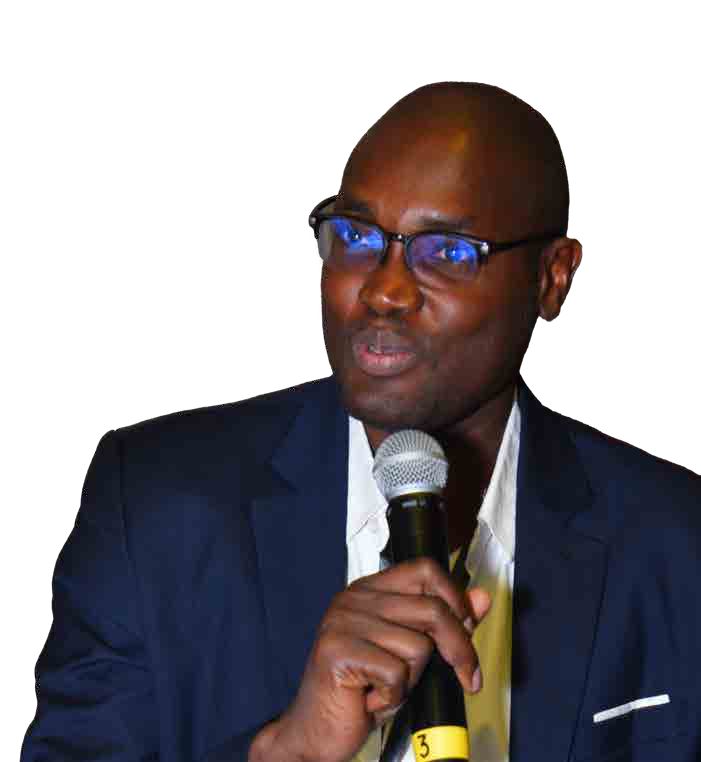
Chief Financial Analyst, Client Solutions Division, Syndications, Co-financing and Client Solutions Department, African Development Bank
Africa faces major financing gaps which are constraining its progress on many fronts. The continent needs USD 1.3 trillion annually to achieve the Sustainable Development Goals (SDGs) by 2030. The need to mitigate and adapt to a changing climate and meet global commitments on climate action adds to the funding gap. To finance their Nationally Determined Contributions (NDCs) under the Paris Climate Agreement, African countries require USD 277 billion per year until 2030, yet current climate finance flows to Africa amount to only USD 30 billion annually, concentrated in a few countries.
African countries have emerged from the COVID-19 pandemic with worsened fiscal balances and rising debt, just when they need to invest more in national development. There is an urgent need to broaden the range of financing available to Africa for both sovereign and private sector entities and diversify beyond fiscal and development finance sources.
African countries’ ability to access international debt capital markets has been constrained by several factors including heightened risk aversion from global investors towards Emerging Markets and challenging macro-economic conditions. As a result, international debt capital markets were shut for African issuers and the few investors with appetite to Africa are requesting credit enhancement and de-risking solutions as a pre-requisite to lending to African borrowers.
The African Development Bank Group (AfDB Group)’s Ten Year Strategy 2024-2033 places significant emphasis on the mobilisation of finance particularly from private sector capital. This aims to address Africa’s development financing needs in an increasingly challenging global aid and regional operating landscape. Leveraging its AAA rating and international standing, the AfDB Group is deploying its guarantee instruments to crowd in institutional investors and commercial banks and assist African borrowers access development resources on international debt capital markets.
By mitigating credit and political risks, guarantees enhance the bankability of projects and crowd in investors who might otherwise be reluctant to engage in African markets. Guarantees increase financing volumes and improve financing terms available for sovereign and non-sovereign borrowers including access to longer maturities and grace periods, customised repayment profiles and lower borrowing cost. The guarantee instruments have been deployed under both the AfDB and the African Development Fund (ADF, the concessional arm of the AfDB Group) windows.
Since 2014, the AfDB Group has executed 15 guarantee transactions valued at USD 3.7 billion, which have mobilised approximately USD 6 billion in private capital across more than 10 countries. In 2025 alone, over EUR 1.2 billion in guarantees were approved, underscoring the growing importance of guarantees in the Bank Group’s strategy for scaling development impact. Building on previous success in deploying guarantee transactions, 2025 saw further innovations. The ADF utilised for the first time, its partial credit guarantee under a Guarantor-of-Record structure combining country allocation and credit insurance to offer a higher guarantee amount. With such structure, the Republic of Togo was able to raise in one transaction almost 4 times its 3-year allocation. On the side of the AfDB window, the Bank achieved its first repeat guarantee transaction for the Republic of Côte d’Ivoire through the second Sustainable Financing Framework based guarantee and the first Sustainability-Linked guarantee (the latter featuring a guarantee fee reduction mechanism if Sustainability Performance Targets are met) under the private sector window in support of Mota Engil Africa. The projected pipeline for 2026 anticipates over USD 2 billion to be mobilised from commercial lenders via guarantees.
Guarantees offer opportunities to collaborate with various stakeholders including lenders, co-guarantors and insurers. ICIEC is a partner of choice for AfDB. This is enshrined in the long-term partnership between AfDB and the Islamic Development Bank (IsDB) formalized since 1987 and the collaboration under the African Co-Guarantee Platform (CGP) for which both AfDB and ICIEC are founding members.
The AfDB and ICIEC share the common goal to create synergies and scale trade and investment in Africa. In that perspective, they have started a knowledge-sharing initiative to introduce their respective staff to the financial products offered by the two institutions. The first event was held in September 2024 and allowed AfDB investment officers to better understand ICIEC’s Sukuk Insurance product. Following the success of this event, AfDB organized on 16 September 2025 a dedicated session with staff of IsDB Group to present its guarantee products and showcase how these instruments can be leveraged to mobilise financing at scale. Through practical examples and case studies, the session showcased AfDB’s experience in deploying Partial Credit Guarantees, Partial Risk Guarantees, and other innovative risk-sharing instruments. The aim is to deepen collaboration between AfDB and IsDB Group in leveraging guarantees as a catalytic tool to unlock investment opportunities for Africa.
One of the highlights of the session was the collaboration between AfDB and ICIEC in 2023 that helped Côte d’Ivoire mobilise an ESG loan from commercial banks. With the support of a EUR 194 million ICIEC Insurance Policy, AfDB was able to increase its guarantee cover from EUR 206 million to EUR 400 million allowing the country to raise EUR 533 million for a 15-year maturity at low pricing. The proceeds of the loan are used in line with the country’s sustainable financing framework (SFF). The SFF, as in a number of AfDB guarantee transactions, is developed by the country in line with international best practices and is externally verified by a reputable Second Party Opinion Provider. It clearly and transparently defines eligible projects and expenses, selection criteria, project monitoring, evaluation and reporting, verification and audit, liquidity management, the SFF institutional set-up and management process. The Côte d’Ivoire case further demonstrates how layered risk mitigation can generate catalytic multiplication: insurance enhanced guarantee coverage, which unlocked larger financing volumes, extended maturities to 15 years, reduced borrowing costs, and anchored the transaction firmly within an ESG-aligned framework.
The Côte d’Ivoire transaction supported by AfDB and ICIEC received external recognition, winning the ESG loan deal of the year at the 2024 Bonds, Loans and ESG Capital Markets Awards.
As a result, the Côte d’Ivoire transaction supported by AfDB and ICIEC received external recognition, winning the ESG loan deal of the year at the 2024 Bonds, Loans and ESG Capital Markets Awards. Beyond the accolade, the transaction underscores the strong complementarities between AfDB and ICIEC in advancing private capital mobilisation and effective de-risking across their common Member States.
In addition to guarantees, AfDB and ICIEC can also collaborate through balance sheet optimisation transactions (BSO). BSO are risk transfer transactions used by the AfDB to achieve three main objectives: (i) free up risk capital and increase lending capacity especially in times where the AfDB must play a counter cyclical role; (ii) address constraints on the prudential ratios to safeguard safety margins on key rating agency ratios and protect the AfDB’s AAA rating which underpins low funding costs passed onto borrowers; (iii) diversify and crowd in financial investors into African development finance. BSO transactions can be executed on a portfolio basis but also project-per-project on a single obligor risk basis. Since the 2015 G20 call to multilateral development banks (MDBs) to use the ‘billions’ in Official Development Aid to mobilise ‘trillions’ of investments through more efficient use of existing risk capital, the AfDB has streamlined BSO into its operations. The use of BSO has been further recommended in the 2022 Capital Adequacy Framework Recommendations’ report to G20.
The AfDB has been a pioneer in BSO innovations with notably the first MDBs Exposure Exchange Agreement in 2015 where the Bank exchanged with IBRD and IADB, USD 4.5 billion of its exposure to its top 9 African countries (reduction of exposure on borrowing countries) against equivalent exposure to 13 Latin American and Asian countries (diversification of exposure towards non-borrowing countries). An exposure exchange is a useful balance sheet optimization instrument for managing country concentration risk and freeing more lending capacity for constrained countries. Following the success of the first exposure exchange transaction, the AfDB has since executed 3 other exposure exchange transactions freeing around USD 12 billion in additional lending capacity for the benefit of African borrowers.
The AfDB also initiated in 2018 its Room to Run (R2R) programme consisting of BSO portfolio transactions aimed at addressing specific constraints on prudential metrics, improving AfDB’s credit risk profile and reducing risk capital consumption to free up capacity to finance new projects in Africa. As part of R2R, the AfDB executed in 2018 the first MDB Synthetic Securitization Transaction (SST) on a USD 1 billion reference portfolio of seasoned pan-African project finance loans and lines of credit to financial institutions. The SST freed up to USD 650 million in additional headroom for new loans and guarantees. Together with the SST, the AfDB also executed a portfolio Credit Insurance on a USD 500 million reference portfolio of non-sovereign financial sector loans to create USD 465 million in additional headroom. The latest transaction in the R2R programme is a USD 2 billion synthetic risk transfer where UK’s Foreign, Commonwealth & Development Office (FCDO) and private insurers covered the AfDB’s outstanding sovereign exposures to relevant regional Member States in October 2022. It has provided an estimated additional USD 2 billion in new lending capacity for climate finance.
In summary, guarantees and BSO are catalytic instruments that enable AfDB and ICIEC opportunities to collaborate and advance private capital mobilisation and de-risking in support of sustainable development projects across Africa. Leveraging their long-standing partnership and the African Co-Guarantee Platform, the two institutions can achieve greater impacts by unlocking higher financing volumes more quickly for the benefit of their common Member States. Scaling these instruments will be critical to closing Africa’s financing gaps and meeting the continent’s long-term development and climate ambitions.