Oman's Macroeconomic Situation And Growth Momentum
Lead Underwriter (Operations, Sovereign Risks) at ICIEC
Oman’s economic outlook for 2025 reflects moderate growth, supported by ongoing structural reforms. Both the Ministry of Economy and the IMF estimate real GDP growth of around 2.2%–2.3%. Growth is driven mainly by the non-oil economy, which includes manufacturing, logistics, tourism, and services. These sectors continue to outperform hydrocarbon activities, which remain constrained by OPEC+ production caps.
Preliminary data from Q1 2025 showed GDP expanding by 4.7%, largely fuelled by robust non-oil activity. While crude oil production has been capped, natural gas output has partially offset this decline, helping maintain stability in hydrocarbon revenues. This diversification underscores the success of Oman’s long-term development agenda, which seeks to reduce reliance on oil while cultivating new engines of growth.
Government policy remains firmly anchored in Vision 2040, which emphasizes fiscal discipline, diversification, and structural reform. Fiscal performance has been strong, with surpluses recorded in 2024 followed by only a modest deficit projected in 2025. Public debt has fallen dramatically from a pandemic-era peak of more than 68% of GDP in 2020 to around 35% today, thanks to prudent fiscal management and conservative budgeting.
Monetary policy complements these efforts, focusing on price stability and investor confidence. Oman has one of the lowest inflation rates in the region, helping preserve household purchasing power and reinforcing business sentiment.
The manufacturing sector has become a critical driver of growth, expanding across petrochemicals, food processing, metals, and pharmaceuticals. Meanwhile, Oman’s strategic location at the crossroads of Asia, Africa, and the Middle East supports its transformation into a global logistics hub, underpinned by world-class port and transport infrastructure.
Vision 2040 and Growth Drivers
Oman Vision 2040, launched under the guidance of His Majesty Sultan Haitham bin Tariq, serves as the nation’s long-term blueprint for achieving economic resilience, social well-being, and environmental sustainability. It articulates a clear strategy to transition from an economy historically dependent on hydrocarbons toward one that is diversified, knowledge-based, and globally competitive.
Oman’s development trajectory is guided by Vision 2040 and the Tenth Five-Year Development Plan (2021–2025). Both place emphasis on non-oil sector expansion, foreign investment, and modern infrastructure. Non-oil GDP is forecast to grow by 2.7% in 2025, supported by investments in ports, industrial clusters, and logistics corridors.
Recent reforms, including the Foreign Capital Investment Law, have further liberalised the business environment and encouraged international participation. The Vision 2040 agenda enjoys support from key multilateral institutions such as the IsDB Group, IMF and World Bank, which have commended Oman’s steady progress on fiscal consolidation, legal modernisation, and private sector development.
Progress to Date
- Oman has already diversified its non-oil revenues to account for more than 30% of GDP, supported by strong performance in logistics and manufacturing exports.
- The successful issuance of green sukuk and the establishment of frameworks for Public-Private Partnerships (PPPs) demonstrate tangible steps toward achieving fiscal and environmental goals.
- The roll-out of initiatives under the National Energy Strategy 2040 confirms Oman’s leadership in green transition within the Gulf Cooperation Council (GCC).
Creditworthiness has improved significantly. In 2025, Moody’s upgraded Oman to Baa3 and S&P confirmed BBB-, both with stable outlooks. These investment-grade ratings reflect strong fiscal discipline, lower debt ratios, and greater policy predictability.
Renewable energy is emerging as another major pillar. Large-scale solar and wind projects are underway, alongside ambitious plans in green hydrogen, positioning Oman to become a regional leader in sustainable energy. These initiatives align with global climate commitments while also generating new industries and long-term employment opportunities.
Despite ongoing global uncertainties, including volatile oil prices, geopolitical risks, and supply chain disruptions, Oman continues to deliver steady growth. Its ability to adapt to shocks highlights growing institutional capacity and a clear commitment to reform continuity.
Fiscal and Monetary Policy
Oman’s fiscal strategy remains cautious and disciplined. The 2025 budget anticipates a modest deficit of OMR 0.62 billion, consistent with conservative oil price assumptions of USD 60 per barrel. Public debt is expected to fall further below 35% of GDP, reinforcing long-term sustainability and supporting the country’s upgraded credit ratings.
The Central Bank of Oman (CBO) continues to prioritize monetary stability. Inflation has been well contained: the annual rate fell to 0.5% in August 2025, the lowest since late 2024, with an average of just 0.8% for the year through August. This reflects stable housing and fuel prices, effective supply chain management, and timely government subsidies. Price stability is central to economic confidence. By maintaining predictable inflation, the CBO provides an enabling environment for investment and supports household welfare. Together, prudent fiscal and monetary policies form a strong macroeconomic anchor for Oman’s medium-term outlook.
Development Agenda and Operational Resilience
The government’s development agenda is firmly anchored in Vision 2040, aiming to transform Oman into a diversified, innovation-driven economy. Key elements include:
- Digitalization of government services to increase efficiency and transparency.
- SME empowerment and entrepreneurship support to foster private sector-led growth.
- Labour market reforms to improve productivity and attract talent.
- Human capital investment, with a focus on education, skills, and youth employment.
Operational resilience has been evident in Oman’s capacity to maintain policy discipline despite volatile global conditions. Adequate foreign reserves and moderate debt sustainability risk provide buffers against external shocks. This resilience underpins investor confidence and strengthens Oman’s reputation as a stable destination for long-term projects.
Islamic Finance Proposition and Sukuk Developments
Islamic finance has become one of Oman’s fastest-growing financial segments. Shariah-compliant banking now represents over 16% of total sector assets, with steady growth expected as new players enter the market.
Sukuk issuance has expanded rapidly, attracting both domestic and international investors. Major issuers such as Energy Development Oman (EDO), Omantel, and the Oman Electricity Transmission Company have successfully tapped Sukuk markets to finance infrastructure and energy projects. This demonstrates the sector’s ability to mobilise long-term funding while aligning with ethical investment preferences.
Beyond traditional Sukuk, Oman has embraced Commodity Murabaha and Islamic trade finance solutions, particularly in manufacturing and logistics. Innovative instruments, including green and sustainability-linked Sukuk, are gaining traction, placing Oman at the forefront of Islamic financial innovation in the region.
By broadening funding channels and deepening the capital market, Islamic finance is helping diversify Oman’s financial system and support national development priorities.
Infrastructure and Project Pipeline
Oman maintains a strong pipeline of strategic projects designed to enhance connectivity, industrial capacity, and renewable energy integration. Key initiatives include:
- Expansion of Sohar, Duqm, and Salalah ports, creating world-class maritime and logistics hubs.
- Development of new highways and rail networks to improve regional connectivity.
- Modernisation of airports to accommodate rising passenger and cargo volumes.
- Upgrading of electricity transmission grids, supporting renewable integration and industrial growth.
Special Economic Zones (SEZs), particularly in Duqm and Sohar, are attracting international investment through public-private partnerships and targeted incentives. These clusters are set to become anchors of Oman’s diversification strategy, boosting export competitiveness and job creation.
Oman’s Relationship with the IsDB Group
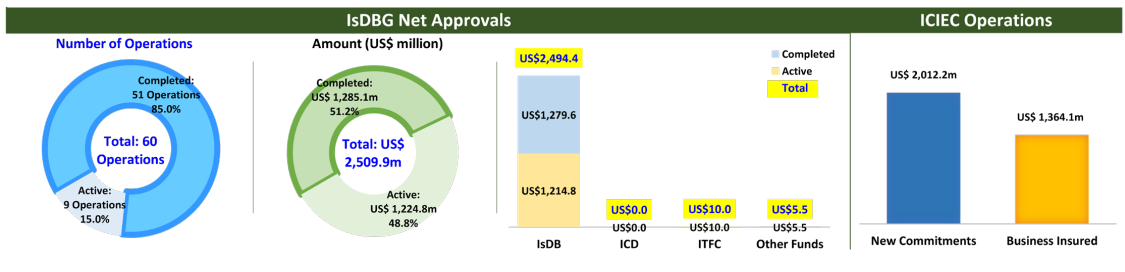
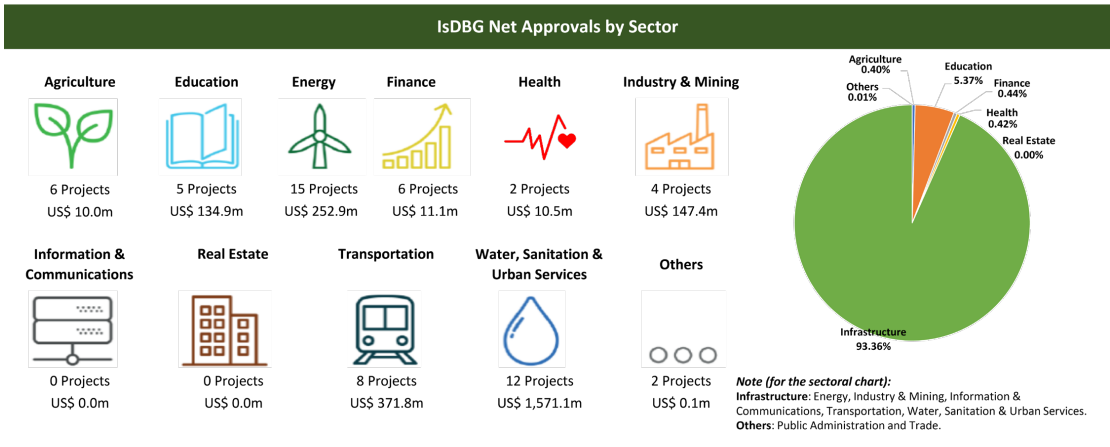
Oman has been a founding member of the Islamic Development Bank (IsDB) Group since 1974, with a subscribed capital share of ID 185 million (≈USD 530 million). Over the decades, Oman has received more than USD 2.5 billion in cumulative approvals from the Group, financing projects across transport, health, water, social infrastructure, and industrial development. These engagements are closely aligned with Vision 2040, supporting diversification, private sector growth, and sustainable development.
ICIEC’s Engagement with Oman
Oman joined ICIEC in 2009 and has since developed a strong working relationship with the institution. ICIEC provides risk mitigation and credit enhancement tools that support both sovereign and private transactions in Oman. Coverage spans short-term trade credit, medium-term investment guarantees, and customized products for infrastructure and energy projects.
Selected Case Studies
Duqm Port Project (2018): ICIEC provided USD 114 million in reinsurance cover to Atradius, supporting the construction of a liquid bulk berth terminal in the Duqm Special Economic Zone. This project strengthened Oman’s logistics competitiveness by reducing transport distances and costs and enhancing export potential.
Sohar Port Expansion (2025): ICIEC signed a USD 40 million policy with Royal Boskalis for dredging and development works at the Sohar Port and Freezone South Expansion. The project will deepen navigation channels and upgrade jetty infrastructure, positioning Sohar as a leading regional maritime hub. It also supports the launch of MARSA LNG, the Middle East’s first LNG bunkering facility, underscoring Oman’s commitment to clean energy solutions. ICIEC’s coverage enabled smoother access to financing and ensured project bankability.
Through such transactions, ICIEC plays a catalytic role in mobilising foreign investment, promoting sustainable trade, facilitating Oman’s broader diversification strategy, and contributing directly to Vision 2040 objectives.
Opportunities for Deeper ICIEC–Oman Collaboration
- Green and sustainable projects: ICIEC can support Oman’s ambitious renewable energy and green hydrogen agenda, particularly in attracting global investors to solar, wind, and hydrogen clusters.
- PPP frameworks: As Oman advances public-private partnerships in ports, utilities, and logistics, ICIEC’s guarantees can help mobilise Foreign Direct Investment (FDI) and support the financial sustainability of these ventures.
- Export diversification: With non-oil exports already accounting for over a third of Oman’s trade, ICIEC’s credit insurance products can further expand access to new and higher-risk markets in Africa and Asia.
- SME support: By tailoring risk mitigation solutions for small and medium exporters, ICIEC can contribute directly to job creation and private sector empowerment, both key pillars of Vision 2040.
Outlook and Strategic Implications
Oman’s economy is projected to grow at 2.4%–3.4% in 2025, accelerating to as high as 3.7% in 2026 as OPEC+ production caps are gradually eased and non-oil momentum builds further.
Key Growth Drivers
- Ambitious investments in logistics and industrial clusters.
- Expansion of renewable energy, with a special focus on green hydrogen.
- Digital transformation and SME development.
- Continued reforms to the business environment and labor market.
Fiscal and external buffers will remain strong, supported by cautious budgeting and a policy of channelling hydrocarbon surpluses into debt reduction and infrastructure upgrades. Public debt is projected to remain below 35% of GDP, compared to more than 68% just five years ago, a clear sign of reform success.
Risks persist, including global oil market volatility, potential trade disruptions, and regional geopolitical uncertainties. However, the growing share of non-hydrocarbon exports (over one-third of the total), coupled with steady gains in manufacturing and services, provides important safeguards.
Over the medium term, Oman is set to redefine the Gulf development model—transitioning from resource dependence to a balanced, innovation-driven economy. Strategic partnerships with multilateral institutions such as the IsDB Group will continue to play a pivotal role, ensuring access to risk mitigation tools, strengthening investor confidence, and accelerating the realization of Vision 2040 objectives.
Conclusion
Oman’s economic transformation is gaining traction. The combination of fiscal discipline, strong credit ratings, growing Islamic finance, and an ambitious infrastructure agenda positions the Sultanate for sustainable and inclusive growth. With Vision 2040 as its compass and active partnerships with the IsDB Group, particularly ICIEC, Oman is steadily emerging as a regional benchmark for economic sustainability and diversification.