Mr. Erkin Azizzhonovich Kakhorov

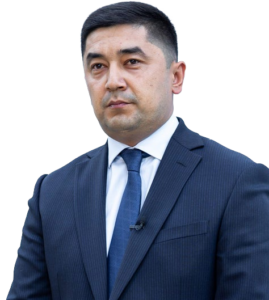
THE CHAIRMAN OF THE MANAGEMENT BOARD AT AGROBANK
As Uzbekistan continues to expand its engagement with international capital markets and Islamic finance, strategic partnerships are playing an increasingly important role in mobilising investment and supporting sustainable economic growth. In this interview, Mr. Erkin Azizzhonovich Kakhorov, Chairman of the Management Board of Agrobank, reflects on the Bank’s successful cooperation with ICIEC and how this partnership enabled a landmark Islamic financing transaction. He discusses the value of risk mitigation in attracting international investors, the growing importance of Shariah-compliant financing solutions, and the opportunities that closer collaboration between financial institutions and multilateral partners can create for trade, investment, and development across Uzbekistan and the wider region.
Could you share the Bank’s perspective on its cooperation with ICIEC and explain how this partnership contributes to the achievement of Agrobank’s strategic objectives?
Before addressing this question directly, allow me to briefly elaborate on how Agrobank arrived at its cooperation with ICIEC. As you may know, since 2010 Agrobank has maintained close and productive cooperation with institutions of the Islamic Development Bank Group. In particular, collaboration with ICD and ITFC enabled Agrobank to make a meaningful contribution to the promotion of Islamic financing mechanisms for entrepreneurs and businesses across the Republic.
With the growing demand for Shariah-compliant financial products among the Bank’s clients, Agrobank identified the strategic necessity of accessing capital markets that operate in accordance with Islamic finance principles. The solution was found through cooperation with ICIEC, which is also a member of the Islamic Development Bank Group. Furthermore, the experience gained through our engagement with other institutions of the Group enabled us to establish a mutually beneficial partnership with ICIEC within a relatively short period of time.
As a result, Agrobank became the first bank in the country to access the international Islamic capital market through a Commodity Murabaha transaction, thereby establishing a strong presence both within the Republic and among international Islamic investors.
With the growing demand for Shariah-compliant financial products among the Bank’s clients, Agrobank identified the strategic necessity of accessing capital markets that operate in accordance with Islamic finance principles.
What were the key advantages of cooperation with ICIEC in facilitating the respective transaction and arranging the financing?
It would not be an exaggeration to state that Agrobank’s cooperation with ICIEC and the resulting Commodity Murabaha transaction supported by the Corporation’s coverage, represents one of the most significant financial events of the year. This milestone enabled Agrobank not only to access the international Islamic liquidity market, but also to overcome the limitations associated with country exposure limits.
This partnership has substantially strengthened the Bank’s standing in international financial markets, enhanced confidence among foreign investors and Islamic financial institutions, and expanded Agrobank’s capacity to finance entrepreneurs while broadening the availability of banking services through Islamic financial products.
One of the key advantages of cooperation with ICIEC has been the implementation of effective commercial and political risk mitigation instruments. This enabled Agrobank to attract more accessible and longer-term financial resources, which are critically important both for the Bank and for the broader national economy. In addition, the insurance coverage and guarantees provided by ICIEC contributed to more efficient transaction structuring and strengthened cooperation with international counterparties.
Through this mechanism, the Bank has been able to provide greater support to agriculture, the processing industry, and infrastructure development projects, as well as small and medium-sized enterprises. This is particularly important amid the growing demand for financial resources from entrepreneurs and export-oriented companies.
Based on Agrobank’s experience, partnerships between banks and international institutions such as ICIEC play a significant role in promoting sustainable trade and investment in Uzbekistan. Such cooperation contributes to strengthening the investment climate, enhancing confidence in the national banking system, and facilitating the country’s deeper integration into international financial markets.
Based on your experience, what role can partnerships between banks and institutions such as ICIEC play in promoting sustainable trade and investment in Uzbekistan?
In this regard, I would emphasise that such mechanisms create additional opportunities for financing sustainable development projects and introducing modern financial instruments. Cooperation with ICIEC has also provided Agrobank with valuable practical experience that may serve as a useful benchmark for other financial institutions across the region.
By mitigating investor risks, ICIEC and similar institutions serve as an important catalyst for attracting investment into Uzbekistan in general and for advancing Islamic banking and financing instruments in particular.
What lessons and insights have been gained from Agrobank’s cooperation with ICIEC that could be valuable for other financial institutions?
First and foremost, as previously mentioned, this was the first transaction of its kind in Uzbekistan. Agrobank has effectively established a benchmark that may serve as a reference point for other financial institutions across the region. Building upon the experience gained, Agrobank intends to continue developing new capital attraction mechanisms and further strengthen its engagement with international investors.
Secondly, through the successful execution of this transaction, the Bank demonstrated to international investors its high standards of corporate governance, operational transparency, and effective risk management framework. Experience confirms that long-term partnerships built on mutual trust and a strategic approach are essential for the successful implementation of major international projects.
Looking ahead, which areas of future cooperation with ICIEC do you consider the most promising in supporting Agrobank’s development priorities?
Speaking about future prospects, Agrobank sees significant potential in expanding joint initiatives in the areas of green finance, support for the agroindustrial sector, and Islamic finance, as well as the further development of programmes aimed at supporting small and medium-sized enterprises.
The Bank is confident that continued cooperation with ICIEC will not only strengthen Agrobank’s financial resilience but will also make a substantial contribution to the implementation of Uzbekistan’s priority socio-economic development objectives.
Partnership with ICIEC constitutes an important component of the Bank’s long-term strategy aimed at expanding international cooperation and attracting sustainable long-term financing.