Member Country Profile: Azerbaijan
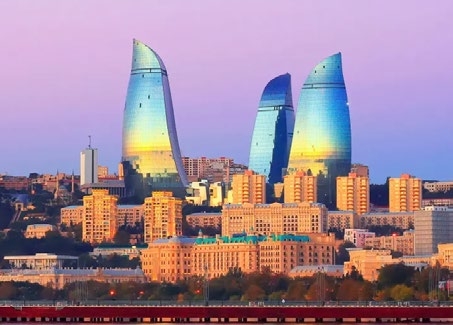
According to the Energy Institute Statistical Review of World Energy (2025), OPEC, and the IEA, Azerbaijan ranks 20th globally in terms of proven crude oil reserves, holding approximately 7 billion barrels. This represents roughly 0.4% of the world’s total reserves. In terms of average daily production, Azerbaijan is among the top 25 global producers, accounting for about 0.6% of the global oil supply. Furthermore, the country ranks 23rd worldwide in proven natural gas reserves, with approximately 2.5 trillion cubic meters. Azerbaijan is recognised as a key exporter due to its advanced infrastructure, notably the Southern Gas Corridor, and currently leads the region in the growth rate of gas exports to Europe.
In 2025, Azerbaijan’s GDP amounted to approximately $75 billion. The primary sectors contributing to the GDP include the industrial sector (including oil and gas) at 41%, Trade at 10%, Transport at 7%, Construction at 6%, Agriculture at 4%, and the Banking sector at 3%. Azerbaijan’s export profile remains dominated by the hydrocarbon sector, which accounted for approximately 87% of total export revenues in 2025. However, during 2024–2025, the non-oil and gas sector achieved a sustained majority share of the national economy, reaching 52.7% of GDP.
While Azerbaijan has traditionally utilised its hydrocarbon wealth as the primary engine of economic expansion, contemporary policy frameworks are increasingly focused on fostering diversification away from the oil and gas sectors. Leveraging its strategic location and abundant natural resources, the country is now pivoting towards a diversified, knowledge-based economy, bolstered by robust international partnerships and a favourable investment climate.
Azerbaijan continues to maintain a strong credit profile as of April 2026, holding investment-grade ratings from Fitch (BBB-, Stable) and Moody’s (Baa3, Positive), while S&P Global maintains a BB+ rating with a Positive outlook.
AZERBAIJAN 2030: NATIONAL PRIORITIES
In February 2021, the President of the Republic of Azerbaijan issued a decree approving the “National Priorities for Socio-Economic Development: Azerbaijan 2030”. This foundational document defines five key vectors for the country’s strategic development:
- A Sustainably Growing, Competitive Economy: A strategic focus on the non-oil sector, innovation, and export diversification.
- A Dynamic, Inclusive Society Based on Social Justice: Emphasis on poverty reduction and comprehensive regional development. 3) Competitive Human Capital and a Modern Innovation Space: Implementation of educational reforms and support for the startup ecosystem.
- The “Great Return” to Liberated Territories: Full economic and social reintegration of the Karabakh and East Zangezur regions.
- A Clean Environment and a “Green Growth” Country: Transitioning to renewable energy sources and the reduction of carbon emissions.
As the initial implementation phase of “Azerbaijan 2030”, the 2022–2026 Socio-Economic Development Strategy serves as a strategic roadmap to increase the private sector’s economic share to 88%. Key pillars include SOE optimisation, judicial reforms, and the expansion of industrial parks and FEZs. Complementing this, the “Great Return” programme (est. 2022) focuses on the economic reintegration of liberated territories, which are projected to generate 25% of the national GDP by 2030.
STRATEGIC CONNECTIVITY AND REGIONAL PARTNERSHIPS
Beyond its domestic agenda, Azerbaijan serves as a critical geostrategic bridge between Asia and Europe through several large-scale international projects:
- The Middle Corridor (TITR): A flagship multimodal transport route bypassing Russia to connect China and Central Asia with Member Country Profile: Azerbaijan Bounded by the Caspian Sea and the Caucasus Mountains, Azerbaijan, often referred to as the ‘Pearl of the Caspian’, stands as a natural bridge between East and West. Azerbaijan is bordered by Russia, Georgia, Armenia, Türkiye, and Iran. The nation’s geography features a diverse mix of rugged mountain ranges and fertile lowlands, supported by a vast natural resource base centred on its significant oil and gas reserves. COUNTRY AND REGION FOCUS 22 ICIEC SPECIAL ISSUE COUNTRY AND REGION FOCUS Europe. By digitising customs and expanding the Port of Alyat, transit times have been reduced to 12-15 days.
- Railway Infrastructure Modernisation: To support these corridors, Azerbaijan is upgrading its rail network:
- East-West Axis: The Baku-Tbilisi-Kars (BTK) railway has been expanded to a capacity of 5 million tons annually, serving as the backbone of the Middle Corridor.
- North-South Axis: The reconstruction of the Baku-Yalama and Baku-Astara lines facilitates seamless transit between Russia, Iran, and the Persian Gulf.
- Reconstruction of Liberated Territories: The construction of the Horadiz-Agbend line is a priority, designed as a key segment of the future Zangezur Corridor to link mainland Azerbaijan with Nakhchivan and Türkiye.
The Digital Silk Way: A strategic initiative to transform Azerbaijan into a regional digital hub. This involves laying a subsea fiber-optic cable across the Caspian Sea (connecting Azerbaijan and Kazakhstan) to provide a high-speed data corridor between East Asia and the EU.
- Green Energy Corridor: A multi-stage project to export renewable energy to Europe. This includes a high-voltage Caspian subsea cable (integrating the power grids of Uzbekistan, Kazakhstan, and Azerbaijan) linked to the Black Sea submarine cable reaching Romania and Hungary.
- Southern Gas Corridor (SGC) Expansion: A vital pillar of EU energy security. Ongoing efforts aim to double gas export capacity to 20 billion cubic meters annually by 2027 through the modernisation of the TANAP and TAP pipelines.
- North-South Transport Corridor (INSTC): Azerbaijan is the only country participating in both the East-West and NorthSouth axes, facilitating trade between India, the Persian Gulf, and Northern Europe.
FISCAL AND MONETARY POLICY: AZERBAIJAN AND CENTRAL ASIAN COUNTRIES
Compared to Central Asian economies, Azerbaijan’s growth dynamics appear more moderate. In Kazakhstan, after a period of accelerated growth, expansion is projected to gradually converge to around 3.5-4% by 2030-2031, while Uzbekistan is expected to maintain higher growth rates of approximately 5.5-6% throughout the forecast horizon. At the same time, Turkmenistan shows growth rates comparable to Azerbaijan, in the range of 2-3% in 2026-2031, indicating broadly similar macroeconomic parameters within the IMF projections. Thus, through 2031, Azerbaijan is characterised by a stable economic growth trajectory.
Based on the analysis of the latest data from national statistical agencies and the United Nations Population Division, Azerbaijan presents a distinct demographic profile characterised by maturity and high density. With a population of approximately 10.5 million, Azerbaijan is significantly more compact than Kazakhstan (~21.1 million) or Uzbekistan (~37.7 million), resulting in the highest population density in the group at 122 people per km². While Uzbekistan and Turkmenistan maintain a “younger” demographic with median ages under 27, Azerbaijan – much like Kazakhstan – has transitioned into a more mature stage with a median age of 32.4 years. Furthermore, while Uzbekistan leads in absolute annual growth at 2.0%, Azerbaijan demonstrates a more stable and moderate growth rate of approximately 0.5%, reflecting an advanced stage of demographic transition and a higher level of urbanisation compared to its Central Asian neighbours.
Azerbaijan demonstrates a high degree of fiscal liquidity and a stable inflationary environment relative to its regional peers. In 2025, Azerbaijan effectively stabilised its inflation rate at ~6%. In contrast, regional peers faced significantly higher pressures: Kazakhstan recorded a year-end inflation rate of 12.3%, driven largely by rising costs in utilities and food services, while Uzbekistan reported inflation at ~7-8%.
For the period spanning the 2025 fiscal year through the first quarter of 2026, the regional economic landscape reveals that Azerbaijan maintains the highest ratio of reserves relative to its economic output among its peers. Azerbaijan’s total sovereign assets – consisting of Central Bank reserves and the State Oil Fund of Azerbaijan (SOFAZ) – reached a record $85.15 billion, an amount that represents approximately 112% of its annual GDP. In comparison, Kazakhstan holds the highest absolute financial buffers in the region at $100.6 billion, comprising both National Bank reserves and the assets of the National Fund of the Republic of Kazakhstan; however, due to the larger size of its economy, this total is equivalent to roughly 38-40% of its GDP. Meanwhile, Uzbekistan’s total sovereign assets, which include the Fund for Reconstruction and Development and gold-forex reserves, are estimated to be between $52 and $55 billion, accounting for approximately 50-55% of its GDP.
It is estimated that by the end of 2025, Azerbaijan demonstrated a high degree of fiscal stability by maintaining a budget surplus of 2.4% of GDP, driven by disciplined expenditure and robust hydrocarbon exports. In contrast, Kazakhstan and Uzbekistan recorded fiscal deficits of approximately 3.1% and 4.0% of GDP, respectively, during the same period.
ICIEC’S ENGAGEMENT WITH AZERBAIJAN
ICIEC’s involvement in Azerbaijan began prior to its membership in 2023. ICIEC reinsured KazakhExport for the export of diesel locomotives from Kazakhstan to Azerbaijan Railways and insured several member country banks and exporters for transactions involving Azerbaijan. In 2024, ICIEC supported a transaction in the telecommunication sector of Azerbaijan. In summary, since Azerbaijan joined ICIEC, approximately USD 164 million in cumulative business has been insured.
Potential areas of cooperation:
- Middle Corridor and Regional Partnerships: Azerbaijan actively cooperates with the countries of Central Asia and Türkiye. Located on the route connecting Europe and China, Azerbaijan is one of the beneficiaries of this trade path. Locomotive supply deals in the railway industry may be expanded to support Azerbaijan’s logistics sector. Support can also be provided in maritime logistics in the Caspian Sea.
- PPP frameworks: The development of PPP is one of the key instruments for implementing the Azerbaijan 2030 strategy. Azerbaijan’s main focuses in the application of PPP are 1) green energy, 2) infrastructure and logistics, 3) the social sphere, and 4) water desalination. In April 2024, an agreement was signed for the implementation of a project for the desalination of Caspian Sea water based on the PPP model (investor: ACWA Power).
- Digitalisation: The experience of implementing ICIEC projects with world-leading communication equipment suppliers in Central Asian countries can be actively utilised in Azerbaijan.