Berne Union Members Record Historic Highs in New Commitments in 2024 Despite Rising Geopolitical Risks and Supply Chain Disruptions as New Businesses and Investments in Green Clean Energy Flourish
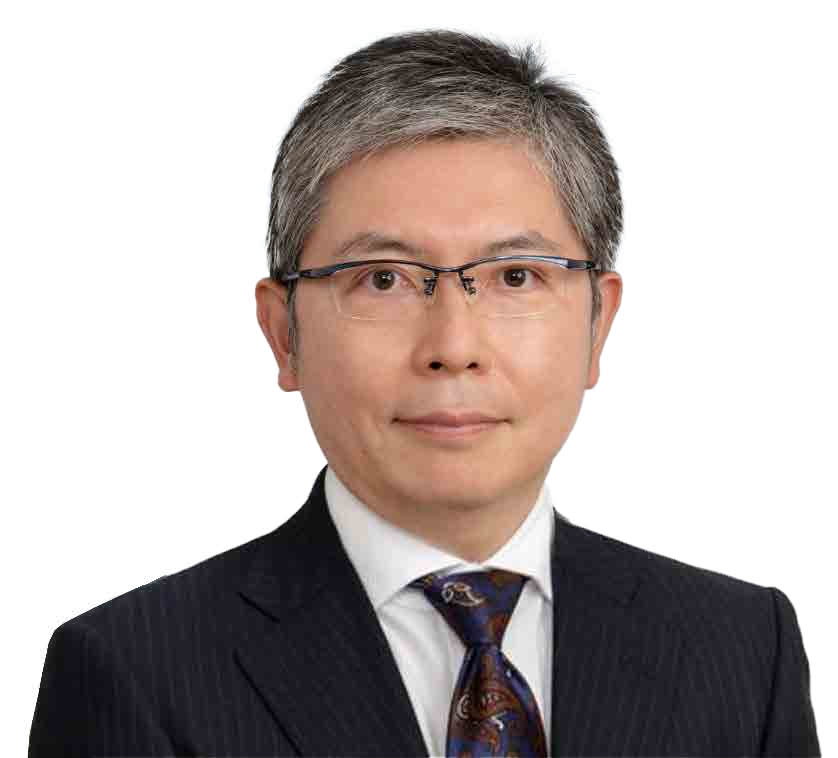
Mr. Yuichiro AKITA ,
President of the Berne Union & Senior General Manager, International and Strategic Policy,
Nippon Export Insurance and Guarantees Company (NEXI) Japan’s Official Export Credit Agency
In times of global uncertainty comes both challenges and opportunities. As risk absorbers and mitigators the credit and investment insurance industry have a defining role to play to ensure the continued flow of trade and investment, the lifeblood of the global economy. In an exclusive interview, Mr. Yuichiro AKITA, President of the Berne Union (the International Union of Credit and Investment Insurers) discusses how members have consistently demonstrated resilience and innovation in responding to past crises, and through the development of new products, the launch of fresh initiatives, and enhanced collaboration with partner institutions, how they have actively worked to safeguard global trade and investment flows during these challenging times, and the unforeseen crises in the years ahead.
ICIEC Newsletter: The BU’s Export Credit and Investment Insurance 2024 Industry Report shows that members recorded a historic high of USD3.3 trillion in new commitments amid escalating geopolitical tensions, war, natural disasters, and economic headwinds. At the same time, members paid a record total of USD10 billion in claims across all business lines. Which aspects of the state of the industry is most heartening and gives hope that BU members and the industry at large are indeed in a good position to meet the current challenges in the industry and the global economic landscape?
Mr. Yuichiro AKITA: Amid rising geo-political risks, impacts of conflicts, and severe natural disasters increased supply chain disruption risks globally. Since recovery from the pandemic, inflation-driven costs increase deteriorated economics of projects globally. This has created headwinds for new businesses and investments, including clean energy technologies, such as offshore wind and EV sectors. Last year, in many developed countries, the ruling parties lost a significant number of seats in the national elections, the voters prioritized addressing domestic income equality, inflation countermeasures, and social instability, while interests in transition to a green or low-carbon economy or international cooperation in public policy issues appear to have become secondary.
Nevertheless, BU members recorded a historic high in new commitments. In relation to MLT (medium-and-long-term) space, the long-term trend towards increasing capacity of private insurers is evident, now they provide more than 20% of new MLT commitments annually. In addition, new commitments of renewable energy have increased steadily, amounting to USD15 billion in 2024 (2.5 times the level of 2019). We still expect to see solar and onshore wind power projects and other clean energy, such as geothermal biomass and nuclear power as well as sophisticated ancillary technologies, such as energy storage and carbon capture.
Lastly, the high claim payment showed the members’ indispensable function to increase clients’ resiliencies. It is important for BU members to promptly pay insurance claims for covered incidents to gain customers’ trust, which is also crucial for the future of the industry.
The mainstay of your tenure as BU President is the BU STRIDE initiative. Can you expand on the rationale behind this initiative and its progress towards strengthening the foundations of international trade and investment, and reaffirming the BU’s commitment to be “the guardians of free trade and foreign direct investment in this new era of uncertainty?
The theme of the BU Spring Meeting held in Croatia was “Resilience,” one of the pillars represented in STRIDE (Sustainability through Resilience, Innovation, Diversity, and Empowerment).
Among BU members, ECAs have played a vital role as national export credit agencies in complementing market failures during crises such as the global financial crisis and the COVID-19 pandemic, thereby supporting international trade and investment. Now, facing new uncertainties, we believe it is imperative – and indeed possible – to fully mobilize the tools developed and implemented over the years to fulfil our mission as guardians of trade and investment.
While this market-complementing role remains critical, the mission of ECAs has expanded significantly. Some ECAs now support the future export opportunities of their national industries, overseas investments, supply chain and resource security, and the growth of SMEs. In recent years, many ECAs have also engaged in supporting climate action, energy transitions, pandemic responses, and social infrastructure in emerging and developing countries. Even when these activities primarily aim to support national industries, they often bring social impact to developing countries. Moreover, in cases such as untied financing, the social impact in host countries itself becomes a primary purpose, rather than direct economic benefits to the provider country.
Given these realities, the work of ECAs can no longer be contained within the traditional framework of “export credit.” It is increasingly important for ECAs to recognize themselves as entities capable of contributing directly to sustainability and the SDGs. The BU STRIDE Presidential Platform that I advocate, as such, is a slogan to foster new innovations that enable BU to contribute to the realization of the SDGs, not only through ECAs but also in close collaboration with private insurers within BU and MDBs such as ICIEC and IsDB.
Under your erstwhile hat at NEXI you are familiar with ICIEC’s unique position as the world’s only Shariah-compliant multilateral insurer. Do you see an enhanced role for Islamic risk mitigation and credit enhancement solutions, albeit niche now, and what can the Berne Union do to help facilitate this?
Inter-agency cooperation requires significant energy and commitment, regardless of whether the partner is an Islamic finance institution or otherwise. A natural question arises: when one already has well-established relationships with trusted partners, why seek new collaborations? What benefits could outweigh the costs of building new partnerships? This question is shared by both parties when embarking on new relationships.
The challenge is even greater when partners have different approaches to business – differences in organizational missions, procurement rules, environmental and social safeguards, risk management methods, and risk appetites. Distinct characteristics, such as those found in Islamic finance, can further add to this complexity. However, collaboration becomes particularly meaningful when there are risk taking barriers that cannot be overcome alone but can be addressed together with a partner.
Reflecting on NEXI’s cooperation with ICIEC, despite differences in financing and insurance structuring, the partnership delivered greater benefits—such as enhanced intelligence, negotiation leverage, and deterrence in specific markets—making it easier to take on risks collectively.
It is essential to share the merits of such collaboration through mutual exchange of operational insights and case studies. BU serves precisely as such a platform, and we are eager to create further opportunities within BU to facilitate these meaningful engagements going forward.
A recent UNCTAD Report stresses that Political Risk Insurance (PRI) plays a vital role in de-risking investments and mobilizing finance towards achieving the UN’s SDGs. Between 2018 and 2022, PRI providers insured USD150 billion worth of projects in developing countries, including LDCs. UNCTAD findings point to low investor awareness, high costs, and inconsistent ESG standards as key barriers to credit insurance market entry. This has led to increased cost of finance due to higher risk premiums paid. Do you think that LDCs are getting a fair deal from the credit insurance industry?
The recent UNCTAD report has shed light on how Political Risk Insurance (PRI) can contribute to mobilizing private investment for the achievement of the SDGs, while also identifying the challenges that remain. For many years, the role of the BU and ECAs in advancing the SDGs has often been overlooked. In this context, it is highly encouraging and indeed groundbreaking that PRI has been highlighted so prominently. Furthermore, the outcome document of FFD4 has reaffirmed the importance of ECAs and the critical role of tools that mitigate risks associated with overseas investment. This report, therefore, marks a significant milestone in the field of development finance.
Although the importance of PRI is increasing amid rising geopolitical risks, a key challenge lies in the low awareness of PRI as a product and of Berne Union members who provide it. PRI is not new, yet only a limited number of national insurance providers actively offer it. Institutions such as SINOSURE, NEXI, and PwC on behalf of the German government have developed strong capacities, while many others possess limited underwriting experience or are not actively promoting PRI.
To address this, the Berne Union seeks to facilitate knowledge exchange among its members by sharing best practices in product design, underwriting, monitoring, and claims management. We also provide a forum to discuss marketing strategies and case studies, enabling members to learn how to re-enter the PRI market or expand their offerings.
Through these initiatives, the Berne Union is strengthening the PRI capabilities of its members, enhancing the global availability of PRI, and channelling greater private investment into SDG-relevant sectors. In doing so, we support sustainable development and resilience in emerging markets, contributing to a more stable and inclusive global economy.
In 2024, medium-and-long-term commitments by Berne Union members reached USD160 billion, with private insurers contributing over 20%, highlighting the growing synergy between public and private actors. In your view, how critical is this collaboration, particularly through instruments like untied support and working capital solutions for building resilience in the current global trade environment? Additionally, what role can the Berne Union play in facilitating more effective blended finance structures involving DFIs, ECAs, and MDBs to mobilize capital for sustainable trade and investment?
The role of ECAs is expanding well beyond traditional export credit to include support for overseas infrastructure development through untied financing, securing critical resources, and providing development finance that contributes directly to the SDGs. Alongside this, we are seeing greater participation by private insurers in the MLT finance sector, as well as increased reinsurance cooperation between ECAs and private insurers. Beyond ECAs, collaboration among MDBs, private insurers, and institutional investors through portfolio syndication and securitization is also gaining momentum. Such public-private partnerships are vital for expanding the industry’s overall risk capacity and for bridging gaps in trade finance and SDG financing.
Blended finance was one of the most widely discussed topics at FFD4. Currently, collaboration between MDBs and ECAs often involves a vertical risk split, with each institution cofinancing a distinct portion of a project. Looking ahead, we should advance to the next stage: horizontally slicing risk within a single project to leverage the differing risk appetites of ECAs— who back private investors and banks—and MDBs—who can assume higher political or project risks.
This approach can strengthen blended finance structures, attract greater private investment into high-impact SDG projects, and foster stronger, complementary roles among ECAs, DFIs, and MDBs to channel foreign direct investment more effectively while managing risks efficiently across all stakeholders.
As the Berne Union, we aim to provide a practical platform for deeper discussions that explore and advance this kind of ECA – MDB collaboration. Through this, we hope to contribute to further innovation in the field of blended finance and support sustainable development worldwide.
The International Credit Insurance and Surety Association (ICISA) recently highlighted the rising incidence of fraud and money laundering risks in credit insurance due to rising economic challenges, higher trade volumes and the appearance of advance fake document technology especially through the introduction of electronic trade documentation. How important is this development for Berne Union members and what is the Union doing to help member entities mitigate these risks?
There is a rapidly growing awareness among Berne Union members regarding the critical issue of fraud. This is a matter that directly impacts the trustworthiness and financial soundness of our industry, and it is essential that we address it collectively and effectively.
At the recent BU Spring Meeting, a dedicated session on fraud was held, where members actively shared their experiences and discussed current mitigation measures. This issue is particularly pressing for ECAs handling short-term export credit insurance, where the sheer volume of transactions exposes them to significant challenges, with numerous cases already identified in practice.
In July, the BU ECA Committee will host a dedicated exchange among ECA practitioners focused on fraud. While technological advancements continuously evolve alongside new fraudulent methods, we recognize fraud as a shared challenge for our industry. The Berne Union is committed to promoting ongoing information sharing among members as we work to safeguard the integrity and resilience of our sector.
Looking forward, what are the challenges ahead, and what are the lessons drawn from past crises such as the global financial crisis in 2008, the Covid-19 pandemic, and the ongoing conflict in Ukraine and the Middle East?
Berne Union members have consistently demonstrated resilience and innovation in responding to past crises, ensuring the continued flow of trade and investment—the lifeblood of the global economy. Through the development of new products, the launch of fresh initiatives, and enhanced collaboration with partner institutions, BU members have actively worked to safeguard global trade and investment flows during challenging times.
During the global financial crisis, members expanded untied financing to support working capital for domestic and international companies and developed direct lending mechanisms to secure short-term liquidity. These liquidity provision tools have since been effectively utilized during the European debt crisis and the COVID-19 pandemic. In Asia, even as the private trade credit insurance market contracted, a reinsurance network among ECAs was established to maintain regional trade flows, forming the foundation for ongoing ECA cooperation in the region.
Today, amid rising geopolitical risks and the ongoing war in Ukraine, untied financing is being used to support resource offtake projects for resource security. In the PRI domain, some ECAs have re-entered the market, offering innovative solutions that enable the underwriting of war-related risks even within conflict-affected regions.
We will undoubtedly face unforeseen crises in the years ahead. However, the tools developed during past crises and the strengthened inter-agency cooperation frameworks now in place have prepared us to launch new joint initiatives swiftly and effectively. The Berne Union is committed to serving as a catalyst for these collaborative efforts, ensuring our industry continues to support global trade and investment, even in the most challenging circumstances.