Mr. Bakhodir Abdullayev
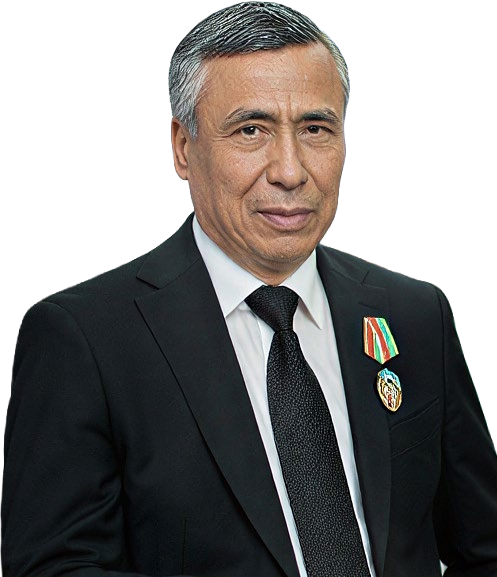
CHAIRMAN OF THE MANAGEMENT BOARD AND CEO, JSC “UZBEK METALLURGICAL PLANT”
Steel is not just another industrial product. It has a multiplier effect across the economy. Mr. Abdullayev describes Uzbek Steel’s evolution from a producer of long products into a national steel platform delivering both long and flat steel, with the ICIEC supported Casting and Rolling Complex marking the company’s entry into flat steel production and strengthening domestic supply, localisation and export potential. He highlights how ICIEC’s risk mitigation helped make a strong project bankable by aligning its risk profile with international lenders’ requirements while looking beyond financing to Uzbekistan’s wider development value and points to future cooperation on raw material security and deeper downstream processing.
Could you share with us the strategic vision of Uzbek Steel and its role in supporting Uzbekistan’s industrial development and economic diversification?
Our strategic vision is to develop Uzbek Steel, JSC Uzbek Metallurgical Plant, widely known as Uzmetkombinat, from a producer of long steel products into a national steel platform supplying both long and flat products. This means expanding capacity, strengthening domestic supply, reducing exposure to external shocks and supporting deeper industrial processing in Uzbekistan.
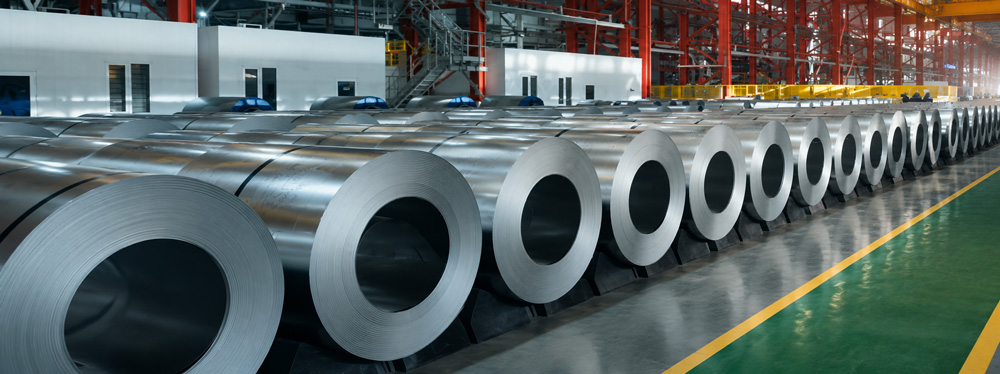
Uzmetkombinat currently produces more than 1 million tonnes of metal products a year. With the ramp-up of the Casting and Rolling Complex, our annual steel production capacity is expected to increase to about 2 million tonnes. The purpose is clear: to meet domestic demand more reliably, reduce imports and strengthen export potential. A key part of this strategy is moving further along the value chain. Supported by ICIEC, the Casting and Rolling Complex marks Uzmetkombinat’s entry into flat steel production. The complex has been built and is now in ramp-up. It will create capacity for high-quality flat products, helping support localisation, downstream
A key part of this strategy is moving further along the value chain. Supported by ICIEC, the Casting and Rolling Complex marks Uzmetkombinat’s entry into flat steel production.
manufacturing and products aligned with international standards, including DIN.
Steel is essential for housing, infrastructure, mining, energy, machine-building and manufacturing. For Uzbekistan’s growing economy, a stronger domestic steel base improves supply reliability, cost predictability and economic diversification.
Uzmetkombinat has been part of Uzbekistan’s industrial base for more than 80 years. Commissioned in 1944, it is now the country’s largest ferrous metallurgy enterprise and supplies more than one third of the steel products consumed in Uzbekistan. In 2025, it was among the top 20 taxpayers in the manufacturing sector.
I came to this role after spending my professional life in private business and entrepreneurship. When the President entrusted me with leading Uzbek Steel in August 2025, the task was to bring a more business-oriented approach into a major state-owned industrial enterprise. In a short period, we have already achieved meaningful operational results, including a 25% increase in production volumes and an 18% reduction in production cost.
Uzmetkombinat is also Bekabad’s anchor industrial enterprise. The city of roughly 100,000 people developed around the plant. Our responsibility therefore goes beyond steel output and includes employment, skills and social stability. Our task is to modernise this base with financial discipline, operational reliability and a long-term view.
What are the main priorities currently guiding the company’s growth, modernisation, and competitiveness in both domestic and export markets?
Our priorities today are execution-focused. The first is the disciplined ramp-up of the Casting and Rolling Complex. Construction is complete; the focus now is on stable equipment performance, trained operating and maintenance teams, reliable process control and consistent product quality. This is the stage where long-term competitiveness is built not by installed capacity alone but by how predictably and efficiently that capacity operates.
The second priority is the modernisation of our existing production base. We are working to reduce production costs, improve energy and material efficiency, remove operational bottlenecks and make output more predictable. These improvements are important in the domestic market, where customers value reliability and delivery discipline, and in export markets, where cost, quality and timing determine competitiveness.
A further priority is raw material security. As production volumes increase, the company needs a more secure raw material base and better protection from fluctuations in scrap availability and pricing. We are therefore preparing projects that can strengthen supply stability, improve cost control and support higher production volumes over the long term.
Overall, our growth is guided by a simple principle: modernisation must translate into measurable operating results – stable quality, lower costs, reliable deliveries and a stronger position in both domestic and selected export markets.
How do you assess the role of the steel industry in supporting infrastructure, industrialisation, and broader economic development in Uzbekistan and the region?
Steel has a direct role in Uzbekistan’s growth. It is one of the basic inputs for construction, transport, infrastructure, energy, mining and machine-building. Demand is driven by population growth of around 2% a year, active construction and economic expansion of approximately 6 to 8% annually. Housing, roads, bridges, industrial facilities, utilities and energy infrastructure all require reliable steel supply.
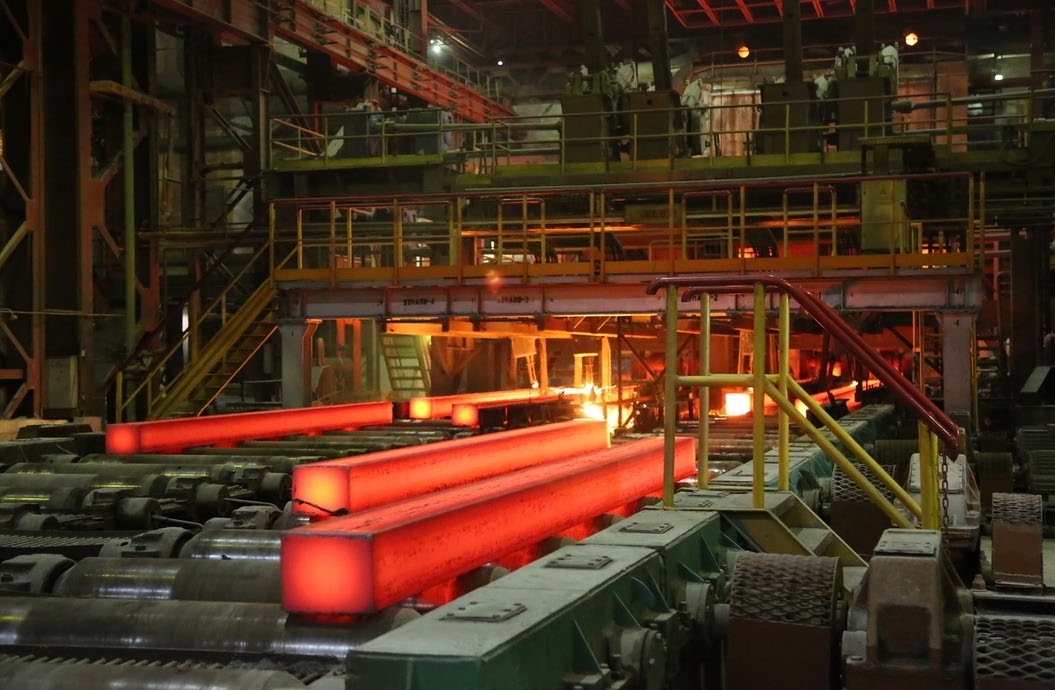
For large projects, availability matters as much as price. When a country depends too heavily on imported steel, investors and contractors face greater exposure to logistics delays, external price movements and supply disruptions. Local production does not remove all risks, but it gives the economy more control, reduces pressure on foreign currency outflows and supports national manufacturers.
This is why steel is not just another industrial product. It has a multiplier effect across the economy. A stronger steel sector supports construction materials, machine-building, export-oriented manufacturing and industrial clusters. It also helps Uzbekistan move from basic raw-material dependence toward deeper processing and higher value-added production, which is consistent with the country’s wider economic diversification agenda.
The social and regional dimension is also important. Uzmetkombinat is a major employer, with more than 10,000 employees, and its supplier network supports additional jobs. Industrial development creates activity not only inside the plant but also around it –
The social and regional dimension is also important. Uzmetkombinat is a major employer, with more than 10,000 employees, and its supplier network supports additional jobs. A key part of this strategy is moving further along the value chain. Supported by ICIEC, the Casting and Rolling Complex marks Uzmetkombinat’s entry into flat steel production.
through services, contractors, logistics and regional businesses.
For the wider region, the same logic applies. Central Asia is expanding transport, energy, mining and industrial projects. Uzmetkombinat’s role is to provide stable volumes, maintain quality, reduce import dependence where possible and support investment projects with steel produced in Uzbekistan. In this sense, the development of Uzbek Steel supports not only the domestic economy but also Uzbekistan’s role as an emerging industrial hub in Central Asia.
Could you reflect on Uzbek Steel’s experience of cooperation with ICIEC and the value this collaboration has brought to the company?
Our cooperation with ICIEC was directly linked to the Casting and Rolling Complex, the most significant investment project ever undertaken by Uzmetkombinat. For us, this cooperation was practical from the beginning: it was connected not to a general discussion, but to the financing and delivery of a specific industrial asset.
With ICIEC’s support, Uzmetkombinat secured a EUR 132.5 million long-term loan with a seven-year tenor from Standard Chartered Bank of the United Kingdom and KfW IPEX-Bank GmbH of Germany. This was an important milestone for the company, both in terms of the scale of the transaction and in terms of working with international financial institutions on a long-term basis.
The value of the cooperation was not limited to the financing itself. It helped us move the project forward with a more balanced financial structure. For an industrial company, this is important: investment in new capacity should not create excessive short-term pressure on ongoing operations, especially during construction and ramp-up.
We also valued ICIEC’s working approach. The team was responsive, pragmatic and focused on finding workable solutions, while maintaining a disciplined process. The project had to be presented clearly, structured properly and supported by detailed documentation. That experience was useful for Uzmetkombinat beyond this single transaction, because it strengthened our own ability to work with international lenders and partners.
The Casting and Rolling Complex has now been built and is in the ramp-up phase. In that sense, cooperation with ICIEC has already moved beyond financing on paper. It has supported a real industrial project that is now becoming part of Uzbekistan’s production base. For Uzmetkombinat, this is the main value of the collaboration.
In your view, how can risk mitigation and insurance solutions help large industrial players such as Uzbek Steel implement strategic projects more effectively?
Large industrial projects can have a strong business case but a risk profile that lenders find difficult to accept. Steel projects require large upfront investment, imported equipment, long construction and ramp-up periods, and exposure to market cycles. Without risk mitigation, even a sound project can become too expensive to finance or fail to receive workable terms.
This was directly relevant for the Casting and Rolling Complex, a EUR 780 million project for Uzmetkombinat. At this scale, financing terms are not a technical detail. Tenor, cost of funds, repayment profile and lender confidence affect both delivery and the company’s ability to operate normally while investing. ICIEC’s involvement helped align the project’s risk profile with the requirements of international lenders. It gave lenders additional comfort and supported a financing structure that worked for all parties. That is the practical value of risk mitigation: it does not replace project economics but helps make a strong project bankable.
ICIEC’s approach also went beyond tied financing arrangements. Rather than focusing only on the origin of equipment or services, it looked at the project’s development value for Uzbekistan: local production, import substitution, employment stability, industrial capacity and the strengthening of the national steel sector.
For Uzmetkombinat, this helped secure long-term financing from reputable foreign banks on competitive terms and gave management more room to focus on ramp-up, quality, cost control and reliable supply.
Looking forward, what opportunities do you see for further collaboration with ICIEC and international financial partners to support Uzbek Steel’s future ambitions?
Looking ahead, cooperation with ICIEC and international financial partners will be important for projects that support higher production volumes and a stronger raw material base. Uzmetkombinat is considering strategic projects focused on securing additional sources of metallic raw materials. These initiatives are expected to strengthen the company’s raw material base, reduce reliance on scrap, improve cost stability, and support future production growth.
We also see potential in deeper processing of flat products, including pipes or cold-rolled products, subject to market demand and feasibility. These projects will require long-term financing, clear risk allocation and lender confidence – areas where ICIEC’s instruments can add practical value.
For Uzmetkombinat, ICIEC has already proven to be the kind of partner that large industrial companies need: disciplined in risk assessment, practical in execution and focused on real development impact. We value this approach and see strong potential to continue working with ICIEC as a trusted partner in turning strategic industrial projects into bankable, deliverable and economically meaningful assets for Uzbekistan.