The Republic of Iraq – Economic Transition and Development Priorities
Country Manager, MENA Region Division
Associate, Risk Management at ICIEC
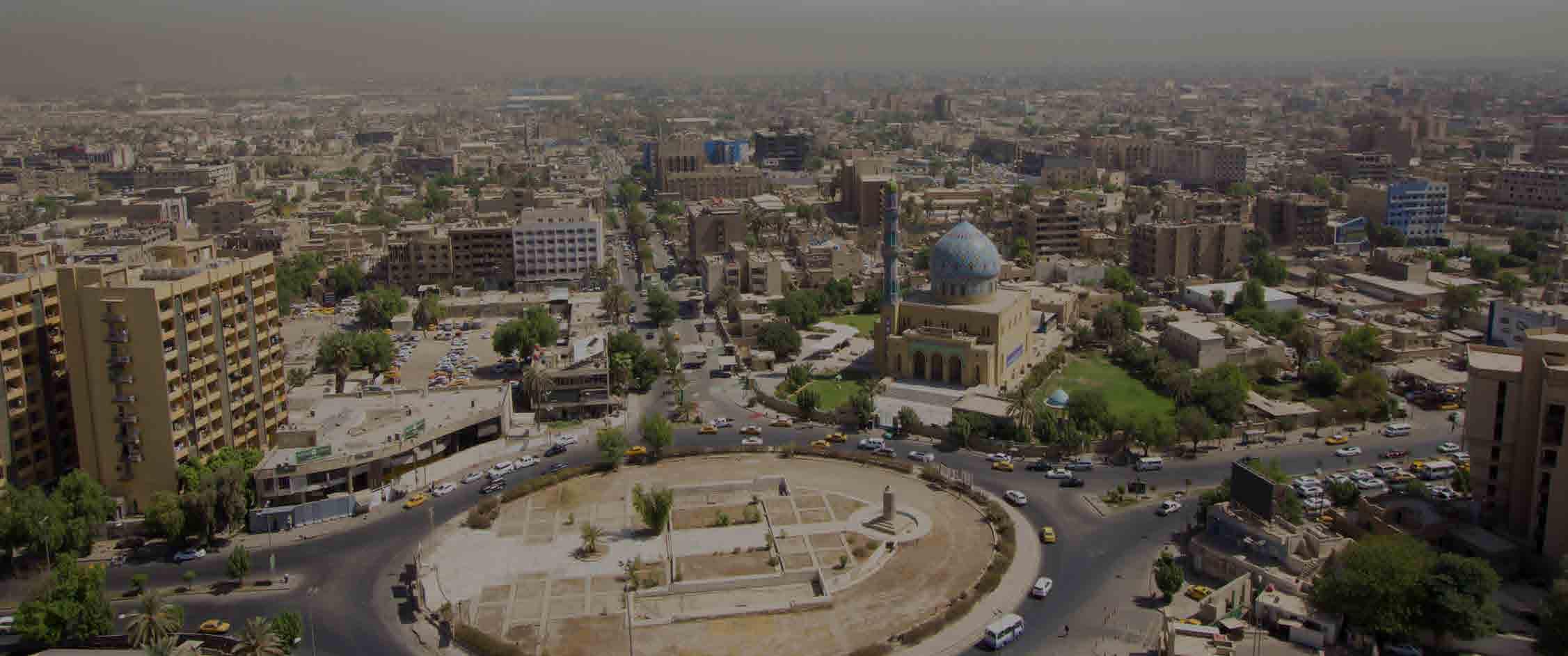
Following years focused on reconstruction and stability, the Republic of Iraq is working to transition its economy from heavy dependence on oil exports toward a more diversified and sustainable growth model. The government’s development priorities include strengthening the private sector, improving infrastructure such as electricity and transportation, and modernising public financial management. Investment in agriculture, manufacturing, and digital services is seen as essential to create jobs for Iraq’s young and rapidly growing population. Anticorruption reforms and regulatory improvements are also central to attracting foreign direct investment and rebuilding investor confidence. This transition agenda is guided by Iraq’s Vision 2030 and translated into action plans through the National Development Plan (NDP) 2024–2028, which sets medium-term priorities across infrastructure, public services, and institutional reform. Long-term economic stability depends on fiscal reform, human capital development, and reducing vulnerability to fluctuations in global oil prices.
Hydrocarbons continue to play a central role in Iraq’s economy, providing the bulk of fiscal revenues and foreign exchange earnings. As a result, economic performance remains influenced by oil prices and production levels. At the same time, the authorities are increasingly focused on strengthening the foundations for broader-based growth, supported by gradual reforms and targeted investment.
Iraq enters this phase supported by stable financial foundations. Foreign exchange reserves remain sizeable, and external debt service obligations are relatively low. These conditions provide flexibility to manage volatility and support medium-term priorities, particularly in areas that enhance productivity, service delivery, and private sector participation.
At the institutional level, progress has been made in streamlining budget approval and improving execution rates, particularly for priority infrastructure programmes. Continued efforts to strengthen coordination, improve administrative effectiveness, and support implementation capacity are helping to sustain reform momentum.
From a macroeconomic perspective, growth prospects remain closely linked to developments in the oil sector. Medium-term projections point to gradual strengthening supported by public investment and infrastructure expansion; fiscal balances are expected to remain expansionary in the near term and the external position may face moderate pressure under lower oil price scenarios. Nevertheless, foreign exchange reserves and the exchange rate framework provide important buffers that support macroeconomic stability.
Infrastructure continues to sit at the heart of Iraq’s development priorities, with capital increasingly directed toward large-scale transport, logistics, power, and gas projects. Flagship initiatives such as the Grand Faw Port and the Development Road Corridor are progressing in phased implementation, with the strategic objective of positioning Iraq as a regional trade and transit hub linking the Gulf to Turkey and Europe. Parallel investments in gas capture, power generation, and grid rehabilitation—alongside emerging renewable energy projects—are aimed at strengthening energy security and improving service reliability. While public–private partnership (PPP) activity remains at a developmental stage, ongoing institutional and regulatory reforms are gradually laying the groundwork for broader private sector participation.
Flagship initiatives such as the Grand Faw Port and the Development Road Corridor are progressing in phased implementation, with the strategic objective of positioning Iraq as a regional trade and transit hub linking the Gulf to Turkey and Europe.
Islamic finance is also emerging as a complementary channel to support development financing. In 2023, Iraq’s parliament approved a sukuk law covering both sovereign and corporate issuance, marking an important institutional milestone. Building on this framework, the Ministry of Finance issued reconstruction sukuk under the “Sukuk Al-Imar” programme in January 2024, totalling IQD 2 trillion (approximately USD 1.5 billion). The issuance, distributed through authorised banks and tradable on the Iraqi Stock Exchange, helped broaden domestic participation and support the gradual development of Shariah-compliant capital markets.
ICIEC will continue to play a key role in supporting Iraq’s economic transition by mitigating political and commercial risks that often deter foreign investors and exporters. ICIEC’s Shariah-compliant investment and export credit insurance will help international financiers and companies enter the Iraqi market with greater confidence. By covering risks such as expropriation, currency inconvertibility, breach of contract, and political violence, it facilitates foreign direct investment in priority sectors like infrastructure, energy, agriculture, and manufacturing.
ICIEC also supports Iraqi banks and exporters by enhancing their creditworthiness, enabling access to trade finance and integration into global markets. Through these risk-mitigation tools, ICIEC will continue to contribute to private sector development, economic diversification, and sustainable growth in Iraq.
ICIEC and the IsDB Group conducted a mission to Iraq in 2025 to engage with government stakeholders and discuss priority sectors where structured support could add value. These discussions focused on establishing a practical framework through which IsDB Group institutions can extend financing and advisory support, particularly in infrastructure and other strategic sectors aligned with national development priorities.
In 2025, ICIEC also supported Iraq’s critical power infrastructure project, Karbi Substations, a major transmission upgrade that will strengthen electricity supply and energy security for Baghdad, Karbala, and Basrah. The project insured by Euler Hermes (Germany) and financed by a consortium led by Standard Chartered Bank, covers the turnkey delivery of three 400/132/11kV Gas Insulated Switchgear (GIS) substations by Siemens Energy Global GmbH & Co. KG. ICIEC’s reinsurance cover amounted to EUR 99 million, supporting a total insured amount of EUR 336 million, and helping mobilise international financing for infrastructure delivery. Once completed, the substations are expected to expand transmission capacity by 4,500 MVA, improve grid stability and reliability for households and industry, and contribute to SDG 7, SDG 8, SDG 9, SDG 11, and SDG 13 through more resilient and efficient electricity infrastructure.
Iraq’s economic outlook remains closely linked to developments in the global oil market, with fiscal and external balances highly sensitive to fluctuations in crude prices and production quotas. While elevated oil revenues can support public spending and reconstruction, volatility poses risks to budget stability and long-term planning. In the near to medium term, growth is expected to be driven by a combination of oil sector performance and gradual recovery in non-oil activities such as construction, trade, and agriculture. Structural reforms aimed at improving the business climate, strengthening public financial management, and expanding private sector participation will be critical to sustaining momentum.
ICIEC remains committed to supporting Iraq’s evolving development agenda through targeted risk mitigation and structured engagement across sovereign and private sectors.