The power of CPRI in mobilizing private capital towards the SDGs

According to the Islamic Development Bank (IsDB), the financing gap for Member Countries to meet the United Nation’s Sustainable Development Goals (SDGs) amounts to USD 1 trillion per year. Official Development Assistance funding only amounts to USD 135 billion global disbursements per year and is finite[1]. Relying only on public resources to address this gap is not enough. There is a clear call for the development community to consider how best to mobilize resources from the private sector if they are to ever close the financing gap of the SDGs. A shift in even 1.1% of the total financial assets held by banks, institutional investors and asset managers could be enough to fill the financing gap, something that the public sector can’t do alone due to limited resources and available capital. The question therefore remains, how does this get done?
Development Finance Institutions (DFI) play a catalytic role in financing meaningful and often large-scale projects that align with national, regional, and global development goals, including the SDGs. However, there is potential to attract far more international and domestic capital from a variety of private-sector sources, including commercial banks, institutional investors, impact investors and foundations, who themselves are becoming increasingly driven by ESG considerations. The sharper focus on ESG and impact within the private sector is creating an open opportunity for DFIs to seize this momentum and direct it toward achieving the SDGs by drawing in private sector financing for SDG-aligned projects.
To attract the private sector, DFIs must consistently hold the concept of “additionality” as a guiding principle by ensuring their financial interventions seek to be catalytic and go beyond what is available in the market in order to not the private sector crowd out[2]. According to the World Bank, DFIs have played a major role in financing sustainable development because they can take risks (or portion of risks) that the private sector has traditionally steered clear of.
How is ICIEC additional?
A Specialized Multilateral Insurers (SMIs), such as ICIEC, exist to address market gaps and crowd in the private sector by assuming risks that are not already being taken and offering additionality through their product offerings. In many respects, achieving additionality as a “risk-taker” is much easier than when providing direct financings. A key strategic recommendation of the G20 Stock Take Report is for DFIs to “shift the basic business model of the MDBs from direct lending towards risk mitigation aimed at mobilizing private capital”. The report stresses, inter alia, the catalytic value and additionality of insurance and guarantee products that achieve the outcome of “multiplying private capital by adopting system-wide approaches to risk insurance and securitization” [3].
In order to deliver on their mandates and contribute to the SDGs, most ECAs and SMIs provide Credit and Political Risk Insurance (CPRI) cover for impactful development projects and transactions that would otherwise be deemed too risky for the private sector. When financing projects in high-risk environments, private financiers, such as commercial banks, are able to lower the cost of debt to the borrower when they have access to CPRI. CPRI is, therefore, an instrument with great potential to crowd in the private sector by hedging risk in markets and geographies that would otherwise represent unacceptable risks for lenders who are unable or unwilling to take on high-risk financing. CPRI also allows for the leveraging of debt at a lower risk and margin, which results in more efficient use and allocation of resources and capital. The G20 Stock Take Report prepared by IsDB and ICIEC demonstrates that providers play a critical role in transferring and mitigating the risks for the private sector financiers. Comprehensive insurance provides important capital relief benefits for commercial banks.
The G20 Stock Take Report advances that increasing the provision and diversification of CPRI from MDBs and SMIs is essential to attracting the risk-averse private sector into financing development, taking on the sharing of the risk through system-wide insurance and diversification of risk, to create large-scale asset class. This can transition countries towards market-based finance rather than being dependent on concessional and nonmarket-based development finance. Insurance is beneficial in mitigating risk, avoiding loss from default, solutions for limits and constraints to borrowers, sectors and countries, and solvency for credit risk. Furthermore, CPRI benefits equity investments by protecting against losses due to political risk events and improving risk profiles of foreign direct investment. ECAs and SMIs need to play complementary roles in providing CPRI and PRI to overcome ECAs limitation to providing equity support to their local investors and limited capital. CPRI providers have a unique opportunity to utilize their mandate to contribute to reaching national development strategy goals, leveraging their expertise in LMIC finance sectors to incentivize private sector financing behavior to align with development goals.
Since the pandemic, uncertainty has been growing around sovereign debt sustainability, which is actually the best argument to sell CPRI. The increase in the demand for this type of guarantee will continue to grow, especially when it comes to financing the SDGs in addressing market gaps within politically unstable and risky economies. CPRI acts as a catalyst for many different reasons. For one, it finances the real economy by enabling trade and supporting growth. Second, it unlocks private capital financing. Third, it protects against non-payment risks. And finally, it supports the economic growth of both emerging and developed markets by enabling market entry and investments[4].
In summary, CPRI is a great tool to address the SDG financing gap and crowd in the private sector. For development finance institutions and commercial banks, risk thresholds are well defined, which limits their capacity to finance projects in high-risk environments and markets. In order to crowd in the private sector, such as impact investors, there needs to be some risk mitigation. This is an incredible opportunity for ECAs and SMIs to offer solutions that transfer the risk. A collaboration between the private and public sectors will be necessary to mobilize the necessary capital for projects that would traditionally not be done, using a combination of credit wraps, funded instruments, and DFI lending into the same project as the private sector. According to the Berne Union Yearbook 2021, there is no doubt that collaboration between private and public institutions will be necessary to increase current levels of insurance support. This requires instruments that are inherently additional.
Additionality is at the forefront of ICIEC’s strategy. By mitigating risks through its CPRI products, ICIEC offers catalytic financial instruments to crowd in the private sector sources of financing in Member Countries. The Corporation works closely with the private sector, cherishing relationships with both its financing clients and the private insurance market – all for the benefit of member countries achieving the SDGs. Credit information reporting systems are a shared challenge within the OIC and ICIEC will have a unique role to play through its accumulated data on credit information after three decades of underwriting processes and assessment of trade transactions. ICIEC’s efforts to build this database will help inform credit decisions which will improve lending and foster economic growth within OIC Member Countries.
[1] https://www.oecd-ilibrary.org/sites/6ea613f4-en/index.html?itemId=/content/component/6ea613f4-en
[2] 201809_MDBs-Harmonized-Framework-for-Additionality-in-Private-Sector-Operations.pdf (ifc.org)
[3] https://www.isdb.org/sites/default/files/media/documents/2020-10/G20%20stock-take%20clean%20copy%2015092020%206h53pm.pdf
[4] Berne Union – 2021 Berne Union Yearbook: Adapt, Innovate, Accelerate, Repeat

Demystifying ICIEC’s Preferred Creditor Status

What is Preferred Creditor Status?
Multilateral Development Banks (MDBs) are essential lenders in international financial markets. Owned by multiple sovereign shareholders, otherwise known as member countries, MDBs raise money by issuing bonds in global capital markets, which are then used towards financing projects within member countries.
Member country governments frequently borrow from their MDBs, as well as private lenders, and others, maintaining multiple creditors concurrently. If a member country experiences financial stress and has difficulties repaying the financings, a hierarchy exists in which certain creditors are prioritized in order of repayment. Those who receive repayment priority are referred to as Preferred Creditors (PCs), having been granted Preferred Creditor Status (PCS) by their borrowers. It is widely accepted that MDBs, amongst other IFIs, maintain PCS. The Islamic Development Bank Group, (IsDB), is one such MDB and, as the insurance arm established under the IsDB group, this PCS is de facto also extended to ICIEC.
According to Moody’s Global Credit Analysis, PCS is defined as an implicit accord between borrowers and lenders that loans made by these institutions receive preferential servicing and repayment treatment above other borrowing-member liabilities such as commercial bank debt[1]. PCS also grants preferential access to a lender of foreign currency in the event of a foreign exchange crisis in the borrowing country (also called an inconvertibility event). PCS thus gives MDBs a high level of assurance that sovereign and non-sovereign loans within a member country are protected against restrictions on foreign exchange, mitigating transfer and convertibility risks, and ultimately resulting in repayment. This same assurance is generally not afforded to private institutions (except when their financings are concomitant with that of the MDB’s in a structure called the A/B Loan)[2].
Since its origins, the legal basis of PCS has been questioned. Currently, general international law contains no compulsory standard of conduct requiring the preferential treatment of any external creditor, including MDBs. Thus, the current imposition of international PCS is de facto, or a matter of fact, rather than de jure, a matter of law. PCS, therefore, is an optional standard of international behaviour that must be affirmed through multilateral and/or bilateral agreements, or through a borrower’s unilateral granting of PCS permissions to an MDB. For many MDBs, PCS is embedded in their articles of association or agreement. Though these articles do not provide legal status to an MDB’s PCS, the principle is instead embodied in the practice of the MDB and its borrowers and granted by member country shareholders.
PCS is a critical tool for protecting the capital of MDBs while ensuring borrowers can still receive favourable credit terms. There are several benefits to PCS, both for MDBs and their clients. Some countries confer PCS to MDBs with the expectation that the MDB will provide credit at competitive rates during times of crisis, despite the higher risk. As default probabilities are often higher during a crisis, private creditors lending to sovereigns experiencing an emergency will raise interest rates as compensation for the assumption of greater risk. However, thanks to PCS, MDBs expect to be repaid regardless of default, thereby lowering the risk for MDBs.
A critical factor with respect to PCS is the mutual ownership structure found amongst MDBs. As member countries hold equity in these MDBs, they are financially incentivized to ensure these institutions are protected from default. Meanwhile, the mutual ownership structure also ensures advocacy from the MDBs and other IFI representatives when discussing and solving any issues or disputes over non-payment. Subsequently, IFIs can help distressed member countries formulate policies that help restore economic stability and improve the debt position while having credibility-enhancing ‘skin in the game’ at lower risk. Thanks to these benefits, MDBs awarded PCS often receive the “Halo Effect”, meaning these MDBs are seen as favourable sources of finance, resulting in increased business volumes.
ICIEC’s PCS
The Islamic Development Bank Group, (IsDB) is an AAA-rated MDB collectively owned by 57 Member Countries (MCs) across the Organization for Islamic Cooperation (OIC). IsDB has PCS enshrined in its articles of agreement, which have been ratified by the governments of all IsDB Group MCs, earning IsDB’s PCS universal recognition and acceptance. Having been established by the IsDB, ICIEC shares similar articles of agreement and is therefore conferred the same PCS from its 48 MCs. Additionally, ICIEC’s PCS enjoys recognition from entities such as bank regulators, rating agencies, and private PRI providers.
ICIEC is considered a Specialized Multilateral Insurance (SMI) provider for export credit and foreign investment. Thus, Preferred Creditor Treatment (PCT) is triggered differently. ICIEC becomes a creditor when the Corporation pays a claim. As ICIEC has PCS embedded within its articles of agreement, the Corporation is first in line to receive repayment.
For ICIEC MCs, maintaining PCS helps investors and exporters receive exceptional security at competitive rates, providing cover against potential risks that lead to barriers for investors and exporters in high-risk markets. With further security on investments and trade provided by ICIEC’s reinsurance policies, ICIEC’s PCS helps attract FDI and trade in critical sectors for the sustainable development and national objectives of ICIEC MCs.
ICIEC is also able to leverage its position within the IsDB group to advocate for priority payment with the MC. There, IsDB representatives highlight the potential ramifications of non-payment in terms of access to future credit. In doing so, the value of PCS is reinforced, and ICIEC policyholders are given a strong voice within high-risk scenarios to receive favourable treatment in the event of non-payment.
ICIEC can also extend its PCS to other institutions such as ECAs. For example, through a Memorandum of Understanding (MoU) recently signed with the United Kingdom’s Export Credit Agency (ECA), UK Export Finance (UKEF), the potential risk-sharing has been emphasized, leveraging the Corporation’s PCS across key international markets for UKEF’s support in ICIEC MCs.
ICIEC’s PCS is an enabling tool to support its partners and its shareholders. It places the Corporation in a special and powerful position as facilitator of trade and investment flows and gives a level of comfort to investors and exporters, financial institutions that support them, as well as partner credit and political risk insurers.
[1] David Stimpson, Global Credit Analysis, (London: Moody’s Investors Service, 1991), 188.
[2] https://publications.iadb.org/publications/english/document/Research-Insights-Why-Are-Preferred-Creditors-Preferred.pdf
Better together: how partnerships create synergy for the SDGs

Partnerships for the goals
The SDGs are a collection of 17 interlinked global goals designed as a blueprint to achieve a better and more sustainable future for all. The SDGs were established in 2015 by the United Nations General Assembly with the intention to be achieved by the year 2030. In September 2019, it was stated at the United Nations General Assembly that 2020 would be the beginning of the Decade of Action for the Sustainable Development Goals (SDGs). Little did the world know that a global pandemic was about to cause severe disruptions to the global economy.
Before COVID-19, the road to achieving the SDGs was already an uphill battle, with the annual financing gap estimated at USD 2.5 trillion in developing countries[1]. The pandemic has exasperated this gap even further, the OECD estimates an additional increase of USD 1.7 trillion[2]. These consequences have highlighted the need to align global finance mechanisms and incentives with the SDGs to get the world back on track to achieve the 2030 Agenda. It has become imperative that public and private sector actors optimize their efforts towards more sustainable initiatives.
Since their adoption, the financing of SDGs has primarily been done through the public sector, relying heavily on international public financial sources, such as Development Finance Institutions (DFIs), including Multilateral Development Banks (MDBs), National Development Banks (NDBs), Regional Development Banks (RDBs) and further supported by Export Credit Agencies (ECAs), Multilateral Insurance Institutions such as ICIEC. Separately, each institution can contribute significantly to global sustainable development, but by working together, these DFI can catalyze finance for development projects worth billions of dollars throughout the world.
Although DFI and public sources of funding are instrumental to financing SDGs, they can’t fill the overwhelmingly large SDG financing gap alone. Collaborations between the public and private sectors are also critical for catalyzing efforts to achieve the SDGs. So much so that the call for collaborative efforts has been inherently built into agenda 2030 via SDG17: partnerships for the goals. The intention of this goal is to strengthen the means of implementation and revitalize the global partnership for sustainable development.
ICIEC’s partnership landscape
The SDGs are influential signposts for ICIEC’s continuing development journey as they play an important role in shaping the Corporation’s strategy and development outcomes. ICIEC has always considered collaboration as an important catalyst for its strategy and operations, marking SDG17 as one of the six SDGs where ICIEC’s development role is most relevant. The Corporation has long pursued partnerships with banks, investors, corporates, and national ECAs, among others, both within and beyond its 48 member countries.
When working jointly with ECAs, banks, and the reinsurance market, ICIEC’s insurance solutions can be bolstered to reduce the risk for larger and more impactful sustainable development projects. For example, through partnerships with banks, ICIEC plays a key role in mitigating risk to mobilizing private sector resources to develop medical infrastructure in its Member Countries. When working with ECAs, ICIEC’s reinsurance solutions offer risk-sharing support that enhances their capacity to insure sustainable development projects. Together, the Corporation and its partners increase the reach and depth of their service offerings, encouraging critical financing for meaningful projects that would otherwise be deemed too risky.
Additionally, ICIEC is a specialized institution inherently established by the Islamic Development Bank (IsDB) to be a partner in the IsDB Group. Other members of the Group include the International Islamic Trade Finance Corporation (ITFC), The Islamic Development Bank Institute (IsDBI), the Islamic Corporation for the Development of the Private Sector (ICD) and the World WAQF Foundation (WWF). All IsDB Group member institutions work together towards the same goal – delivering economic prosperity across the OIC by supporting sustainable development through Shari’ah-compliant solutions. Synergies between ICIEC and the IsDB Group strategically allow the entities to deliver on both their shared and individual goals more effectively.
ICIEC’s SDG synergy: Turning Partnerships into Action
Partnerships are integrated into almost all of ICIEC’s activities, and the SDGs are always an underlying consideration in the projects that the Corporation chooses to undertake. By underwriting investments in strategic sectors and projects in coordination with governments, banks, and ECAs, ICIEC supports the development agendas of its member countries.
For example, ICIEC provided USD 20 million in credit enhancement cover to its partner, BMCE Bank of Africa, to rehabilitate a centre for disabled individuals in Cameroon. The rehabilitation project facilitated the modernization of the centre’s technical facilities, the renewal of essential equipment, and the extension of healthcare facilities to accommodate a broader range of disabilities. The rehabilitation also supported expanding the centre’s services, focusing on socio-professional reintegration and empowering people with disabilities to participate in various socio-economic activities. The project contributes to the government of Cameroon’s policy to fight against social exclusion and meet the demands of the sub-region. The project is also contributing to the achievement of multiple SDGs, including SDG 3: good health and well-being, SDG 8: decent jobs and economic growth, and SDG 10: reduced inequality. The project’s impact reaches beyond Cameroon as the centre provides needed medical services to patients from Chad, Central African Republic, Gabon, Congo, and Equatorial Guinea.
In response to the global coronavirus pandemic and OIC countries facing economic, humanitarian, health, political, and environmental crises, ICIEC tightened its efforts to collaborate, working closely with its partners – both within the Islamic Development Bank Group (IsDB Group) and beyond — to develop and implement innovative and effective solutions to offset the negative short-, medium-, and long-term impacts of the pandemic. Fortunately, most of these efforts also easily align with the achievement of the SDGs.
From the immediate onset of the pandemic, all partners in the IsDB Group unified to take broad and decisive action to protect OIC citizens, committing a total of more than USD 2.4 billion of aid to Member Countries and to Muslim communities in non-Member Countries. In the short-term, ICIEC provided USD 770 million as part of IsDB’s ‘Strategic Preparedness and Response Program’ to ensure the continuous flow of strategic imports, protect investments, and minimize economic volatility. Later, the two entities established a collaborative USD 2 billion credit guarantee facility known as the COVID-19 Guarantee Facility (CGF) to continue their support throughout medium and long-term recovery.
ICIEC also worked particularly closely with the Islamic Solidarity Fund for Development (ISFD) during the crisis. The ISFD sits within the IsDB and works to reduce poverty (SDG1: no poverty), build productive capacities of Member Countries (SDG8: decent work and economic growth), reduce illiteracy (SDG4: quality education), and eradicate diseases and epidemics (SDG3: good health and well-being). ICIEC has formed a bespoke partnership with ISFD known as the ICIEC-ISFD COVID-19 Emergency Response Initiative (ICERI), in which a funding grant of USD 400 million is being used to subsidize insurance premium, facilitating the procurement of medicine, medical equipment, food supplies, and other essential commodities to eligible member countries.
More recently, ICIEC’s ability to bolster support for the SDGs through a partnership with associations was highlighted when the Corporation signed a Memorandum of Understanding (MoU) with the Islamic Organisation for Food Security (IOFS) and a Strategic Partnership Agreement (SPA) with the Islamic Food Processing Association (IFPA), focused on achieving SDG 2: zero hunger. The entities will collaborate using their respective strengths in providing insurance in support of trade and investment towards promoting food security, sustainable agriculture, and rural development. The agreements between the institutions provide a general framework for collaboration, including attracting and promoting investment in agribusiness and food security; promoting best practices in food safety and Halal products to boost intra-OIC food trade in the private sector; promoting South-South Cooperation; and boosting the involvement of SMEs in agri-food business.
Partnerships continue to be a priority for ICIEC and the Corporation seeks to enhance synergies with all of its partners wherever possible towards the faster and more effective achievement of our mutual goals.
[1] https://www.oecd-ilibrary.org/sites/6ea613f4-en/index.html?itemId=/content/component/6ea613f4-en
[2] https://www.oecd-ilibrary.org/sites/6ea613f4-en/index.html?itemId=/content/component/6ea613f4-en
The Role of National ECAs in Integrated National Financing Frameworks

What is an INFF?
The United Nations Development Programme (UNDP) is helping countries to meet their Sustainable Development Goals (SDGs) by encouraging the adoption of an Integrated National Financing Framework (INFF).
An INFF[1] is a planning and delivery tool developed by UNDP to provide a policy focus to financing the SDGs at the national level. The INFFs spell out how the national strategy will be financed and implemented, using a variety of public and private financing sources. Many developing countries are choosing to adopt INFFs in order to help strengthen their planning processes and overcome existing challenges to financing sustainable development.
An INFF lays out the full range of potential financing sources, primarily domestic and international sources from both public and private sectors, to help to increase investment in a country’s SDG priorities. The INFF also sets out a plan for managing risks and provides a governance framework for enhancing accountability. In a nutshell, an INFF has four key building blocks: assessments and diagnostics; financing strategy; monitoring and review; governance and coordination.
The INFF is helping alignment of different types of finance (domestic, international, public, private) with national priorities and needs. It also helps them to enhance coherence across different financing policies, aligning them to medium and long-term sustainable development priorities while better managing risks in a complex financing landscape.
How National Export Credit Agencies (ECAs) play a key role in financing the SDGs.
Most ECAs around the world serve a general mandate to support national exports and foreign direct investment. As such, they generally do not have an explicit mandate to support the SDGs. However, even though they may not have the direct objective to support the SDGs, the trade transactions and projects they support, are likely already well-aligned with the SDG objectives and can be enhanced even further.
As critical policy instruments, ECAs fundamentally – if not intentionally – help achieve SDGs by supporting job creation and the generation of foreign exchange for countries (SDG 8–Decent work and Economic Growth), increasing competitiveness of industries (SDG 9 – Industry, Innovation and Infrastructure), and giving countries balanced access to international trade (SGD 10 – Reduced inequalities). Additionally, as ECAs have the function of providing financing through loans and other credit to consumers who may not be able to access these through traditional banks, they are uniquely placed to finance investments that directly meet any of the 17 SDGs.
ECAs are often supported by the governments of the countries they support through various models, supporting businesses across various industries. As several of these governments (193 Member States of the United Nations) have also adopted the “Transforming Our World: The 2030 Agenda for Sustainable Development’’, which includes the SDGs, there is increasing opportunity for global ECAs to align their mandates with the SDGs.
ICIEC’s role in supporting national ECAs and the INFF
ICIEC’s mandate is to promote trade transactions and facilitate the flow of foreign direct investment for projects that contribute to the socio-economic development of its member countries. The Corporation fulfills these objectives by providing Shariah-compliant credit and political risk mitigation and credit enhancement insurance and reinsurance solutions. ICIEC is at the nexus of global relationships and networks that are essential for fulfilling its mandate and achieving sustainable development outcomes. ICIEC’s support encourages the participation of national ECAs along with banks, investors, and corporates in transactions involving risky markets.
By necessity and design, ICIEC works closely with partners to share information and risk, provide additional insurance capacity, and promote trade and investment in its member countries. One of ICIEC’s important roles in this regard is strengthening its member countries’ export finance systems and providing Shariah-compliant reinsurance to the national ECAs. It also cooperates with non-member country ECAs to facilitate strategic investments for its members’ economies.
ICIEC’s reinsurance solutions are particularly pertinent to the role it can play in supporting national ECAs and the implementation of INFFs. ICIEC is empowered to reinsure the commercial and political risks on national ECAs in its member countries. By doing so, it enhances their financial capacity to support national exports that themselves are aligned with SDGs. By reinsuring a national ECA, it takes the risk off the balance sheet of the national ECA – and hence national government – and does not add to the debt burden of the country, which in many of ICIEC’s members is already elevated and, in some cases, becoming unsustainable. This frees up more fiscal space for the central government to invest in other SDG-aligned activities.
ICIEC is strategically placed to provide capacity-building, joint marketing, and technical assistance to ECAs in member countries, while serving as a credit services information hub. It is also uniquely placed to help ECAs in non-member countries to cover projects in member countries.
Conclusion
The INFF is a guide for countries to use in sourcing and utilizing finances for meeting the SDGs. ECAs support a country’s export and cross-border investment initiatives, including projects and trades that are aligned with the objectives of the SDGs. ICIEC plays a role in providing additional capacity to ECAs so they can insure against risks that arise from member countries and, in turn, helps member countries meet the objectives of the SDGs. As such, ICIEC, plays a vital role in ensuring that the sources of finance (international public and private sources) that form the framework of the INFF are protected against insured the risks of market failures and non-repayment of debt, which would otherwise limit the financing of the SDGs.
[1] https://inff.org/about
Claims Market Review

Claims are inherent to insurance and fundamental to its value. When losses occur – and they inevitably will at times – policyholders want their insurer to pay out any legitimate claims. However, fraudulent or illegitimate claims require insurers to be vigilant and, as the world continues to grapple with the Covid-19 pandemic, a pattern of fraud in trade transactions has remained. This article peeks into year-end expectations for the claims landscape and how insurers are insulating against fraud.
Experiences from COVID and post-COVID
The beginning of 2021 was essentially a continuation of 2020, as lockdown measures were reintroduced in many countries, border-crossings were once again limited, and businesses were forced to continue operating amongst restrictions and remote working. Trade credit insurers also had to accept that 2021 was an extension of the status quo regarding emerging claims and claims paid.
At 2020’s end, the expectations for claims throughout 2021 were mixed. A significant increase in volume was expected for the first quarter of the year, followed by a projected decrease in the second quarter, anticipating a rebounding global economy. Despite the earlier predictions for a rise in claims, particularly in credit and political risk insurance (CPRI), there has yet to be a notable uptick in the claims reported amongst the members of the Berne Union, the International Association of Credit Investment Insurers[1].
What is notable is that according to the Berne Union, claims so far in 2021 have been at pre-pandemic levels, with insurers’ risk appetite for new business remaining robust. However, insurers are generally cautious about the expectation for claims volumes going forward. Given the potential impact of the pandemic continuing to influence the risk environment unpredictably, some insurers now fear the bulk of bankruptcies will emerge in late 2021 and into 2022, while others are predicting a more gradual flow for claims based on a potential link between the extension of government pandemic response programs and financial support, and the elongated claims cycle. This theory suggests that Covid-19 related claims may gradually emerge over several years going forward.
Many public insurers widened their mandates in 2020 to support businesses, including those industries most severely impacted by Covid-19. Naturally, being more exposed to these industries, SMEs, and more vulnerable risks, in general, maybe the reason why public providers continue to expect increasing claims going forward. However, these updated predictions are still nowhere near the tsunami expected at the start of the year.
While the overall volume of claims has not yet been disrupted in COVID and the CPRI market remains healthy, a pattern of fraudulent claims has emerged, requiring the industry to take a more careful stance to ensure that claims lodged are indeed legitimate. With the potential for claims volumes to rise as governments withdraw support measures, we may witness a corresponding influx in fraudulent claims.
What are Fraudulent Claims?
What does a fraudulent insurance scam look like in the credit insurance market? Fraud can be committed by either the buyer or the seller or when they both collude to swindle the credit insurer.
A common way of committing fraud as a buyer is by purchasing goods or services on an open account with the sole intention of not paying. An example might be when they conduct the first few deliveries against cash to gain the seller’s confidence. Over time, now with a track record, the seller may be willing to ship a larger order or to grant credit by selling on open account terms, for 30 or 60 days, for example, during which time, the buyer could receive the goods, re-sell the goods and then disappear without payment.
In other cases, fraudulent sellers intentionally misstate overdues, establish fraudulent payment schemes, or present audited financial statements based on false information.
Collusion between the buyer and seller can look like each legitimate establishing company in their respective countries. These companies would undertake several smaller transactions over a period to create a payment track record and get a credit risk assessment. With this in hand, the buying company will make a big order, which is insurable given the payment history. The seller creates false documentation showing that goods were supposedly shipped or exports bogus goods via ports that have poor adherence to international standards. When the underwriter becomes suspicious, the fraudulent buyer is long gone.
How to spot fraud as a credit insurer?
Of course, fraud has been around since the beginning of time, usually driven by greed or fear. Both characteristics are in play during a pandemic, and unfortunately, trade credit insurers have not been very successful in countering fraud with traditional instruments. Advancements in technology have made fraud easier for scammers to conduct, so insurers have had to become much more diligent in spotting fraud cases, implementing better fraud prevention policies and guidelines than ever before by focusing on the fundamentals at an early stage.
Fraud detection is most successful when suspicious patterns are discovered early. For example, underwriters need to pay attention to an increase in the number of credit limit applications above a defined threshold or outside an approved period and undertake regular screening of the ownership relations between policyholders and buyers. Where the seller ships 80% of its product to one seller, the risk of fraud might be higher.
When examining financial statements to issue a credit limit, underwriters also need to look for clues in the financial statements. The company’s behaviours and life cycle of its production – from orders at customer service to fill the orders through manufacturing and shipping to invoicing – should be understood to ensure that the process matches the cash cycle and the generated receivables are generated related.
Ultimately, there is no better defense than maintaining thorough Know Your Customer (KYC) or Know Your Transaction (KYT) policies. Nor is there a substitute for an underwriters’ common sense, curiosity, and a good dose of skepticism. At ICIEC, we’re sure to ask the right questions and are confident in our due diligence process before we bind a policy. Insurance is inherently meant to cover the risk of lost payment, and as a leading multilateral ECA, ICIEC ensures that all legitimate claims are honoured and paid. After all, this is why our customers value our insurance.
Post Covid Recovery – A Focus on Africa

Introduction
The COVID-19 pandemic has led to unprecedented global health, social and economic crises. In comparison to other regions, such as Europe, Asia, and Latin America, Africa has so far been spared the worst of the Covid-19 pandemic in terms of health outcomes related to the virus. As of November 29th, 2021, the continent had 8.8 million cases and 223,365 deaths[1]. Still, according to UNICEF, as of September 2021, Covid-19 vaccines had reached just one in every 100 people living in Sub-Saharan Africa, highlighting ever-growing inequality since the rise of the pandemic.
However, while incidents of the disease have been fewer in Africa than in other regions of the world, the economic and social impact has been disproportionately higher. The COVID-19 pandemic has led to the worst underperformance on record for Sub-Saharan Africa, with an economic growth rate of -1.9%, and approximately 32 million more citizens are slipping into extreme poverty[2]. It is estimated that average incomes in Sub-Saharan Africa will not return to pre-pandemic levels until at least 2025, while the risk of losing hard-earned development gains increases exponentially with each passing day.
Essential services, such as healthcare, education and other social services, have been severely disrupted, as have the economic viability of many MSMEs who have had to shut their doors due to lockdown to prevent the spread of the disease. While most regions of the world have relaxed fiscal constraints to make unprecedented funding available to their populations and businesses and support their recovery policies, most African countries lack the flexibility and capacity to follow suit.
Post-Covid needs for African countries
There are three types of needs to be addressed for Africa due to the pandemic: a) response with vaccines, b) economic recovery and c) building resilience for the future. There is also a need to spark a meaningful dialogue at the global level for an inclusive and sustainable recovery of African economies.
Response with Vaccines
Getting vaccinated against Covid-19 remains the most critical tool to save lives, sustain livelihoods and put an end to the pandemic. However, African countries continue to significantly lag behind the rest of the world in vaccination rates. Preliminary studies by the World Health Organization (WHO) shows that as of November 2021, only 27% of health workers in Africa are fully vaccinated against Covid-19. This means that a significant portion of frontline workers remain unprotected from the virus against which they are fighting[3].
The low vaccination rate is attributable to the region’s lack of vaccination facilities, insufficient vaccine supply and vaccine hesitancy. While health agencies and governments are improving supplies and educating populations on the benefits and side effects of vaccination, there is considerably more that can be done, especially in the coordination and delivery of vaccines to rural areas of the continent.
Economic Recovery
The fiscal space for African countries to support their nation’s pandemic and post-pandemic needs is severely limited. To address the desire for an inclusive and just recovery, there is a need to bolster the MSME sector to ensure business continuity and access to finance. While in many developed countries, direct financial transfers to businesses, low-interest loans and support to move enterprises online has helped soften the brunt of lockdowns on small businesses, on the African continent, companies have simply had to shutter their businesses suffering acute revenue declines.
Building Resilience
Resilience for many African countries needs to include health care, education, infrastructure, and any other sector associated with achieving the United Nation’s 17 Sustainable Development Goals (SDGs). However, a significant challenge for Sub-Saharan Africa is the high debt levels that pre-dated the pandemic. In many countries, government spending on debt service is much higher than spending on education, health, and social protection combined.
The lack of available resources to meet the region’s SDGs leads to an additional financing gap to the tune of USD 425 billion over the next 3 to 5 years[4]. Significant investment is needed to address this financing gap. While USD 33 billion has been reallocated from the IMF’s Special Drawing Rights towards African countries, this amount remains small compared to the region’s needs.
Opportunities for recovery
Africa’s pandemic recovery opportunities are immense, as support is galvanized globally, and there is an acute focus on regaining economic standing to pre-pandemic levels. The importation of vaccines and projects contributing to infrastructure development are expected to remain the highest priorities within the region.
Governments in many African countries are improving trade and accelerating local production by incentivizing the private sector to strengthen their economies to pre-pandemic levels. For example, Egypt is increasing its investments in renewable energies, while Rwanda is leveraging technology, and Nigeria continues to push for the development of its agriculture industry, amongst others. Opportunities for recovery are available but require substantial investments to be successful.
Role of the insurance sector in post-Covid recovery
The path to economic recovery from Covid-19 for Africa is both expansive and expensive. During the pandemic, several African nations depleted their national purses to keep their citizens and businesses afloat, causing a significant decline in national reserves. As the continent recovers, it is faced with the task of replenishing its reserves without increasing its national debt burden. Private investments are a critical element of the approach for many governments.
One critical reason for the lack of private investment in developing countries is the high levels of political risk. The economic impact of the COVID-19 pandemic is magnifying these risks because of increasing unemployment and widening inequality, putting critical investments in jeopardy, and threatening to undo many years of socio-economic development. Political Risk Insurance (PRI) is designed to help mitigate perceived risk by protecting against negative political impacts on otherwise sound commercial investments.
The Islamic Corporation for the Insurance of Investment and Export Credit (ICIEC) was created to provide investment and export credit insurance solutions to strengthen economic relations between its member countries, many of which are in the African continent. The Corporation offers insurance solutions that can help protect its member country’s economies while allowing them to take initiatives for growth and development. ICIEC offers several political and credit insurance solutions that provide the needed cushion for institutions wishing to make investments that can help to revive their economies.
PRI is one of the many insurance products offered by ICIEC for its member countries. ICIEC’s PRI policies allow firms to expand in regions perceived as a higher risk but with otherwise attractive investment opportunities, as seen with many African countries. ICIEC’s PRI also mitigates the risks involved in cross-border trade, providing support to exporters and banks to facilitate trade between member countries and the rest of the world. ICIEC also aims to stimulate, promote and increase intra-OIC exports, encouraging businesses to take advantage of the diverse resources within the region.
ICIEC’s Covid Response
The Covid-19 pandemic has presented member countries with unprecedented challenges to the health of their citizens and economies. ICIEC and its partners have been working throughout the pandemic to provide aid and solutions to these member countries, coordinating to find innovative responses to sustain imports of strategic commodities, protect investments, and minimize volatility.
IsDB Group has allocated US$ 2.3 billion of aid to its member countries under the Strategic Preparedness and Response Programme (SPRP) to combat the health and socio-economic effects of COVID-19, including USD 770 million for ICIEC’s insurance support.
As part of an update to the original SPRP, ICIEC contributes to the IsDB Group Vaccine Initiative (IVAC), supporting Member Countries in accessing the Covid-19 vaccine. For its part, ICIEC is providing risk mitigation solutions to international financial institutions through its insurance solutions, facilitating additional resource mobilization from the global market.
To encourage trade and investment during the Covid-19 pandemic, ICIEC and IsDB jointly launched the Covid-19 Guarantee Facility (CGF), an innovative program to support the financing of trade and investment. The CGF also supports SMEs in sustaining activity in core strategic value chains and ensuring the continuity of necessary supplies, mainly to the health and food sectors, including vaccine procurement.
Additionally, ICIEC and the Islamic Solidarity Fund for Development (ISFD) have collaborated to create the ICIEC-ISFD Covid-19 Emergency Response Initiative (ICERI) program, a rapid Covid-19 response that employs an innovative financial structure, providing more confidence to suppliers, investors, and financiers of Covid-19 related transactions and extends some relief to the member countries on their borrowing costs. To date, USD 271 million worth of trade transactions has been supported by the ICERI program in the food and other essential commodities sectors, using only USD 1 million of the subsidies funded by ISFD.
ICIEC’s Focus on Africa
ICIEC demonstrates its support for African member countries through the many response initiatives the Corporation is contributing to or leading in Africa. ICIEC has provided insurance support for many import transactions across Africa, supporting the governments of Egypt, Senegal, and Nigeria, among others. These transactions have allowed the countries to receive critical commodities, such as foodstuffs and health supplies needed to tackle the outbreaks of Covid-19.
Thanks to ICIEC’s EUR 142 million cover for a Deutsche Bank investment, the citizens of Côte d’Ivoire will have greater access to hospitals and healthcare services. Two new hospitals with a collective capacity of 400 beds have been built in the south-eastern towns of Adzope and Aboisso, bringing state-of-the-art equipment and facilities to the otherwise underserved region. The two hospitals will employ around 600 local people and foster the development of a micro-economy in the areas surrounding them.
Additionally, the project will finance five new medical units in existing hospitals across the country. The project EPC will be conducted by a Moroccan contractor, supporting the export of services from another ICIEC member country and facilitating intra-OIC trade of services and human capital between Cote d’Ivoire and Morocco. The support from ICIEC will help Côte d’Ivoire achieve its National Development Plan targets for 2016-2021 while also improving the Republic’s ability to contain the Covid-19 pandemic.
While there is some hope that the spread of vaccines can help bring an end to the health crisis, Africa’s economic recovery will require continued and sustained focus and effort. During this time, ICIEC will continue to make its insurance solutions readily available to member country governments and businesses.
[1] www.worldometers.info/coronavirus/#countries
[2] https://www.weforum.org/agenda/2021/09/africa-post-covid-recovery-ida-replenishment/
[3] https://www.afro.who.int/news/only-1-4-african-health-workers-fully-vaccinated-against-covid-19
[4] https://www.imf.org/en/Publications/Staff-Discussion-Notes/Issues/2021/04/27/A-Post-Pandemic-Assessment-of-the-Sustainable-Development-Goals-460076
Supporting Digitization: Enhancing Telecommunications Infrastructure in Uzbekistan

The Digital Age
The coronavirus pandemic has disrupted the global population’s ability to work and socialize in person since March of 2020. As a result, internet and mobile telephone services play an increasingly important role in supporting economic growth and social inclusion across the world. Additionally, mobile internet connects people to new opportunities and life-enhancing services online, driving growth for the digital economy and advancing progress towards the UN’s SDGs.
According to the World Bank[1], “Digital technologies are at the forefront of development and provide a unique opportunity for countries to accelerate economic growth and connect citizens to services and jobs. In times of crisis, from natural disasters to pandemics such as the one the world experienced with Covid-19, digital technologies are what’s keeping people, governments and businesses connected”.
While the reach of mobile networks across the globe has expanded significantly in recent years, with more than 3.7 billion people connected to mobile internet by the end of 2019, over half of the world’s population remains unconnected. There is a ‘coverage gap’ of approximately 750 million people residing in underdeveloped and remote areas who cannot access a mobile broadband network. There is also a ‘usage gap’ for 3.4 billion people who can access mobile broadband networks but are not subscribed to mobile internet services due to costs or other factors. Increased penetration for mobile networks, specifically for 3G and 4G, can enhance digital connectivity by expanding internet and broadband access, which facilitates the reduction of barriers to trade, commerce, communication, service delivery, and human development.
Telecommunications in CIS Countries
According to GSMA[2], the Covid-19 pandemic has profoundly impacted the digital landscape in the Commonwealth of Independent States (CIS) and around the world. Mobile operators in the region have engaged with both the public and private sectors on initiatives to alleviate the impact of the pandemic for vulnerable groups of the population and the most affected businesses. Measures include zero-rated use of educational services and government websites, discounted tariffs for healthcare workers, and free access to online conferencing solutions to enable business continuity and support economic recovery.
Though still behind most developed markets, the CIS region is witnessing an accelerated shift to mobile broadband. 4G became the leading mobile technology in the region during 2020 and remained a strategic priority for governments, with network availability and performance as the key competitive dimensions. Greater use of data-intensive services and demand for higher speeds will drive further adoption as the pandemic continues, with 4G accounting for nearly two-thirds of total connections by 2025. In certain countries, it is expected that this will also deliver some revenue uplift.
Further to this, in 2019, mobile technologies and services generated 6.1% of GDP in the CIS region – a contribution of USD 137 billion. The mobile ecosystem supported over 830,000 jobs, either through direct employment or indirectly through activity on the broader economy. Mobile technologies and services also contributed USD 14 billion to fund the public sector – mainly via general taxation. Over the coming years, advancing mobile technologies will drive further contributions to the CIS economy, impacting key sectors such as manufacturing, utilities, and professional and financial services.
Telecommunications in Uzbekistan
The Republic of Uzbekistan is a landlocked country rich in natural resources and located in the heart of Central Asia. Home to approximately 32 million people, the nation boasts the largest population in the CIS region[3] and has long been known as a leading influence for informational development within these countries. However, Uzbekistan’s telecommunications networks are still primarily based on modern additions to Soviet-built infrastructure. Challenges to developing Uzbekistan’s telecommunications have constrained the ability to unlock the full potential of the nation’s digital economy.
For many years Uzbekistan has been working to bring its telecommunications up to the standard in developed countries. There has been a positive trend in the country’s telecom market within the last decade due to increased investment in infrastructure, expanding subscriber bases, and rising revenues. Over the past five years, Uzbekistan has seen a rapid increase in mobile broadband penetration, with market penetration driven by a rising level of mobile subscribers and mobile data. However, the nation’s mobile broadband market is still at an early stage of development, and mobile network penetration remains low.
Since the beginning of 2018, the Government of Uzbekistan has announced ambitious development goals for the telecommunications sector, including plans to liberalize markets and actively seek private investment. The Government has set the challenging target of increasing broadband capacity and deploying 277,000 km of fibre optic infrastructure. The Government of Uzbekistan has also demonstrated a commitment to improving access to digital government services and adopting digital development approaches to economic growth.
Importing essential Telecommunications Equipment
ICIEC has provided a combined over USD 50 million cover through Specific Transaction Policy to two Chinese telecommunication giants to accelerate the development of Uzbekistan’s communication and information technologies. The project involved the USD 70 million modernization of the nation’s mobile broadband access network, data storage and processing centre expansion, and DWDM network in the Eastern Region of Uzbekistan, specifically in the capital city of Tashkent and the Western Region of the country.
ICIEC intervention enables the largest and the market leader of a telecommunications operator in Uzbekistan to expand its core services for public authorities at all levels, state institutions, organizations, and individual consumers. As of August 2020, the operator mobile subscriber base reached 6 million users. This number will continue to grow as the company expands its 4G networks in regions across the country through this project. The company’s mobile coverage is estimated to reach 90% of the population. The mobile telecom operator, which operates with 22 branches and 17,000 employees, supports most of the national territory with its network expansion.
The project is enabling Uzbekistan to facilitate growth in its mobile sector. The project aligns with Uzbekistan’s broader economic and social objectives as slated in their National Development Strategy 2017-2021. It includes the goal to increase 4G penetration and smartphone usage in the country. The project also contributes to foreign direct investment and improves access to telecommunications infrastructure for citizens of Uzbekistan who were previously out of reach.
ICIEC’s support for the project aligns with the Corporation’s development objectives. Uzbekistan is a newly added member country for ICIEC, and this project contributes to several of the United Nation’s Sustainable Development Goals (SDGs). Enhancing Uzbekistan’s telecommunications networks will exponentially promote developments in industry and infrastructure as defined by the SDGs. It will also contribute to decent work and economic growth with the potential of growing the nation’s digital economy. Finally, the project is helping Uzbekistan reduce inequalities concerning the percentage of the population that will access reliable internet services.
The State of Political Risk Insurance
The Role of Political Risk Insurance
Political Risk Insurance (PRI) provides coverage for non-commercial risks or political events, including host governments’ direct and indirect actions that negatively impact investments where appropriate compensation is provided. When multilateral and large national insurers do not offer coverage, PRI can also help deter host governments’ harmful actions, help resolve investment disputes, and provide access to best practices in environmental and social standards.
The PRI industry includes many broad categories of providers, where PRI covers export or trade credit and investment insurance.
Specialized multilateral insurers are a cornerstone of the PRI market. These organizations include ICIEC, the Multilateral Investment Guarantee Agency (MIGA) that is part of the World Bank Group, the Arab Investment and Export Credit Guarantee Corporation (Dhaman), and the African Trade Insurance Agency (ATI). The World Bank, Asian Development Bank, and the Inter-American Development Bank also provide types of Political Risk Guarantees.
Next are the PRI providers of national governments. The providers are principally national export credit agencies (ECAs), bilateral development banks, and investment insurance entities. These organizations focus on cross-border trade and investment, generally for clients in their own countries. Berne Union data indicate that the stock of political risk cover from member export credit agencies increased from USD 184.7 billion in 2010 to USD 317.0 billion in 2018.
There is also a growing private market for PRI. This market includes about 20 Lloyd’s syndicates and reportedly as many as 60 private PRI insurers. The largest private insurers are based in three insurance centres— London, Bermuda, and the United States (primarily New York City), and many have regional offices in various locations, principally in Asia. In addition to traditional equity PRI, the private market covers various payment risks for businesses in developing countries, either for political perils alone or comprehensive non-payment cover. Brokers play an essential role in promoting and sourcing PRI for the private market. Broking is a dynamic market segment with players entering and exiting the PRI brokerage market.
Finally, reinsurance companies underwrite PRI-related coverage for both trade and investment and are an essential factor driving both pricing and capacity in the private market. Top reinsurers include Munich Re and Hannover Re of Germany, Swiss Re of Switzerland, and Berkshire Hathaway/General Re of the United States. ECAs and multilaterals also participate as reinsurers of PRI on a smaller scale.
Recent Trends and Developments
Demand for PRI is broadly related to foreign direct investment (FDI) flows, although the relationship is neither linear nor always easily explained. There are also contradictory forces at play. Although, as noted earlier, PRI volumes are generally growing over time, the portion of FDI that PRI covers are declining. According to data from the World Bank and Berne Union, PRI to global FDI ratio fell from about 25 percent in the early 1980s to under 10 percent in the decade after 2010.
Today, only a relatively small share of the inward FDI into developing countries is insured against political risks. A recent study for the G20 confirmed that PRI covers only a small percentage of inward FDI into developing countries globally, and most FDI investments remain uninsured[1] . The average inward FDI stock insured during 2010-18 for all developing countries was around 1%. The average annual inward FDI flows insured during the nine-year reference period for all developing countries is 5%.
Notwithstanding the small share of FDI covered by PRI, before the 2020 pandemic, investing firms and analysts perceived political risk had increased. A 2019 U.K.-based survey by Willis Towers Watson indicated that most firms surveyed thought the political risk was on the rise[2]. Respondents were concerned about political sanctions related to Russia and CIS countries, and many expressed concerns about political instability in parts of the Middle East and Africa, amongst other things.
The COVID-induced recession then hit the global economy. FDI and trade both contracted sharply in 2020; MIGA expected that the pandemic would decrease global foreign direct investment (FDI) by up to 40 percent in 2020, and the World Bank Group expected the global economy to experience the worst recession since World War II. UNCTAD data confirm that FDI did indeed collapse in 2020, falling 42% from $1.5 trillion in 2019 to an estimated $859 billion.[3] This low level was last seen in the 1990s and was more than 30% below the investment trough that followed the 2008-09 global financial crisis. COVID created a flashpoint for investment risk, and traditional areas of concern were compounded by the sharp 2020 recession and by many specific financial and political stresses.
Looking ahead, expectations are that both trade and FDI will see a positive recovery in 2022 and beyond. The WTO and the IMF expect global trade to grow by 6-8 percent in 2021 before slowing to 4 percent annually. The WTO forecasts relatively strong export growth in the Middle East (12.4%) and Africa (8.1%) in 2021, although this export recovery depends on travel expenditures picking up over the year, strengthening demand for oil and oil prices.
UNCTAD projects that FDI will recover and grow by 20 percent in 2021. In 2022 and thereafter, a return to more traditional annual FDI growth rates (i.e. 6-8 percent annually for many countries) would be a reasonable assumption.
Private political risk insurers expect currency convertibility and non-transfer will continue to be popular political risk coverages, particularly in commodity-dependent countries, but also in countries that face severe consequences from the pandemic-induced slowdown. Political tensions are also elevated in Belarus, Ukraine and US-China relations, giving investors a sense of higher perceived political risk. Climate change and the low-emission energy transition are now underway, posing another area of potential elevated political risk that both investors and insurers are examining carefully.
When taken together, these factors point to an operating environment where demand for PRI should be relatively robust in the years ahead due to both the growth recovery in FDI and the perception of heightened political risk among investors and analysts.
Political Risk in ICIEC Member Countries
ICIEC member countries have a vast array of government systems, policies, trade and investment relationships, and national priorities that affect their relative openness and attractiveness to international trade and foreign investment, presenting various types and degrees of political risk.
As a group, Gulf states have generally taken a series of political decisions and policies designed to create a positive and attractive international trade and investment environment, notably for high-value services trade and investment in addition to extracting value from the traditional energy economy. It is reasonable to expect this supportive policy environment to continue in the future.
In comparison, countries served by ICIEC in Africa and parts of the Middle East are at many different political and policy development stages, with accompanying degrees of political risk. Political uncertainty may remain an underlying factor among many of these countries. At the same time, a more stable and supportive political environment may emerge in some countries. ICIEC members in other regions may also experience events that add to political risk perceptions.
The following table summarizes the average share of FDI stock covered by political risk insurance for selected developing countries, including some ICIEC members.[4] Note: There are substantial differences in cover and perceived risk among countries, even for countries classified in the same IBRD income category.
Table 1: Average Share of Inward FDI Stock Insured 2010 – 2018
| Country | IBRD Income Country Category | OECD ECA Country Risk Category (2021) | FDI Stock Insured 2010-2018 avg |
|---|---|---|---|
| Afghanistan | LIC + Fragile State | 7 | 10.8% |
| Chad | LIC + Fragile State | 7 | 0.9% |
| Liberia | LIC + Fragile State | 7 | 0.8% |
| Ethiopia | LIC | 7 | 1% |
| Zambia | LMIC | 7 | 2% |
| Rwanda | LIC + Fragile State | 6 | 13% |
| Kenya | LMIC | 6 | 4.1% |
| Bangladesh | LMIC | 5 | 2.3% |
| Algeria | LMIC | 5 | 5.9% |
| India | LMIC | 3 | 1.8% |
Sources: G20 report, based on UNCTAD, OECD, Berne Union data
Regional and geopolitical developments
The vast and diverse regions served by ICIEC have experienced unexpected political developments, instability and tensions. Domestic political tensions are currently heightened in some countries, and there is an ongoing civil strife in a few other cases. The evolution of political relations within, between and among ICIEC members can affect future trade and investment relations and flows and affect the demand for PRI cover from investors and financial institutions.
At the same time, there are signs that a more favourable political environment is emerging in certain areas served by ICIEC, with efforts to strengthen bilateral, regional and multinational political relations. It is thus reasonable to expect that various regional political environments will be subject to both positive and negative forces over the coming years. For some countries, this will mean a political environment supporting increased international trade and investment and likely of greater interest to political risk insurers. For others, there may continue to be destabilizing forces, with political tensions over the medium term that would not be conducive to expanding trade and investment or fostering expanded access to PRI cover.
ICIEC’s product offering
As a specialized multilateral insurer, ICIEC provides political risk insurance for equity investments, debt finance and loan guarantees in its member countries. Its PRI covers four aspects of political risk: currency inconvertibility and transfer restrictions; expropriation; war or civil disturbance; and breach of contract. ICIEC’s reputation as a leader in the market is backed by an Aa3 credit rating from Moody’s.
In addition, ICIEC provides cover for non-honouring of sovereign financial obligations as credit enhancement tools. It offers Political Risk Insurance for equity investments and cross-border loans and covers non-honouring of financial obligations by sovereign / sub-sovereign / state-owned enterprises. ICIEC also uses innovative methods to serve its customer base, such as its website’s digital application forms for PRI. ICIEC also holds a unique role in advocacy and claims avoidance due to the Corporation’s Preferred Creditor Status (PCS) over its member countries.
The political risk insurance market continues to face constant evolution. The expected recovery in FDI in 2022 and beyond, combined with a heightened risk environment, provides the context for solid growth in PRI business going forward. ICIEC promises to remain a key driver in that growth story.
[1] G20 IFA WG, “G20 Stock-Take on Best Practices of MDBs and Specialized Multilateral Insurers in Political Risk Insurance for Equity Investments”, September 2020.
In-focus: An Interview with ICIEC's Head of Underwriting

We caught up with Mr Mohamud Khalif, ICIEC’s Senior Manager for Underwriting, to shed more light on ICIEC’s core business function, emerging insurance trends, ICIEC’s role in the Berne Union and the department’s future goals.
Q: Can you please tell us about yourself and, more broadly, your role at ICIEC?
MK: My official title is Senior Manager, and I have been with ICIEC for close to 19 years. I joined the Corporation as a young professional, and in the beginning, I also did some work within the Islamic Development Bank (IsDB) itself. Over the years, I’ve had the opportunity to work in several different positions with ICIEC, gaining experience across various functions, including conducting country risk assessments as part of the Risk Management department at the time. Currently, I head the Corporation’s Underwriting department, a team of 15 people in total, and I also work very closely with the departments of Business Development, Risk Management, Reinsurance, and Legal. The Underwriting department is divided into two teams: one team deals with underwriting activities for commercial risk transactions, and the other deals with underwriting for sovereign risk, sub-sovereign risk, and state-owned enterprise risk.
Q: As the Head of Underwriting, can you briefly describe underwriting and its role in ICIEC’s broader mandate?
MK: Underwriting is a core function of any insurance institution. The role of the Underwriting department at ICIEC is to receive applications submitted by potential clients and review their project and transaction documentation to assess the risk associated with the transaction. The risk assessment outcome is firstly to evaluate if ICIEC should cover the risk and issue a policy to the client. The second outcome is deciding which of ICIEC’s policies or products would be most suitable for the client and transaction and which risks or perils should be covered under the policy. We then decide the tenor, how long we should cover the risk, and under what terms and conditions we should cover, including the pricing. In summary, our department determines what type of risks we should take, the magnitude of the risks ICIEC can underwrite, for how long, and at what price.
Underwriting is essential more broadly within ICIEC’s mandate; underwriting is crucial as it supports our clients by assuming some of the transaction risks, especially when conducting cross-border business. When businesses engage in activities in new countries, they don’t know the culture, rules, laws, and systems work. They sometimes have insecurities about their ability to succeed in that country. In these situations, businesses typically undertake feasibility studies to assess the project’s profitability and how they will help the host country through job creation, facilitate the transfer of technology and many other benefits. However, what these businesses cannot manage is the political risk. This is where ICIEC’s underwriters come in with our knowledge of and relationships with, Member Countries. Throughout the whole transaction, we develop strong relationships with all the parties involved, including project staff on the ground and key government officials. This puts us in a privileged position to help avoid any potential problems, in addition to the insurance we provide. For example, we actively engage with the involved parties and resolve the matter when something goes wrong. In some cases, we can even arrange meetings between our CEO and the respective minister of finance, for example, to resolve any issues or disputes.
Q: What is ICIEC’s risk appetite like in the current market?
MK: Risk appetite is not something static but is rather dynamic. It is affected by the economic and political environment at the global, country and sector levels. Last year, our risk appetite was revisited to support most impacted member countries due to the pandemic. Now, as the pandemic is slowly clearing up and we see the mass roll-out of vaccines, our risk appetite is returning to the normal baseline again. In general, I can say that our risk appetite is determined through a defined written process. Thus our risk management department determines our level of risk appetite scientifically, analyzing available information at different levels.
Q: What are some of the trends in structuring transactions you have observed recently? Are there any new players, or is there any shift in the share of risk being taken on by other players, e.g. ECAs, private financial institutions etc.?
MK: The COVID-19 pandemic certainly has had a visible impact on the different players in the market. The risk appetites of private financial institutions have decreased significantly. As a result, ECAs and multilateral development finance institutions, including ICIEC, have done a great deal of work filling the gaps left by the private sector players taking more of the share of financing. Member Countries’ governments also played a crucial role by providing stimulus measures to the economy, specifically towards the trade and investment sectors, which also helped mitigate some of the risks caused by the pandemic. Without government interventions, the impact of the pandemic would have been much worse on the economy.
Furthermore, COVID-19 had far-reaching implications for the trade and investment industries globally. We know, for instance, that trade declined in 2020 by close to 10%, whereas some studies indicate that FDI went down by about 40%. These declines were much higher than those observed during the global financial crisis in 2008-09. The upshot of the pandemic and the panic it created scared away a lot of the private sector capital used to support development projects, especially those in countries already perceived to be high risk even before the pandemic. This led multilateral development institutions such as ICIEC and other Islamic Development Bank entities to take center stage and modestly try to fill the gaps left by the private sector capital flight. The trend emerging from this process has been the numerous initiatives that MDBs and ECAs have implemented to provide support to projects that traditionally would have been able to access private finance before the pandemic.
Q: What are some sectors or regions you see the potential for growing ICIEC’s support?
MK: The majority of ICIEC’s Member Countries are developing or emerging economies, which means there is a high potential for growth in these countries. Thus, the need for support from institutions like ICIEC is quite significant. Recently we have seen increased demand for Political Risk Insurance (PRI) in several regions, such as with our three Central Asian Member Countries. We have also seen increased demand in Sub-Saharan Africa, specifically in Cote d’Ivoire, Senegal and Nigeria. In the MENA region, with the political situation getting better in Libya, we expect demand to pick up very quickly, resulting from the need for reconstruction in the country. Indeed, we are ready to play our part in supporting that reconstruction process in the future. We also see a lot of demand in South Asia. In Bangladesh, for example, the economy has been growing very fast, specifically in the banking sector and the textile sector. We also see some increased demand in Indonesia as well. There is a lot of potential for ICIEC services right now.
The global integration of economies is fueling this demand. Many Member Countries are now more in touch with the rest of the world from a business perspective. For example, many Member Countries are trading capital goods with non-Member Countries. We often see this quite often, whether it is exports from these Member Countries or imports of strategic commodities and capital goods.
We see an increase in demand in the health sector, of course stemming from the pandemic. We also see growth in digital technologies because of the new trends emerging as the result of lockdowns. For example, new technologies to adapt operations for people working from home. Another sector in which we see growth picking up is renewable energy. The push for this happening globally, to mitigate against climate change, but the real action is trickling down to Member Countries through climate-related transactions. These are the main sectors in which we see a lot of growth and potential happening.
Q: ICIEC is an active member of the Berne Union; what do you see as ICIEC’s main contributions to the Union, and what are some of the benefits ICIEC gets from being a member?
MK: The Berne Union is an important association for ICIEC. It compromises Investment and Export Credit insurers worldwide from both the private and public sectors (national ECAs and specialized multilateral insurers, like ICIEC). The Union organizes annual meetings which serve as learning and networking opportunities for ICIEC staff. Being a member of the Union affords ICIEC numerous opportunities for actual collaborations. For example, we work with non-Member Country ECAs in Russia, China, the US, Netherlands, France, Belgium, and ECAs in our Member Countries through the Berne Union. In terms of what we contribute to the Union, we partake actively in all the meetings, send staff in for training, and share industry data and information. Over the last two years, we have been a member of the Management Committee, which means we are part of the decision-making process of the leadership of the Union itself and are a very active participant. Previously, ICIEC held the Vice-Chair position for the short-term committee, the biggest committee in the Union. We also actively participate in data collection and surveys used for publications. Lastly, we provide ideas and topics for discussion and use the Union as a platform for us to showcase what we are doing. In these areas, we see opportunities for collaboration among members. So, the Union for us is a forum that we believe is very helpful for us and at the same time, ICIEC plays a crucial role in making it a lively and valuable forum for everyone.
Q: What are some of the short- and long-term goals for ICIEC’s underwriting?
MK: To summarize, we would like to improve our overall efficiency and cost-effectiveness. The most crucial function of an underwriting department is always the quality of the underwriting, the efficiency by which it is done, the cost-effectiveness, and the results achieved. We have sound quality underwriting and robust results. As such, our short- and long-term goals are to increase the efficiency to serve our clients. Currently, we are expecting to roll out a new digital system to do so. Here it is important to note that our department has two sets of clients – internal and external. The internal clients are our colleagues in the business development unit prospecting for business opportunities that they bring to us to process. However, there are some aspects where we are inefficient in developing the deal. Efficiency and timeliness are essential. Additionally, as a development institution, we also have to be very selective in the projects we choose. We have to make sure that the projects we choose have a clear and measurable development impact. Hence, our long-term goal is to enhance the collaboration agreements with our Member Countries, peer institutions, private sector insurance providers, companies, ECAs and all the other stakeholders in this industry.
Supporting Economic Growth: Foreign Direct Investment in the MENA region

The role of FDI in MENA countries
Since the early 2000s, Foreign Direct Investment (FDI) to the Middle East and North African (MENA) region has provided substantial capital and support for national development projects in MENA countries. Sectors such as oil and gas, real estate, coal, chemical manufacturing, services (particularly in tourism and hospitality), and renewable energy have been the primary recipients of this FDI, with the majority of investments coming from the United States, France, the United Kingdom, Italy, China, Japan, India, Germany, and Austria.[1]
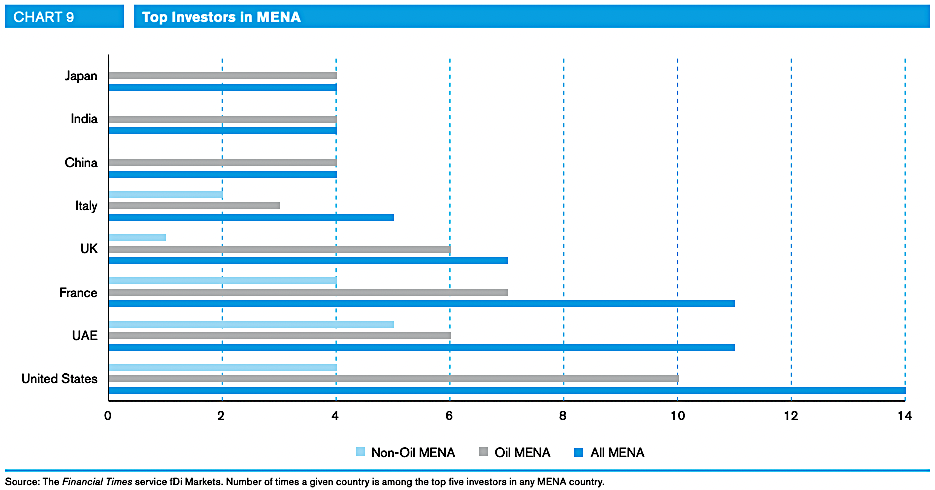
Greenfield investment is a type of FDI in which a parent company creates a subsidiary in a different country and builds its operations from the ground up, creating jobs and contributing to economic growth. Greenfield investments represent over 80% of total FDI projects in most MENA countries, creating more than 50,000 jobs to date in Algeria, Egypt, Morocco, Saudi Arabia, Tunisia and the United Arab Emirates. On average, these investments represented 4.86% of MENA GDP from 2003-2012.[2] Gulf Corporation Council (GCC) countries are a significant source for these greenfield investments in their fellow MENA countries, contributing significantly to intra-OIC relations.
Though FDI has provided significant development support to MENA countries, it has become relatively stagnant over the last decade. On average, countries in the region struggled to secure FDI following the 2008 global financial crisis and the Arab Spring movements of 2010-2011. While inward FDI did eventually rise again in 2015, inflows plateaued by 2018, still only reaching less than half the levels of total FDI inflow found in MENA countries at their peak in 2007. Conflict-ridden countries in the MENA region have experienced further difficulties attracting FDI, reporting negative FDI inflows. By 2019, net FDI inflows to the MENA region sat at a mere USD 57.8 billion compared to USD 126.5 billion in 2007.
Factors influencing FDI into MENA countries
Several factors influence FDI flows to MENA countries. Former colonial ties, religious affiliation, and the use of a common language all act as major influences in ways unseen in the rest of the world. Furthermore, differences between the economies of oil-producing and non-oil producing MENA states play a significant role in attracting FDI. Generally, non-oil producing MENA countries attract more significant greenfield investment than their oil-producing counterparts. This can be attributable primarily to oil-producing countries utilizing their abundant in-country oil resources to generate national capital instead of seeking foreign sources.
The most significant factor influencing the limitations witnessed for FDI in many MENA countries is the perceived risk associated with the region, which results in heightened concern from foreign investors regarding immediate and long-term regional stability. These risks can include political instability, low GDP, and infrastructure deficiencies, amongst others. To mitigate against these risks and counter the decline of FDI in the region, various MENA governments have advanced policy reforms, using policy and regulation to promote and facilitate the return of foreign firms and money. Such reforms have led many MENA states to revise investment legislation, ease market entry, streamline regulations in business operations, strengthen investment promotion agencies (IPAs), and adopt policies to direct investment into under-performing regions. However, despite these efforts, many MENA governments have been unable to secure FDI at levels equal to that found amongst other emerging and developing economies, limiting sustainable development in the region. While the MENA region currently has the market, resources, and human capital potential required to attract FDI at high levels, it faces significant challenges that hinder incoming FDI’s flow and effectiveness.
MENA’s FDI and COVID-19
The onset of the COVID-19 pandemic further exasperated the issues regarding FDI inflows to the MENA region. No nation was spared from the economic impacts of the virus, as all governments had to close borders and implement lockdowns and quarantines, grinding global economic activity to a halt and causing a contraction of the global economy by 3.3% in 2020.[3] Furthermore, as a result of the pandemic, global FDI flows fell by 35% from US$ 1.5 trillion in 2019 to US$ 1 trillion in 2020.[4]
Early estimates suggested the MENA region would lose up to 45% of its FDI inflows in 2020, though varied outcomes have been suggested since this prediction. [5] Such concerns were raised primarily in response to the impact of the pandemic on greenfield investments, which had already dropped by 80% in the first six months of 2020. This was a drastic loss compared to the anticipated reduction in greenfield investments in other emerging and developing economies (42%) and amongst OECD countries (17%).[6] The projections were based on significant greenfield investment-reliant industries such as tourism and manufacturing being hit particularly hard due to lockdowns and border closures.
As oil prices dropped, greenfield investments from the GCC oil-producing countries to their MENA neighbours were also anticipated to fall drastically, primarily affecting the region’s real estate (65% of investments) and energy (14% of investments) sectors.[7] Despite these bleak projections, greenfield investment drops appear to primarily result from projects being put on hold rather than being cancelled or shelved, meaning a greater likelihood of FDI bouncing back in the region.
Despite bleak early projections, states throughout the MENA region have experienced positive and negative FDI inflows during the COVID-19 pandemic. FDI flows to West Asia increased by 9% in 2020. Meanwhile, North Africa saw FDI inflows contract by 25%. These variations in FDI have largely been sector-driven, with specific sectors seeing higher or lower investments due to the pandemic-based valuations of different industries.
Many MENA countries have worked to support select industries based on these disruptions. Some states are positioning themselves as premier destinations for FDI in specific industries. For example, the Tunisian government is encouraging international automobile manufacturers to refocus their funds away from the Chinese and American markets into the country through implementing various investment-friendly policy and regulation schemes. Furthermore, states are revising investment laws to focus on priority sectors and improve regulatory and institutional structures that facilitate increased FDI. Turkey is extending a specialized free zone programme encouraging investment in software and ICT activities to include other high value and technology-intensive activities, resulting in Ford’s recent construction of USD 2.6 billion electric automobile assembly plant.
ICIEC and FDI in MENA
ICIEC’s mandate is to bolster economic growth and sustainable development in its 47 Member Countries. With much of its Membership located within the MENA region, the Corporation is a significant support for attracting FDI flows to MENA countries, specifically for projects that boast substantial developmental impact. ICIEC supports FDI by providing investment cover against the potential risks that lead to barriers for investors through its Preferred Creditor Status and the Corporation’s Political Risk Insurance (PRI) products, namely its Foreign Investment Insurance Policy (FIIP) and Non-Honoring of Sovereign Financial Obligations (NHSFO). ICIEC’s cover helps to provide investors with increased security.
Since the Corporation’s inception in 1994, ICIEC has provided more than USD 78 billion in total business insured, including USD 15.6 billion toward investment protection. In 2020, ICIEC provided a total of USD 9.86 billion cover for trade and investment across its 47 Member Countries. Over USD 6 billion of this total is being used to provide insurance cover for transactions in the MENA region, and USD 1.98 billion is being used specifically for investment insurance cover.
ICIEC has been highly active in promoting FDI in MENA countries, providing cover for several notable investments. One such example is ICIEC’s USD 68 million FIIP cover for the construction and operation of the Benban Solar Complex in Aswan, Egypt. ICIEC’s support for this transaction promoted FDI inflow to the MENA Member Country and contributed to the growth of renewable energy sources, bolstering the nation’s energy security. ICIEC also provided USD 32.5 million in NHSO cover for the Sharjah waste-to-energy (WtE) project in the United Arab Emirates, earning the Project Finance International (PFI) Award for the Middle East Clean Energy Deal of the Year in 2019. Meanwhile, ICIEC won the PFI award for Turkish Deal of the Year in the same year for its various levels of insurance cover toward the construction of the Çanakkale bridge in Turkey, which is set to have an immense impact on both trade and development in Turkey.
As vaccines become more available and MENA countries reopen their borders to trade and promote their industries to investors, ICIEC will continue to work with our Member Countries in the region to facilitate the return of FDI. Though most MENA governments are currently working to provide responses negating the immediate impact of COVID-19 on trade and investment, now is an opportune time to implement ambitious long-term programs that encourage further investment into the region. ICIEC is ready to help MENA governments attract high-quality investments that increase jobs and capital within the region and promote an inclusive, sustainable, and resilient recovery. While the pandemic has posed a difficult stretch for FDI, ICIEC and its MENA Member Countries will work together to ensure the next decade is one of prosperity and openness for MENA-oriented FDI.
https://www.brookings.edu/blog/future-development/2019/12/13/encouraging-transformations-in-central-asia/#:~:text=Nearly%2030%20years%20ago%2C%20the,the%20middle%20of%20the%201990s
https://www.forbes.com/sites/arielcohen/2020/12/08/foreign-investment-in-renewables-and-beyond-the-last-best-hope-for-central-asias-economic-recovery/?sh=26368a2f5ebf
https://read.oecd-ilibrary.org/view/?ref=134_134467-ydi12subjo&title=Investment-in-the-MENA-region-in-the-time-of-COVID-19&_ga=2.157186872.245605971.1622493830-457525634.1622493830
https://www.iemed.org/publication/fdi-in-the-mena-region-factors-that-hinder-or-favour-investments-in-the-region/