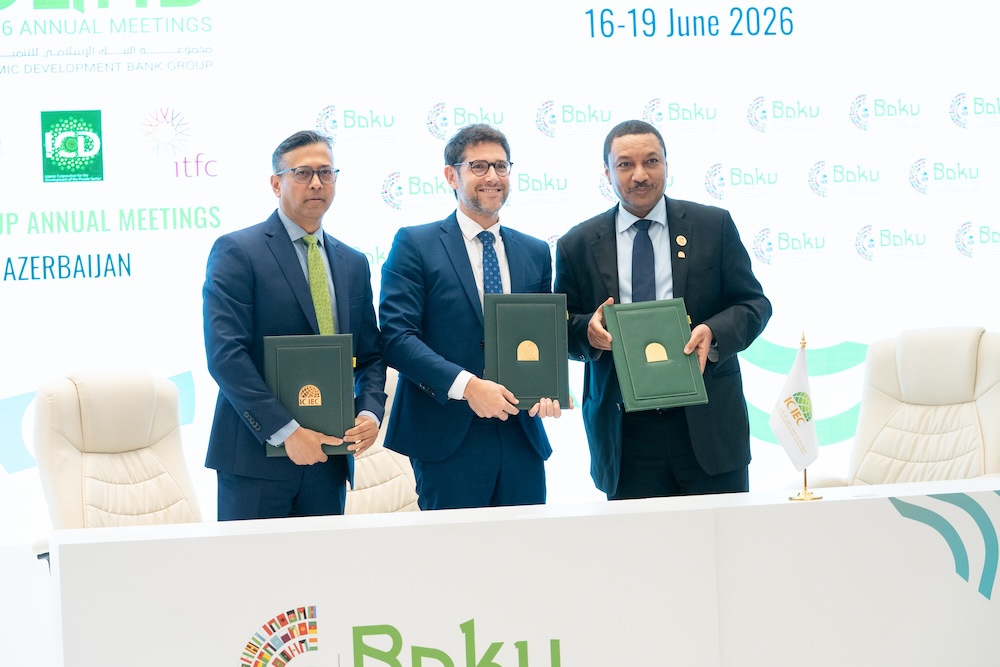
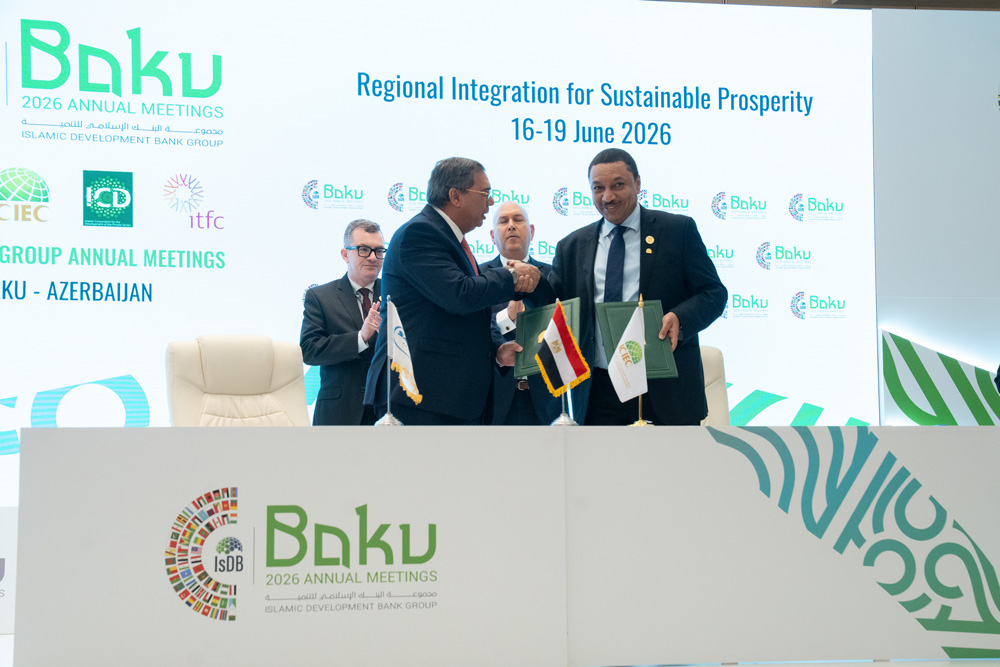
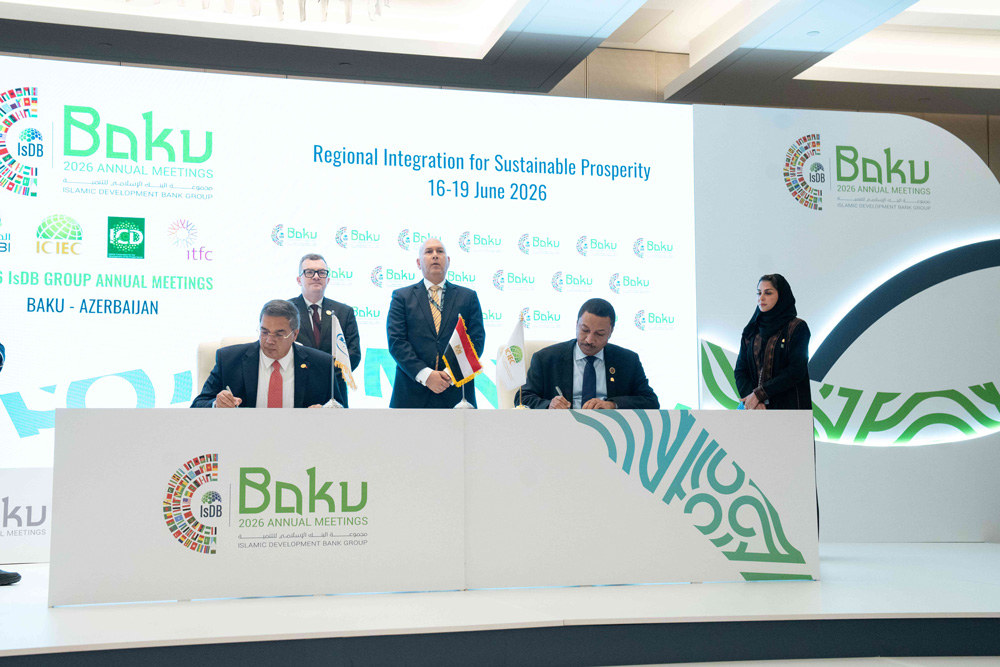
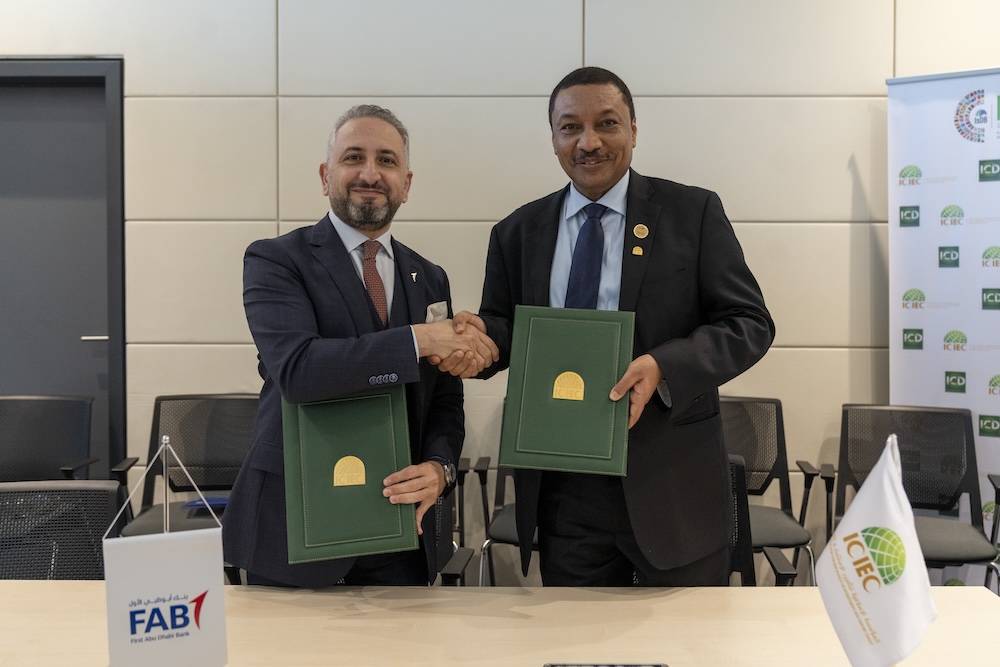
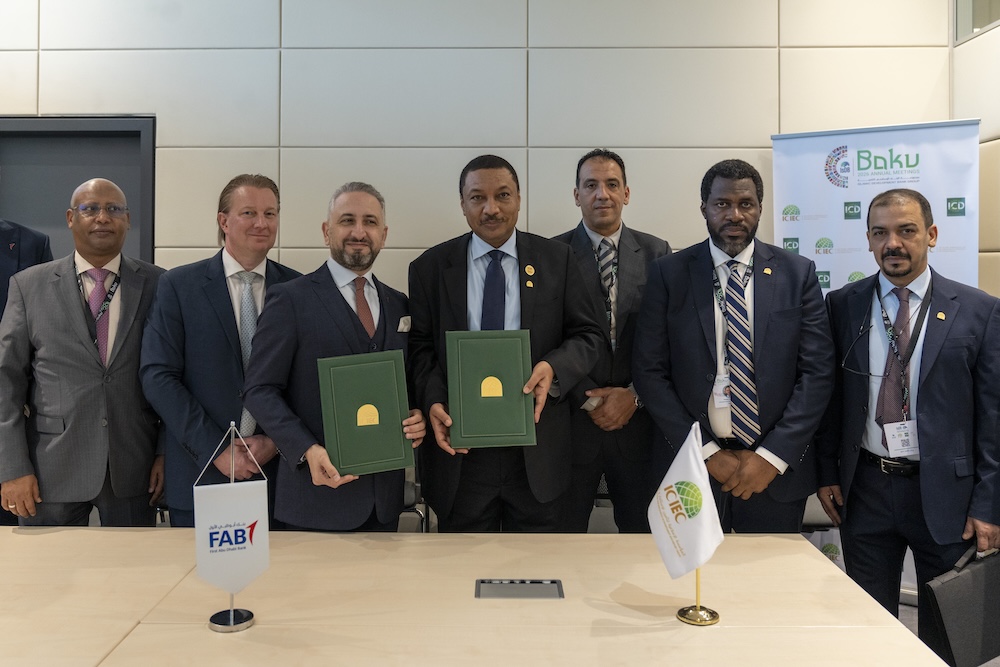
Astana – 12 May 2026 – The Islamic Corporation for the Insurance of Investment and Export Credit (ICIEC), a Shariah-based multilateral insurer and member of the Islamic Development Bank Group, and Oesterreichische Kontrollbank Aktiengesellschaft (OeKB), acting as agent of the Republic of Austria under the Export Guarantees Act, are pleased to announce  the signing of a Framework Reinsurance Agreement designed to expand capacity and enhance risk-sharing for eligible export credit and investment insurance transactions. The agreement was signed during the 2026 Spring Meeting of the Berne Union, hosted by KazakhExport in Astana from 11 to 14 May 2026.

Under the agreement, ICIEC will provide facultative reinsurance on a case-by-case basis for OeKB-supported insurance facilities. The arrangement will help enhance support for Austrian exporters, lenders, and investors undertaking transactions with counterparties in ICIEC Member States, while contributing to the mobilisation of trade, investment, and development-oriented projects across key markets.

The reinsurance arrangement applies to the principal portion of covered credit exposures, with participation levels to be mutually agreed and documented for each transaction. By combining OeKB’s export credit insurance expertise with ICIEC’s multilateral mandate and deep understanding of risks across its Member States, the agreement will help unlock additional capacity for transactions that support economic connectivity, private sector development, and sustainable growth.

Commenting on the signing, Dr. Khalid Khalafalla, Chief Executive Officer of ICIEC, said:

“Building on the reinsurance agreement signed between ICIEC and OeKB in 2023, this Framework Reinsurance Agreement marks another important step in deepening our institutional cooperation. It provides a practical platform to expand reinsurance capacity, enhance risk-sharing, and support eligible export credit and investment insurance transactions involving Austria and ICIEC Member States. Through this partnership, ICIEC will continue to help mitigate risks, mobilise trade and investment, and support transactions that contribute to sustainable economic growth and development impact across our Member States.”

Gerhard Kinzelberger, Senior Director, International Relations & Country Analysis, said: “Many member countries of ICIEC are dynamically growing, interesting markets for Austrian export companies. We are therefore very pleased about the conclusion of this reinsurance agreement, with which we can support Austrian exporters in OIC member states even better in their projects and investments”

Through this Framework Reinsurance Agreement, ICIEC and OeKB are establishing a stronger platform for cooperation that can support eligible transactions, expand insurance capacity, and contribute to increased trade and investment flows between Austria and ICIEC Member States. The agreement also underscores the role of reinsurance partnerships in enabling risk mitigation, strengthening market confidence, and supporting sustainable economic development.

ICIEC and OeKB Sign Framework Reinsurance Agreement to Strengthen Export Credit and Investment Risk Coverage

May 12, 2026

Astana – 12 May 2026 – The Islamic Corporation for the Insurance of Investment and Export Credit (ICIEC), a Shariah-based multilateral insurer and member of the Islamic Development Bank Group, and Oesterreichische Kontrollbank Aktiengesellschaft (OeKB), acting as agent of the Republic of Austria under the Export Guarantees Act, are pleased to announce  the signing of a Framework Reinsurance Agreement designed to expand capacity and enhance risk-sharing for eligible export credit and investment insurance transactions. The agreement was signed during the 2026 Spring Meeting of the Berne Union, hosted by KazakhExport in Astana from 11 to 14 May 2026.

Under the agreement, ICIEC will provide facultative reinsurance on a case-by-case basis for OeKB-supported insurance facilities. The arrangement will help enhance support for Austrian exporters, lenders, and investors undertaking transactions with counterparties in ICIEC Member States, while contributing to the mobilisation of trade, investment, and development-oriented projects across key markets.

The reinsurance arrangement applies to the principal portion of covered credit exposures, with participation levels to be mutually agreed and documented for each transaction. By combining OeKB’s export credit insurance expertise with ICIEC’s multilateral mandate and deep understanding of risks across its Member States, the agreement will help unlock additional capacity for transactions that support economic connectivity, private sector development, and sustainable growth.

Commenting on the signing, Dr. Khalid Khalafalla, Chief Executive Officer of ICIEC, said:

“Building on the reinsurance agreement signed between ICIEC and OeKB in 2023, this Framework Reinsurance Agreement marks another important step in deepening our institutional cooperation. It provides a practical platform to expand reinsurance capacity, enhance risk-sharing, and support eligible export credit and investment insurance transactions involving Austria and ICIEC Member States. Through this partnership, ICIEC will continue to help mitigate risks, mobilise trade and investment, and support transactions that contribute to sustainable economic growth and development impact across our Member States.”

Gerhard Kinzelberger, Senior Director, International Relations & Country Analysis, said: “Many member countries of ICIEC are dynamically growing, interesting markets for Austrian export companies. We are therefore very pleased about the conclusion of this reinsurance agreement, with which we can support Austrian exporters in OIC member states even better in their projects and investments”

Through this Framework Reinsurance Agreement, ICIEC and OeKB are establishing a stronger platform for cooperation that can support eligible transactions, expand insurance capacity, and contribute to increased trade and investment flows between Austria and ICIEC Member States. The agreement also underscores the role of reinsurance partnerships in enabling risk mitigation, strengthening market confidence, and supporting sustainable economic development.

Jeddah – 01 May 2026 – The Islamic Corporation for the Insurance of Investment and Export Credit (ICIEC), a Shariah-based multilateral insurer and member of the Islamic Development Bank Group, is pleased to host a high-level Panel Discussion (HLPD) during the Private Sector Forum of the 2026 IsDB Group Annual Meetings in Baku, Azerbaijan, under the theme “De-Risking Trade & Investment for Regional Prosperity,” which will be held on Thursday, 18 June 2026, from 10:00 to 11:00.

The session will bring together government officials, financial institutions, export credit agencies, investors, and development partners to discuss how risk mitigation solutions can mobilize private capital, strengthen regional integration, and support sustainable growth across Azerbaijan and the wider OIC region.

With Azerbaijan’s strategic location between Europe and Asia, and its growing role in connectivity, logistics, renewable energy, infrastructure, and non-oil economic diversification, the HLPD will highlight practical opportunities for de-risked investment and cross-border cooperation. The discussion will also showcase how ICIEC’s Shariah-compliant political risk insurance and credit enhancement solutions can help address investment barriers, enhance investor confidence, and unlock financing for priority development projects.

ICIEC’s CEO, Dr. Khalid Khalafalla, stated, “This high-level panel discussion is an important platform to advance dialogue and partnerships around regional integration. Through its risk mitigation solutions, ICIEC helps turn investment opportunities into bankable projects that support trade, investment, and sustainable development across Member States.”

ICIEC to Host High-Level Panel on De-Risking Trade and Investment for Regional Prosperity at 2026 IsDB Group Annual Meetings

May 1, 2026

Jeddah – 01 May 2026 – The Islamic Corporation for the Insurance of Investment and Export Credit (ICIEC), a Shariah-based multilateral insurer and member of the Islamic Development Bank Group, is pleased to host a high-level Panel Discussion (HLPD) during the Private Sector Forum of the 2026 IsDB Group Annual Meetings in Baku, Azerbaijan, under the theme “De-Risking Trade & Investment for Regional Prosperity,” which will be held on Thursday, 18 June 2026, from 10:00 to 11:00.

The session will bring together government officials, financial institutions, export credit agencies, investors, and development partners to discuss how risk mitigation solutions can mobilize private capital, strengthen regional integration, and support sustainable growth across Azerbaijan and the wider OIC region.

With Azerbaijan’s strategic location between Europe and Asia, and its growing role in connectivity, logistics, renewable energy, infrastructure, and non-oil economic diversification, the HLPD will highlight practical opportunities for de-risked investment and cross-border cooperation. The discussion will also showcase how ICIEC’s Shariah-compliant political risk insurance and credit enhancement solutions can help address investment barriers, enhance investor confidence, and unlock financing for priority development projects.

ICIEC’s CEO, Dr. Khalid Khalafalla, stated, “This high-level panel discussion is an important platform to advance dialogue and partnerships around regional integration. Through its risk mitigation solutions, ICIEC helps turn investment opportunities into bankable projects that support trade, investment, and sustainable development across Member States.”

Amman, 21 April 2026 – The United Nations Development Programme (UNDP), has signed a Joint Statement of Intent with the Islamic Corporation for the Development of the Private Sector (ICD) and the Islamic Corporation for the Insurance of Investment and Export Credit (ICIEC) —both members of the Islamic Development Bank (IsDB) Group—introducing a new blended finance structure that leverages credit insurance to catalyze private investment in climate-smart sectors.

This partnership will unlock capital for green small and medium-sized enterprises (SMEs) and support national efforts to achieve climate and sustainable development goals across the Arab States region. It will support financing across a broad range of sustainability-related areas, including climate change mitigation and energy transition, climate adaptation and resilience, sustainable water usage and governance, circular economy and management, sustainable agriculture and food systems and other green finance sectors.

“Across our region, SMEs are the backbone of economies and helping them grow and innovate is critical to strengthening economic resilience and climate ambition,” said Abdallah Al Dardari, UN Assistant Secretary General and Director of UNDP’s Regional Bureau for Arab States. “Through this new partnership we will work closely with regional financial institutions to expand SMEs access to green finance, to accelerate inclusive, climate-resilient development in line with UNDP’s flagship Green Finance Platform.”

In countries benefiting from the new partnership, ICD will provide financing facilities to partner banks and financial institutions while ICIEC will offer comprehensive credit insurance and risk-sharing solutions to encourage financial institutions to expand financing to green sectors, in addition to leveraging reinsurance partnerships to enhance the facility’s capacity and long-term sustainability.

"By uniting ICIEC's risk mitigation, ICD's financing, and UNDP's development network, we are creating a scalable engine for green private sector growth,” stressed Mohammad Asheque Moyeed, Acting Director, Banking Department at ICD. “This partnership is our shared commitment to building a more inclusive and sustainable future for SMEs across our member countries."

"Our role in this partnership is to unlock capital for the SMEs driving a greener, more diversified economy,” explained Yasser Alaki, Director of Business Development, ICIEC. “Through our credit insurance solutions, ICIEC provides the essential risk assurance that enables financial institutions to confidently channel financing toward this vital growth sector."

Serving as a convener of the partnership, UNDP will facilitate linkages between financial institutions and SMEs engaged in its programmes and will coordinate joint efforts to mobilize resources to lower the cost of risk-sharing mechanisms.

New strategic partnership in the Arab States regionto enhance access to green finance for small and medium-sized enterprises

April 22, 2026

Amman, 21 April 2026 – The United Nations Development Programme (UNDP), has signed a Joint Statement of Intent with the Islamic Corporation for the Development of the Private Sector (ICD) and the Islamic Corporation for the Insurance of Investment and Export Credit (ICIEC) —both members of the Islamic Development Bank (IsDB) Group—introducing a new blended finance structure that leverages credit insurance to catalyze private investment in climate-smart sectors.

This partnership will unlock capital for green small and medium-sized enterprises (SMEs) and support national efforts to achieve climate and sustainable development goals across the Arab States region. It will support financing across a broad range of sustainability-related areas, including climate change mitigation and energy transition, climate adaptation and resilience, sustainable water usage and governance, circular economy and management, sustainable agriculture and food systems and other green finance sectors.

“Across our region, SMEs are the backbone of economies and helping them grow and innovate is critical to strengthening economic resilience and climate ambition,” said Abdallah Al Dardari, UN Assistant Secretary General and Director of UNDP’s Regional Bureau for Arab States. “Through this new partnership we will work closely with regional financial institutions to expand SMEs access to green finance, to accelerate inclusive, climate-resilient development in line with UNDP’s flagship Green Finance Platform.”

In countries benefiting from the new partnership, ICD will provide financing facilities to partner banks and financial institutions while ICIEC will offer comprehensive credit insurance and risk-sharing solutions to encourage financial institutions to expand financing to green sectors, in addition to leveraging reinsurance partnerships to enhance the facility’s capacity and long-term sustainability.

"By uniting ICIEC's risk mitigation, ICD's financing, and UNDP's development network, we are creating a scalable engine for green private sector growth,” stressed Mohammad Asheque Moyeed, Acting Director, Banking Department at ICD. “This partnership is our shared commitment to building a more inclusive and sustainable future for SMEs across our member countries."

"Our role in this partnership is to unlock capital for the SMEs driving a greener, more diversified economy,” explained Yasser Alaki, Director of Business Development, ICIEC. “Through our credit insurance solutions, ICIEC provides the essential risk assurance that enables financial institutions to confidently channel financing toward this vital growth sector."

Serving as a convener of the partnership, UNDP will facilitate linkages between financial institutions and SMEs engaged in its programmes and will coordinate joint efforts to mobilize resources to lower the cost of risk-sharing mechanisms.

Jeddah – 19 April 2026 – The Islamic Corporation for the Insurance of Investment and Export Credit (ICIEC), a Shariah-based multilateral insurer and member of the Islamic Development Bank Group, is pleased to announce that S&P Global Ratings has affirmed its long-term issuer credit and financial strength ratings at ‘AA-’ with a Stable Outlook for the third consecutive year, maintaining ICIEC’s position among the highest-rated peer institutions globally.

The reaffirmation reflects ICIEC’s strong credit fundamentals, underpinned by solid financial strength, a low-risk profile, and S&P’s confidence in its robust capital adequacy, sound risk management framework, exceptional liquidity, and sustained financial performance. S&P has maintained ICIEC’s Enterprise Risk Profile at strong (A+) and Financial Risk Profile at very strong (up to AA+), supported by capital adequacy at the 99.99% confidence level, prudent governance, strong shareholder support, and Preferred Creditor Treatment (PCT). The overall rating of ‘AA-’ is based on the combined strength of these profiles. Stable Outlook reflects expectations of continued mandate-driven growth while maintaining strong capital and liquidity positions.

S&P further noted that ICIEC’s exposure to ongoing Middle East geopolitical developments remains limited and well-diversified, with strong capital buffers and reinsurance support sufficient to absorb potential volatility and claims. The Corporation’s business prospects remain resilient, supported by core markets across Africa, Asia, and Central Asia, particularly within the PCT-backed investment guarantee segment.

ICIEC extends its sincere appreciation to its Member Countries, the Chairman and members of the Board of Directors, and all stakeholders for their continued support, as well as to its dedicated staff members.

This reaffirmation underscores ICIEC’s financial strength, robust risk management, and institutional resilience, reinforcing its commitment to supporting sustainable economic development across its Member States while further strengthening its global standing. It also reinforces continued confidence among global partners, including policyholders, financial institutions, export credit agencies, and particularly reinsurance partners, in ICIEC as a reliable and trusted low-risk multilateral counterparty.

S&P Affirms ICIEC’s AA- Financial Strength and Issuer Credit Rating with Stable Outlook

April 19, 2026

Jeddah – 19 April 2026 – The Islamic Corporation for the Insurance of Investment and Export Credit (ICIEC), a Shariah-based multilateral insurer and member of the Islamic Development Bank Group, is pleased to announce that S&P Global Ratings has affirmed its long-term issuer credit and financial strength ratings at ‘AA-’ with a Stable Outlook for the third consecutive year, maintaining ICIEC’s position among the highest-rated peer institutions globally.

The reaffirmation reflects ICIEC’s strong credit fundamentals, underpinned by solid financial strength, a low-risk profile, and S&P’s confidence in its robust capital adequacy, sound risk management framework, exceptional liquidity, and sustained financial performance. S&P has maintained ICIEC’s Enterprise Risk Profile at strong (A+) and Financial Risk Profile at very strong (up to AA+), supported by capital adequacy at the 99.99% confidence level, prudent governance, strong shareholder support, and Preferred Creditor Treatment (PCT). The overall rating of ‘AA-’ is based on the combined strength of these profiles. Stable Outlook reflects expectations of continued mandate-driven growth while maintaining strong capital and liquidity positions.

S&P further noted that ICIEC’s exposure to ongoing Middle East geopolitical developments remains limited and well-diversified, with strong capital buffers and reinsurance support sufficient to absorb potential volatility and claims. The Corporation’s business prospects remain resilient, supported by core markets across Africa, Asia, and Central Asia, particularly within the PCT-backed investment guarantee segment.

ICIEC extends its sincere appreciation to its Member Countries, the Chairman and members of the Board of Directors, and all stakeholders for their continued support, as well as to its dedicated staff members.

This reaffirmation underscores ICIEC’s financial strength, robust risk management, and institutional resilience, reinforcing its commitment to supporting sustainable economic development across its Member States while further strengthening its global standing. It also reinforces continued confidence among global partners, including policyholders, financial institutions, export credit agencies, and particularly reinsurance partners, in ICIEC as a reliable and trusted low-risk multilateral counterparty.

Lagos, Nigeria, 30 March 2026 — The Islamic Development Bank (IsDB) Group successfully concluded the IsDB Group Day in Nigeria on 30 March 2026, bringing together senior government officials, private sector leaders, financial institutions, chambers of commerce, development partners, and international stakeholders to strengthen collaboration, promote investment, and enhance private sector–led growth in Nigeria.

The high-level event underscored Nigeria’s strategic importance as Africa’s largest economy and highlighted the critical role of private sector engagement in addressing key development challenges, including infrastructure gaps, youth and women unemployment, limited access to finance for small and medium-sized enterprises (SMEs), and the transition toward a more diversified and sustainable economy.

The IsDB Group Day served as a strategic platform to present the Group’s comprehensive range of services and solutions in investment, trade finance, insurance, Islamic finance, and capacity building.

The event facilitated dialogue amongst policymakers, investors, entrepreneurs, and development partners, fostering meaningful engagement and the exploration of practical business and investment opportunities.

In his keynote address, H.E. Mr. Wale Edun, the Minister of Finance and coordinating Minister of the Economy of the Federal Republic of Nigeria stated:

"As Nigeria transitions from economic stabilization to a period of robust expansion in 2026, our focus is firmly set on Growth Acceleration and Investment Mobilization. This journey toward a $1 Trillion economy by 2030 requires 'capital with purpose'—investments that bridge the gap between financial stability and tangible social outcomes. Through our strategic partnership with the Islamic Development Bank (IsDB) and the implementation of the Country Engagement Framework 2026-2028, we are modernizing our infrastructure, industrializing our agribusiness, and bringing 10 million Nigerians into productive economic activity. By leveraging innovative instruments like Sukuk, we are not just financing projects; we are building a Nigeria that is resilient by design, inclusive by nature, and a premier destination for global investment."

The IsDB Group Head of Delegation underscored: “The CEF marks a new era of strategic synergy, moving beyond isolated interventions to deliver integrated, federal-scale solutions. We are aligning our institutional resources to support Nigeria’s transition toward a diversified, high-growth economy—one where the private sector serves as the fundamental engine of development.”

He further emphasized that through this partnership, the Group remains dedicated to accelerating the delivery of integrated transformative solutions that foster national resilience and competitive industrialization.

One of the main features of the program was a panel discussion on Nigeria’s development priorities and the role of IsDB Group in formulating practical avenues of cooperation and forging strategic partnerships to support Nigeria’s path towards sustainable and inclusive development.

The discussions during the IsDB Group Day were closely aligned with Nigeria’s future development vision, which focuses on building a diversified, inclusive, and resilient economy driven by private sector–led growth. Emphasis was placed on expanding access to finance for

SMEs, strengthening public–private partnerships, advancing renewable energy and green infrastructure, and investing in human capital to unlock opportunities for youth and women.

These priorities reflect Nigeria’s commitment to sustainable development, economic diversification, and deeper regional integration through trade and investment.

A series of bilateral (B2B and B2G) meetings were held amongst representatives of the IsDB Group, business leaders, investors, and financial institutions to explore opportunities for cooperation and partnerships with the Islamic Development Bank Group. Inspiring success stories implemented in Nigeria in partnership with local entrepreneurs as well as local and international institutions were also presented.

The event also highlighted the activities, services, and initiatives of IsDB Group institutions, including the Islamic Corporation for the Insurance of Investment and Export Credit (ICIEC), the Islamic Corporation for the Development of the Private Sector (ICD), the International Islamic Trade Finance Corporation (ITFC), the Islamic Development Bank Institute (IsDBI), and the Islamic Development Bank Group Business Forum (THIQAH).

The day concluded with a reaffirmation of the Islamic Development Bank Group's commitment to continued cooperation  with the Nigerian government and the country’s private sector to further build strategic partnerships, expand investment opportunities, and enhance the business environment, thereby contributing to the achievement of sustainable development in Nigeria.

IsDB Group Day in Nigeria Advances Private Sector Engagement and Investment Partnerships

March 30, 2026

Lagos, Nigeria, 30 March 2026 — The Islamic Development Bank (IsDB) Group successfully concluded the IsDB Group Day in Nigeria on 30 March 2026, bringing together senior government officials, private sector leaders, financial institutions, chambers of commerce, development partners, and international stakeholders to strengthen collaboration, promote investment, and enhance private sector–led growth in Nigeria.

The high-level event underscored Nigeria’s strategic importance as Africa’s largest economy and highlighted the critical role of private sector engagement in addressing key development challenges, including infrastructure gaps, youth and women unemployment, limited access to finance for small and medium-sized enterprises (SMEs), and the transition toward a more diversified and sustainable economy.

The IsDB Group Day served as a strategic platform to present the Group’s comprehensive range of services and solutions in investment, trade finance, insurance, Islamic finance, and capacity building.

The event facilitated dialogue amongst policymakers, investors, entrepreneurs, and development partners, fostering meaningful engagement and the exploration of practical business and investment opportunities.

In his keynote address, H.E. Mr. Wale Edun, the Minister of Finance and coordinating Minister of the Economy of the Federal Republic of Nigeria stated:

"As Nigeria transitions from economic stabilization to a period of robust expansion in 2026, our focus is firmly set on Growth Acceleration and Investment Mobilization. This journey toward a $1 Trillion economy by 2030 requires 'capital with purpose'—investments that bridge the gap between financial stability and tangible social outcomes. Through our strategic partnership with the Islamic Development Bank (IsDB) and the implementation of the Country Engagement Framework 2026-2028, we are modernizing our infrastructure, industrializing our agribusiness, and bringing 10 million Nigerians into productive economic activity. By leveraging innovative instruments like Sukuk, we are not just financing projects; we are building a Nigeria that is resilient by design, inclusive by nature, and a premier destination for global investment."

The IsDB Group Head of Delegation underscored: “The CEF marks a new era of strategic synergy, moving beyond isolated interventions to deliver integrated, federal-scale solutions. We are aligning our institutional resources to support Nigeria’s transition toward a diversified, high-growth economy—one where the private sector serves as the fundamental engine of development.”

He further emphasized that through this partnership, the Group remains dedicated to accelerating the delivery of integrated transformative solutions that foster national resilience and competitive industrialization.

One of the main features of the program was a panel discussion on Nigeria’s development priorities and the role of IsDB Group in formulating practical avenues of cooperation and forging strategic partnerships to support Nigeria’s path towards sustainable and inclusive development.

The discussions during the IsDB Group Day were closely aligned with Nigeria’s future development vision, which focuses on building a diversified, inclusive, and resilient economy driven by private sector–led growth. Emphasis was placed on expanding access to finance for

SMEs, strengthening public–private partnerships, advancing renewable energy and green infrastructure, and investing in human capital to unlock opportunities for youth and women.

These priorities reflect Nigeria’s commitment to sustainable development, economic diversification, and deeper regional integration through trade and investment.

A series of bilateral (B2B and B2G) meetings were held amongst representatives of the IsDB Group, business leaders, investors, and financial institutions to explore opportunities for cooperation and partnerships with the Islamic Development Bank Group. Inspiring success stories implemented in Nigeria in partnership with local entrepreneurs as well as local and international institutions were also presented.

The event also highlighted the activities, services, and initiatives of IsDB Group institutions, including the Islamic Corporation for the Insurance of Investment and Export Credit (ICIEC), the Islamic Corporation for the Development of the Private Sector (ICD), the International Islamic Trade Finance Corporation (ITFC), the Islamic Development Bank Institute (IsDBI), and the Islamic Development Bank Group Business Forum (THIQAH).

The day concluded with a reaffirmation of the Islamic Development Bank Group's commitment to continued cooperation  with the Nigerian government and the country’s private sector to further build strategic partnerships, expand investment opportunities, and enhance the business environment, thereby contributing to the achievement of sustainable development in Nigeria.

N’Djamena, Chad, 26 January 2026 – The Islamic Development Bank Group hosted IsDB Day in Chad on Monday, deepening cooperation with the Central African nation.

The event follows the successful launch of “Chad Connection 2030” in Abu Dhabi a few months ago, which signaled IsDB's commitment to support development projects aligned with Chad's National Development Plan.

Chad's Prime Minister Allamaye Halina attended the January 26 event in N'Djamena, organized in partnership with the Ministry of Finance, Budget, Economy, Planning and International Cooperation.

Dr. Issa Faye led the IsDB Group delegation, representing IsDB President Dr. Muhammad Al Jasser. Cabinet ministers, senior officials and representatives from regional financial institutions and private companies also participated.

The event aimed to deepen cooperation and align IsDB Group support with Chad's National Development Plan.

H.E. Allamaye Halina, Prime Minister of the Republic of Chad, stated: "Chad is entering a phase where translating vision into concrete projects is essential. The Islamic Development Bank Group is a trusted partner in this effort, particularly in strengthening financial implementation, capacity building and mobilising investment that deliver tangible impact for our population."

H.E. Tahir Hamid Nguilin, Minister of Finance, Budget, Economy, Planning and International Cooperation of the Republic of Chad, stressed the following: “Our priority is to boot trade through coherence between public policy, effective financing mechanisms and private sector mobilisation. The IsDB plays a key role in supporting this approach, notably through project structuring, risk mitigation instruments and blended financing solutions”.

Dr. Issa Faye, IsDB Director General for Global Practices and Partnerships, and Group Head of Delegation, stated: “The IsDB Group’s commitment to Chad is focused on delivering integrated solutions that combine financing and technical assistance. During the country engagement dialogue, IsDB team, in conjunction with relevant authorities will explore all available solutions from both public and private sector sources  to ensure that the co-created  development solutions are holistic. Through closer coordination with national authorities and local stakeholders, we aim to accelerate project delivery, building resilience and support high-impact initiatives aligned with  Chad Connection 2030. particularly in agriculture, technology and infrastructure.”

One of the main features of the program was a panel discussion on Chad’s development priorities and the role of IsDB Group, aimed at formulating practical avenues of cooperation and forging strategic partnerships to support Chad’s path towards sustainable and inclusive development.

A series of bilateral (B2B and B2G) meetings were held amongst representatives of the IsDB Group, business leaders, investors, and financial institutions to explore opportunities for cooperation and partnerships with the Islamic Development Bank Group. Inspiring success stories implemented in Chad in partnership with local entrepreneurs as well as local and international institutions were presented

The event also highlighted the activities, services, and initiatives of IsDB Group institutions, including the Islamic Corporation for the Insurance of Investment and Export Credit (ICIEC), the Islamic Corporation for the Development of the Private Sector (ICD), the International Islamic Trade Finance Corporation (ITFC), the Islamic Development Bank Institute (IsDBI), and the Islamic Development Bank Group Business Forum (THIQAH).

The day concluded with a reaffirmation of the Islamic Development Bank Group's commitment to continue working with the Chadian government and the country’s private sector to further build strategic partnerships, expand investment opportunities, and enhance the business environment, thereby contributing to the achievement of sustainable development in Chad.

Chad Connection 2030: IsDB Deepens Partnership to Boost Chad's National Development Priorities

January 26, 2026

N’Djamena, Chad, 26 January 2026 – The Islamic Development Bank Group hosted IsDB Day in Chad on Monday, deepening cooperation with the Central African nation.

The event follows the successful launch of “Chad Connection 2030” in Abu Dhabi a few months ago, which signaled IsDB's commitment to support development projects aligned with Chad's National Development Plan.

Chad's Prime Minister Allamaye Halina attended the January 26 event in N'Djamena, organized in partnership with the Ministry of Finance, Budget, Economy, Planning and International Cooperation.

Dr. Issa Faye led the IsDB Group delegation, representing IsDB President Dr. Muhammad Al Jasser. Cabinet ministers, senior officials and representatives from regional financial institutions and private companies also participated.

The event aimed to deepen cooperation and align IsDB Group support with Chad's National Development Plan.

H.E. Allamaye Halina, Prime Minister of the Republic of Chad, stated: "Chad is entering a phase where translating vision into concrete projects is essential. The Islamic Development Bank Group is a trusted partner in this effort, particularly in strengthening financial implementation, capacity building and mobilising investment that deliver tangible impact for our population."

H.E. Tahir Hamid Nguilin, Minister of Finance, Budget, Economy, Planning and International Cooperation of the Republic of Chad, stressed the following: “Our priority is to boot trade through coherence between public policy, effective financing mechanisms and private sector mobilisation. The IsDB plays a key role in supporting this approach, notably through project structuring, risk mitigation instruments and blended financing solutions”.

Dr. Issa Faye, IsDB Director General for Global Practices and Partnerships, and Group Head of Delegation, stated: “The IsDB Group’s commitment to Chad is focused on delivering integrated solutions that combine financing and technical assistance. During the country engagement dialogue, IsDB team, in conjunction with relevant authorities will explore all available solutions from both public and private sector sources  to ensure that the co-created  development solutions are holistic. Through closer coordination with national authorities and local stakeholders, we aim to accelerate project delivery, building resilience and support high-impact initiatives aligned with  Chad Connection 2030. particularly in agriculture, technology and infrastructure.”

One of the main features of the program was a panel discussion on Chad’s development priorities and the role of IsDB Group, aimed at formulating practical avenues of cooperation and forging strategic partnerships to support Chad’s path towards sustainable and inclusive development.

A series of bilateral (B2B and B2G) meetings were held amongst representatives of the IsDB Group, business leaders, investors, and financial institutions to explore opportunities for cooperation and partnerships with the Islamic Development Bank Group. Inspiring success stories implemented in Chad in partnership with local entrepreneurs as well as local and international institutions were presented

The event also highlighted the activities, services, and initiatives of IsDB Group institutions, including the Islamic Corporation for the Insurance of Investment and Export Credit (ICIEC), the Islamic Corporation for the Development of the Private Sector (ICD), the International Islamic Trade Finance Corporation (ITFC), the Islamic Development Bank Institute (IsDBI), and the Islamic Development Bank Group Business Forum (THIQAH).

The day concluded with a reaffirmation of the Islamic Development Bank Group's commitment to continue working with the Chadian government and the country’s private sector to further build strategic partnerships, expand investment opportunities, and enhance the business environment, thereby contributing to the achievement of sustainable development in Chad.

Jeddah, Kingdom of Saudi Arabia — The Islamic Corporation for the Insurance of Investment and Export Credit (ICIEC), a Shariah-compliant multilateral insurer and member of the Islamic Development Bank (IsDB) Group, has approved EUR 135 million in Non-Honoring of Sovereign Financial Obligations (NHSFO) insurance in support of the Kars-Iğdır-Aralık-Dilucu (KIAD) High Standard Railway Project in the Republic of Türkiye. MUFG Securities EMEA plc arranged the overall transaction, within which a Murabaha financing facility, supported by ICIEC has been structured for the project.

The KIAD Railway is a flagship infrastructure project under Türkiye’s 12th Development Plan (2024–2028), spanning 223.9 km from Kars to Dilucu at the Turkish-Azerbaijani border and linking directly to the Kars–Tbilisi–Baku corridor. With five stations serving key districts in the Kars and Iğdır provinces, the line will become a vital segment of the Silk Road Economic Belt, strengthening the Trans-Caspian Middle Corridor as a competitive Asia–Europe freight route.

The Project is set to generate strong economic and environmental impact by shifting freight from road to electrified rail, cutting logistics costs by an estimated 40% by 2030, enhancing supply chain efficiency, and supporting regional industries. It will employ around 3,000 workers at peak construction and stimulate broader economic activity. Its fully electrified, double-track design will also contribute significantly to Türkiye’s climate goals, reducing 498,276 tons of CO₂e annually and achieving 95% energy efficiency—placing KIAD among the region’s greenest transport initiatives.

Dr. Khalid Khalafalla, CEO of ICIEC, stated, “This strategic investment reflects ICIEC’s continued commitment to supporting sustainable, high-impact infrastructure in Türkiye and across our member states. The KIAD Railway strengthens regional connectivity, advances cleaner and more efficient transport solutions, and promotes trade integration between Asia and Europe. Our participation ensures confidence for financiers and helps accelerate completion of this transformative project.”

The Project reinforces ICIEC’s mandate to promote inclusive development and integration among member countries. By enhancing freight mobility, supporting economic diversification, and contributing to Türkiye’s 2053 Net Zero vision, ICIEC’s support advances three key UN Sustainable Development Goals: SDG 8 – Decent Work and Economic Growth, SDG 9 – Industry, Innovation and Infrastructure, and SDG 11 – Sustainable Cities and Communities.

ICIEC Provides EUR 135 million Insurance Support for Türkiye’s Strategic Kars–Iğdır–Aralık–DilucuHigh Standard Railway Project

December 11, 2025

Jeddah, Kingdom of Saudi Arabia — The Islamic Corporation for the Insurance of Investment and Export Credit (ICIEC), a Shariah-compliant multilateral insurer and member of the Islamic Development Bank (IsDB) Group, has approved EUR 135 million in Non-Honoring of Sovereign Financial Obligations (NHSFO) insurance in support of the Kars-Iğdır-Aralık-Dilucu (KIAD) High Standard Railway Project in the Republic of Türkiye. MUFG Securities EMEA plc arranged the overall transaction, within which a Murabaha financing facility, supported by ICIEC has been structured for the project.

The KIAD Railway is a flagship infrastructure project under Türkiye’s 12th Development Plan (2024–2028), spanning 223.9 km from Kars to Dilucu at the Turkish-Azerbaijani border and linking directly to the Kars–Tbilisi–Baku corridor. With five stations serving key districts in the Kars and Iğdır provinces, the line will become a vital segment of the Silk Road Economic Belt, strengthening the Trans-Caspian Middle Corridor as a competitive Asia–Europe freight route.

The Project is set to generate strong economic and environmental impact by shifting freight from road to electrified rail, cutting logistics costs by an estimated 40% by 2030, enhancing supply chain efficiency, and supporting regional industries. It will employ around 3,000 workers at peak construction and stimulate broader economic activity. Its fully electrified, double-track design will also contribute significantly to Türkiye’s climate goals, reducing 498,276 tons of CO₂e annually and achieving 95% energy efficiency—placing KIAD among the region’s greenest transport initiatives.

Dr. Khalid Khalafalla, CEO of ICIEC, stated, “This strategic investment reflects ICIEC’s continued commitment to supporting sustainable, high-impact infrastructure in Türkiye and across our member states. The KIAD Railway strengthens regional connectivity, advances cleaner and more efficient transport solutions, and promotes trade integration between Asia and Europe. Our participation ensures confidence for financiers and helps accelerate completion of this transformative project.”

The Project reinforces ICIEC’s mandate to promote inclusive development and integration among member countries. By enhancing freight mobility, supporting economic diversification, and contributing to Türkiye’s 2053 Net Zero vision, ICIEC’s support advances three key UN Sustainable Development Goals: SDG 8 – Decent Work and Economic Growth, SDG 9 – Industry, Innovation and Infrastructure, and SDG 11 – Sustainable Cities and Communities.

Jeddah — The Islamic Corporation for the Insurance of Investment and Export Credit (ICIEC), a Shariah-compliant multilateral insurer and member of the Islamic Development Bank (IsDB) Group, is pleased to announce its support for a landmark EUR 132.5 million financing arranged by Standard Chartered for Joint-Stock Company “O'zbekiston Metallurgiya Kombinat” (Uzmetkombinat), the largest steel producer in Uzbekistan.

The financing, backed by ICIEC’s sovereign cover, will enable the completion of Uzmetkombinat’s new Casting and Rolling Complex in Bekabad, Southern Uzbekistan. Once completed, the facility will produce hot-rolled coils (HRCs)—a critical product previously imported—thereby boosting the country’s self-sufficiency in steel production and enhancing competitiveness in the construction and manufacturing sectors.

The introduction of domestically produced HRCs marks a new milestone for Uzbekistan, ensuring greater supply chain efficiency and reduced costs for local industries such as pipe manufacturing and construction. The investment will also have a significant social and economic impact in Bekabad, a city of 100,000 people where Uzmetkombinat already employs more than 8,000 workers and sustains thousands of indirect jobs.

This project represents the second significant transaction between ICIEC and Standard Chartered in Uzbekistan during 2025. Previously, ICIEC supported a EUR 160.4 million Islamic financing facility for Joint-Stock Commercial Bank “Agrobank,” enhancing access to finance for small and medium-sized enterprises (SMEs) across the country.

Commenting on the transaction, Dr. Khalid Khalafalla, CEO of ICIEC, stated: “This landmark transaction exemplifies ICIEC’s mandate to de-risk trade and investment and to catalyze sustainable economic growth across our Member States. By supporting Uzbekistan’s largest steel producer, we are not only fostering the development of critical industrial capacity but also contributing to enhanced self-reliance, job creation, and long-term economic resilience. We are proud to deepen our collaboration with Standard Chartered through this second major transaction in Uzbekistan, which underscores the strength of our partnership and our shared commitment to advancing impactful development projects.”

Desislava Radeva, Executive Director, Development and Agency Finance, Standard Chartered, says: “We are proud to partner once again with ICIEC to support a valuable client, Uzmetkombinat. Steel production represents a key strategic industry for Uzbekistan and the domestic sourcing of HRCs is a huge leap forward for the country. It is an example of Standard Chartered’s expertise in driving prosperity in some of the world’s most dynamic markets.”

ICIEC Supports EUR 132.5 Million Financing to Strengthen Uzbekistan’s Steel Industry

December 10, 2025

Jeddah — The Islamic Corporation for the Insurance of Investment and Export Credit (ICIEC), a Shariah-compliant multilateral insurer and member of the Islamic Development Bank (IsDB) Group, is pleased to announce its support for a landmark EUR 132.5 million financing arranged by Standard Chartered for Joint-Stock Company “O'zbekiston Metallurgiya Kombinat” (Uzmetkombinat), the largest steel producer in Uzbekistan.

The financing, backed by ICIEC’s sovereign cover, will enable the completion of Uzmetkombinat’s new Casting and Rolling Complex in Bekabad, Southern Uzbekistan. Once completed, the facility will produce hot-rolled coils (HRCs)—a critical product previously imported—thereby boosting the country’s self-sufficiency in steel production and enhancing competitiveness in the construction and manufacturing sectors.

The introduction of domestically produced HRCs marks a new milestone for Uzbekistan, ensuring greater supply chain efficiency and reduced costs for local industries such as pipe manufacturing and construction. The investment will also have a significant social and economic impact in Bekabad, a city of 100,000 people where Uzmetkombinat already employs more than 8,000 workers and sustains thousands of indirect jobs.

This project represents the second significant transaction between ICIEC and Standard Chartered in Uzbekistan during 2025. Previously, ICIEC supported a EUR 160.4 million Islamic financing facility for Joint-Stock Commercial Bank “Agrobank,” enhancing access to finance for small and medium-sized enterprises (SMEs) across the country.

Commenting on the transaction, Dr. Khalid Khalafalla, CEO of ICIEC, stated: “This landmark transaction exemplifies ICIEC’s mandate to de-risk trade and investment and to catalyze sustainable economic growth across our Member States. By supporting Uzbekistan’s largest steel producer, we are not only fostering the development of critical industrial capacity but also contributing to enhanced self-reliance, job creation, and long-term economic resilience. We are proud to deepen our collaboration with Standard Chartered through this second major transaction in Uzbekistan, which underscores the strength of our partnership and our shared commitment to advancing impactful development projects.”

Desislava Radeva, Executive Director, Development and Agency Finance, Standard Chartered, says: “We are proud to partner once again with ICIEC to support a valuable client, Uzmetkombinat. Steel production represents a key strategic industry for Uzbekistan and the domestic sourcing of HRCs is a huge leap forward for the country. It is an example of Standard Chartered’s expertise in driving prosperity in some of the world’s most dynamic markets.”

Jeddah, Kingdom of Saudi Arabia — The Islamic Corporation for the Insurance of Investment and Export Credit (ICIEC), a Shariah-based multilateral insurer and member of the Islamic Development Bank Group, is pleased to announce the accession of the Republic of Sierra Leone as its 51st Member Country.

This milestone marks ICIEC’s expanding presence in Sub-Saharan Africa and underscores Sierra Leone’s commitment to strengthening its trade and investment partnerships through multilateral cooperation. As a Member, Sierra Leone will gain access to ICIEC’s Shariah-compliant insurance and reinsurance solutions designed to facilitate exports, attract foreign direct investment, and mitigate political and commercial risks.

Welcoming Sierra Leone’s membership, Dr. Khalid Khalafalla, Chief Executive Officer of ICIEC, stated: “We are delighted to welcome the Republic of Sierra Leone into the ICIEC membership. This accession reflects both the growing recognition of ICIEC’s developmental mandate and Sierra Leone’s vision to build a more resilient and diversified economy. We look forward to supporting the country in mobilizing investments, enhancing export competitiveness, and creating new opportunities for its public and private sectors.”

With Sierra Leone’s membership, ICIEC now counts 51 Member Countries reinforcing its role as a leading multilateral provider of Shariah-compliant insurance and risk-mitigation solutions in support of the Organization of Islamic Cooperation (OIC) economies.

Republic of Sierra Leone Becomes 51st Member of ICIEC, Strengthening West Africa’s Trade & Investment Linkages

November 24, 2025

Jeddah, Kingdom of Saudi Arabia — The Islamic Corporation for the Insurance of Investment and Export Credit (ICIEC), a Shariah-based multilateral insurer and member of the Islamic Development Bank Group, is pleased to announce the accession of the Republic of Sierra Leone as its 51st Member Country.

This milestone marks ICIEC’s expanding presence in Sub-Saharan Africa and underscores Sierra Leone’s commitment to strengthening its trade and investment partnerships through multilateral cooperation. As a Member, Sierra Leone will gain access to ICIEC’s Shariah-compliant insurance and reinsurance solutions designed to facilitate exports, attract foreign direct investment, and mitigate political and commercial risks.

Welcoming Sierra Leone’s membership, Dr. Khalid Khalafalla, Chief Executive Officer of ICIEC, stated: “We are delighted to welcome the Republic of Sierra Leone into the ICIEC membership. This accession reflects both the growing recognition of ICIEC’s developmental mandate and Sierra Leone’s vision to build a more resilient and diversified economy. We look forward to supporting the country in mobilizing investments, enhancing export competitiveness, and creating new opportunities for its public and private sectors.”

With Sierra Leone’s membership, ICIEC now counts 51 Member Countries reinforcing its role as a leading multilateral provider of Shariah-compliant insurance and risk-mitigation solutions in support of the Organization of Islamic Cooperation (OIC) economies.

In the bustling heart of Casablanca, from November 24 to 26, 2025, ICIEC proudly hosted the 4th Capacity-Building Programme for the Users of the OIC Business Intelligence Center (OBIC). This pivotal event was more than just a training session; it was a convergence of minds, a sharing of expertise, and a collective stride towards strengthening credit information systems across the region.

As ICIEC’s flagship initiative, OBIC serves as a vital platform supporting Member States in modernising their credit-reporting ecosystems, strengthening business intelligence infrastructure and enabling informed trade and investment decisions that reduce risk and promote sustainable development.

The Programme, a testament to collaborative spirit, was generously sponsored by ICIEC alongside esteemed partners: the Islamic Development Bank (IsDB), the Arab Bank for Economic Development in Africa (BADEA), the African Export–Import Bank (Afreximbank), and the Islamic Centre for Development of Trade (ICDT). Together, these institutions laid the groundwork for a transformative experience, bringing together 40 dedicated participants from 15 diverse countries across Africa and the OIC region. These delegates, representing export credit agencies, financial institutions, SMEs, investment promotion agencies, and public-sector economic bodies, embarked on a journey to enhance their understanding and application of modern credit ecosystems.

At its core, OBIC stands as ICIEC’s flagship initiative, a beacon guiding Member States towards robust credit-reporting infrastructures. The Casablanca Programme meticulously focused on the nuances of credit intelligence, the architecture of structured data ecosystems, and the power of evidence-based decision-making. This alignment with ICIEC’s mandate to foster secure trade and investment flows underscored a shared vision: to empower institutions with the tools necessary to navigate economic landscapes, mitigate risks, and unlock sustainable growth.

Over three dynamic days, the Programme featured a rich blend of discussions, presentations, and practical case studies designed to strengthen participants’ understanding of modern credit ecosystems and information-sharing mechanisms.

Day 1 focused on setting the stage for modern credit ecosystems. The Programme opened with inspiring remarks from partner institutions, highlighting the critical importance of information sharing in strengthening financial systems. This was followed by a high-level panel discussion that explored how reliable credit intelligence underpins sound economic planning and informed decision-making, establishing a collaborative and forward-looking tone for the Programme.

Day 2 concentrated on operational dimensions and export strategies. Sessions explored the fundamentals of business intelligence, the strategic integration of the Africa Trade Gateway, and advanced approaches to credit risk management. Participants also engaged in discussions on effective export expansion strategies, gaining practical insights and tools that can be applied to enhance trade facilitation and financial decisionmaking.

Day 3 highlighted the role of unique entity identifiers and inclusive financial ecosystems. Discussions emphasized the strategic importance of identifiers such as MANSA and GLEIF, as well as the value of shared databases in improving transparency and risk assessment. The Programme also featured inspiring case studies on women’s economic empowerment in Africa, demonstrating how robust financial ecosystems can create tangible development impact. The event concluded with a certification ceremony, recognizing participants’ successful completion of the Programme and their readiness to apply OBIC tools within their institutions.

Dr. Khalid Khalafalla, CEO of ICIEC, stated: “Strengthening the quality, reliability, and accessibility of credit information across our Member States is essential to unlocking sustainable trade and investment flows. Through the OBIC platform and this Capacity-Building Programme, we are empowering institutions with the tools needed to make informed decisions, reduce risks, and accelerate economic opportunities across the OIC region. Our partnership with IsDB, BADEA, Afreximbank, and ICDT reflects our shared commitment to building a more transparent, interconnected, and resilient economic ecosystem for our Member States.”

The Casablanca Programme was more than just an event; it was a milestone in OBIC’s evolution into a structured capacity-building ecosystem. It significantly deepened institutional understanding of credit intelligence, heightened awareness of OBIC’s capabilities, and fostered stronger cooperation among Member States. The enthusiastic demand for future training cycles underscores the Programme’s profound impact and reinforces ICIEC’s leadership in driving trade intelligence and regional collaboration. As the delegates returned to their respective countries, they carried not just certificates, but a renewed sense of purpose and the practical tools to contribute to a more prosperous and interconnected OIC region.

A Journey towards economic empowerment: The 4th OBIC capacity-building programme in Casablanca

November 24, 2025

In the bustling heart of Casablanca, from November 24 to 26, 2025, ICIEC proudly hosted the 4th Capacity-Building Programme for the Users of the OIC Business Intelligence Center (OBIC). This pivotal event was more than just a training session; it was a convergence of minds, a sharing of expertise, and a collective stride towards strengthening credit information systems across the region.

As ICIEC’s flagship initiative, OBIC serves as a vital platform supporting Member States in modernising their credit-reporting ecosystems, strengthening business intelligence infrastructure and enabling informed trade and investment decisions that reduce risk and promote sustainable development.

The Programme, a testament to collaborative spirit, was generously sponsored by ICIEC alongside esteemed partners: the Islamic Development Bank (IsDB), the Arab Bank for Economic Development in Africa (BADEA), the African Export–Import Bank (Afreximbank), and the Islamic Centre for Development of Trade (ICDT). Together, these institutions laid the groundwork for a transformative experience, bringing together 40 dedicated participants from 15 diverse countries across Africa and the OIC region. These delegates, representing export credit agencies, financial institutions, SMEs, investment promotion agencies, and public-sector economic bodies, embarked on a journey to enhance their understanding and application of modern credit ecosystems.

At its core, OBIC stands as ICIEC’s flagship initiative, a beacon guiding Member States towards robust credit-reporting infrastructures. The Casablanca Programme meticulously focused on the nuances of credit intelligence, the architecture of structured data ecosystems, and the power of evidence-based decision-making. This alignment with ICIEC’s mandate to foster secure trade and investment flows underscored a shared vision: to empower institutions with the tools necessary to navigate economic landscapes, mitigate risks, and unlock sustainable growth.

Over three dynamic days, the Programme featured a rich blend of discussions, presentations, and practical case studies designed to strengthen participants’ understanding of modern credit ecosystems and information-sharing mechanisms.

Day 1 focused on setting the stage for modern credit ecosystems. The Programme opened with inspiring remarks from partner institutions, highlighting the critical importance of information sharing in strengthening financial systems. This was followed by a high-level panel discussion that explored how reliable credit intelligence underpins sound economic planning and informed decision-making, establishing a collaborative and forward-looking tone for the Programme.

Day 2 concentrated on operational dimensions and export strategies. Sessions explored the fundamentals of business intelligence, the strategic integration of the Africa Trade Gateway, and advanced approaches to credit risk management. Participants also engaged in discussions on effective export expansion strategies, gaining practical insights and tools that can be applied to enhance trade facilitation and financial decisionmaking.

Day 3 highlighted the role of unique entity identifiers and inclusive financial ecosystems. Discussions emphasized the strategic importance of identifiers such as MANSA and GLEIF, as well as the value of shared databases in improving transparency and risk assessment. The Programme also featured inspiring case studies on women’s economic empowerment in Africa, demonstrating how robust financial ecosystems can create tangible development impact. The event concluded with a certification ceremony, recognizing participants’ successful completion of the Programme and their readiness to apply OBIC tools within their institutions.

Dr. Khalid Khalafalla, CEO of ICIEC, stated: “Strengthening the quality, reliability, and accessibility of credit information across our Member States is essential to unlocking sustainable trade and investment flows. Through the OBIC platform and this Capacity-Building Programme, we are empowering institutions with the tools needed to make informed decisions, reduce risks, and accelerate economic opportunities across the OIC region. Our partnership with IsDB, BADEA, Afreximbank, and ICDT reflects our shared commitment to building a more transparent, interconnected, and resilient economic ecosystem for our Member States.”

The Casablanca Programme was more than just an event; it was a milestone in OBIC’s evolution into a structured capacity-building ecosystem. It significantly deepened institutional understanding of credit intelligence, heightened awareness of OBIC’s capabilities, and fostered stronger cooperation among Member States. The enthusiastic demand for future training cycles underscores the Programme’s profound impact and reinforces ICIEC’s leadership in driving trade intelligence and regional collaboration. As the delegates returned to their respective countries, they carried not just certificates, but a renewed sense of purpose and the practical tools to contribute to a more prosperous and interconnected OIC region.


Chat Icon
👋 Hi there! Need help with Islamic finance or exploring our programs? Ask me anything!
AI Assistant