Mr. Bakhodir Abdullayev
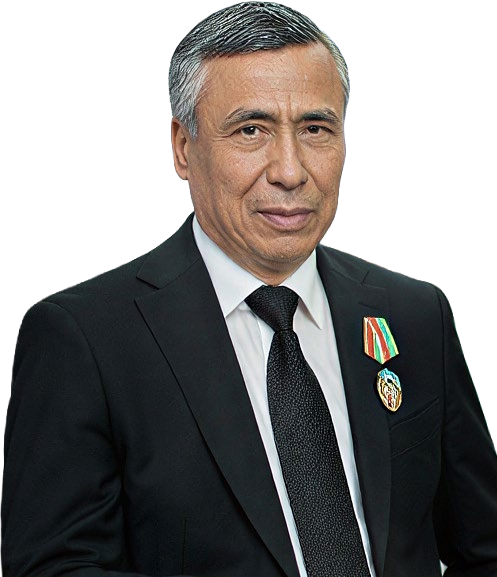
CHAIRMAN OF THE MANAGEMENT BOARD AND CEO, JSC “UZBEK METALLURGICAL PLANT”
Steel is not just another industrial product. It has a multiplier effect across the economy. Mr. Abdullayev describes Uzbek Steel’s evolution from a producer of long products into a national steel platform delivering both long and flat steel, with the ICIEC supported Casting and Rolling Complex marking the company’s entry into flat steel production and strengthening domestic supply, localisation and export potential. He highlights how ICIEC’s risk mitigation helped make a strong project bankable by aligning its risk profile with international lenders’ requirements while looking beyond financing to Uzbekistan’s wider development value and points to future cooperation on raw material security and deeper downstream processing.
Could you share with us the strategic vision of Uzbek Steel and its role in supporting Uzbekistan’s industrial development and economic diversification?
Our strategic vision is to develop Uzbek Steel, JSC Uzbek Metallurgical Plant, widely known as Uzmetkombinat, from a producer of long steel products into a national steel platform supplying both long and flat products. This means expanding capacity, strengthening domestic supply, reducing exposure to external shocks and supporting deeper industrial processing in Uzbekistan.
Uzmetkombinat currently produces more than 1 million tonnes of metal products a year. With the ramp-up of the Casting and Rolling Complex, our annual steel production capacity is expected to increase to about 2 million tonnes. The purpose is clear: to meet domestic demand more reliably, reduce imports and strengthen export potential. A key part of this strategy is moving further along the value chain. Supported by ICIEC, the Casting and Rolling Complex marks Uzmetkombinat’s entry into flat steel production. The complex has been built and is now in ramp-up. It will create capacity for high-quality flat products, helping support localisation, downstream
A key part of this strategy is moving further along the value chain. Supported by ICIEC, the Casting and Rolling Complex marks Uzmetkombinat’s entry into flat steel production.
manufacturing and products aligned with international standards, including DIN.
Steel is essential for housing, infrastructure, mining, energy, machine-building and manufacturing. For Uzbekistan’s growing economy, a stronger domestic steel base improves supply reliability, cost predictability and economic diversification.
Uzmetkombinat has been part of Uzbekistan’s industrial base for more than 80 years. Commissioned in 1944, it is now the country’s largest ferrous metallurgy enterprise and supplies more than one third of the steel products consumed in Uzbekistan. In 2025, it was among the top 20 taxpayers in the manufacturing sector.
I came to this role after spending my professional life in private business and entrepreneurship. When the President entrusted me with leading Uzbek Steel in August 2025, the task was to bring a more business-oriented approach into a major state-owned industrial enterprise. In a short period, we have already achieved meaningful operational results, including a 25% increase in production volumes and an 18% reduction in production cost.
Uzmetkombinat is also Bekabad’s anchor industrial enterprise. The city of roughly 100,000 people developed around the plant. Our responsibility therefore goes beyond steel output and includes employment, skills and social stability. Our task is to modernise this base with financial discipline, operational reliability and a long-term view.
What are the main priorities currently guiding the company’s growth, modernisation, and competitiveness in both domestic and export markets?
Our priorities today are execution-focused. The first is the disciplined ramp-up of the Casting and Rolling Complex. Construction is complete; the focus now is on stable equipment performance, trained operating and maintenance teams, reliable process control and consistent product quality. This is the stage where long-term competitiveness is built not by installed capacity alone but by how predictably and efficiently that capacity operates.
The second priority is the modernisation of our existing production base. We are working to reduce production costs, improve energy and material efficiency, remove operational bottlenecks and make output more predictable. These improvements are important in the domestic market, where customers value reliability and delivery discipline, and in export markets, where cost, quality and timing determine competitiveness.
A further priority is raw material security. As production volumes increase, the company needs a more secure raw material base and better protection from fluctuations in scrap availability and pricing. We are therefore preparing projects that can strengthen supply stability, improve cost control and support higher production volumes over the long term.
Overall, our growth is guided by a simple principle: modernisation must translate into measurable operating results – stable quality, lower costs, reliable deliveries and a stronger position in both domestic and selected export markets.
How do you assess the role of the steel industry in supporting infrastructure, industrialisation, and broader economic development in Uzbekistan and the region?
Steel has a direct role in Uzbekistan’s growth. It is one of the basic inputs for construction, transport, infrastructure, energy, mining and machine-building. Demand is driven by population growth of around 2% a year, active construction and economic expansion of approximately 6 to 8% annually. Housing, roads, bridges, industrial facilities, utilities and energy infrastructure all require reliable steel supply.
For large projects, availability matters as much as price. When a country depends too heavily on imported steel, investors and contractors face greater exposure to logistics delays, external price movements and supply disruptions. Local production does not remove all risks, but it gives the economy more control, reduces pressure on foreign currency outflows and supports national manufacturers.
This is why steel is not just another industrial product. It has a multiplier effect across the economy. A stronger steel sector supports construction materials, machine-building, export-oriented manufacturing and industrial clusters. It also helps Uzbekistan move from basic raw-material dependence toward deeper processing and higher value-added production, which is consistent with the country’s wider economic diversification agenda.
The social and regional dimension is also important. Uzmetkombinat is a major employer, with more than 10,000 employees, and its supplier network supports additional jobs. Industrial development creates activity not only inside the plant but also around it –
The social and regional dimension is also important. Uzmetkombinat is a major employer, with more than 10,000 employees, and its supplier network supports additional jobs. A key part of this strategy is moving further along the value chain. Supported by ICIEC, the Casting and Rolling Complex marks Uzmetkombinat’s entry into flat steel production.
through services, contractors, logistics and regional businesses.
For the wider region, the same logic applies. Central Asia is expanding transport, energy, mining and industrial projects. Uzmetkombinat’s role is to provide stable volumes, maintain quality, reduce import dependence where possible and support investment projects with steel produced in Uzbekistan. In this sense, the development of Uzbek Steel supports not only the domestic economy but also Uzbekistan’s role as an emerging industrial hub in Central Asia.
Could you reflect on Uzbek Steel’s experience of cooperation with ICIEC and the value this collaboration has brought to the company?
Our cooperation with ICIEC was directly linked to the Casting and Rolling Complex, the most significant investment project ever undertaken by Uzmetkombinat. For us, this cooperation was practical from the beginning: it was connected not to a general discussion, but to the financing and delivery of a specific industrial asset.
With ICIEC’s support, Uzmetkombinat secured a EUR 132.5 million long-term loan with a seven-year tenor from Standard Chartered Bank of the United Kingdom and KfW IPEX-Bank GmbH of Germany. This was an important milestone for the company, both in terms of the scale of the transaction and in terms of working with international financial institutions on a long-term basis.
The value of the cooperation was not limited to the financing itself. It helped us move the project forward with a more balanced financial structure. For an industrial company, this is important: investment in new capacity should not create excessive short-term pressure on ongoing operations, especially during construction and ramp-up.
We also valued ICIEC’s working approach. The team was responsive, pragmatic and focused on finding workable solutions, while maintaining a disciplined process. The project had to be presented clearly, structured properly and supported by detailed documentation. That experience was useful for Uzmetkombinat beyond this single transaction, because it strengthened our own ability to work with international lenders and partners.
The Casting and Rolling Complex has now been built and is in the ramp-up phase. In that sense, cooperation with ICIEC has already moved beyond financing on paper. It has supported a real industrial project that is now becoming part of Uzbekistan’s production base. For Uzmetkombinat, this is the main value of the collaboration.
In your view, how can risk mitigation and insurance solutions help large industrial players such as Uzbek Steel implement strategic projects more effectively?
Large industrial projects can have a strong business case but a risk profile that lenders find difficult to accept. Steel projects require large upfront investment, imported equipment, long construction and ramp-up periods, and exposure to market cycles. Without risk mitigation, even a sound project can become too expensive to finance or fail to receive workable terms.
This was directly relevant for the Casting and Rolling Complex, a EUR 780 million project for Uzmetkombinat. At this scale, financing terms are not a technical detail. Tenor, cost of funds, repayment profile and lender confidence affect both delivery and the company’s ability to operate normally while investing. ICIEC’s involvement helped align the project’s risk profile with the requirements of international lenders. It gave lenders additional comfort and supported a financing structure that worked for all parties. That is the practical value of risk mitigation: it does not replace project economics but helps make a strong project bankable.
ICIEC’s approach also went beyond tied financing arrangements. Rather than focusing only on the origin of equipment or services, it looked at the project’s development value for Uzbekistan: local production, import substitution, employment stability, industrial capacity and the strengthening of the national steel sector.
For Uzmetkombinat, this helped secure long-term financing from reputable foreign banks on competitive terms and gave management more room to focus on ramp-up, quality, cost control and reliable supply.
Looking forward, what opportunities do you see for further collaboration with ICIEC and international financial partners to support Uzbek Steel’s future ambitions?
Looking ahead, cooperation with ICIEC and international financial partners will be important for projects that support higher production volumes and a stronger raw material base. Uzmetkombinat is considering strategic projects focused on securing additional sources of metallic raw materials. These initiatives are expected to strengthen the company’s raw material base, reduce reliance on scrap, improve cost stability, and support future production growth.
We also see potential in deeper processing of flat products, including pipes or cold-rolled products, subject to market demand and feasibility. These projects will require long-term financing, clear risk allocation and lender confidence – areas where ICIEC’s instruments can add practical value.
For Uzmetkombinat, ICIEC has already proven to be the kind of partner that large industrial companies need: disciplined in risk assessment, practical in execution and focused on real development impact. We value this approach and see strong potential to continue working with ICIEC as a trusted partner in turning strategic industrial projects into bankable, deliverable and economically meaningful assets for Uzbekistan.

Mr. Allen Chaizhunussov
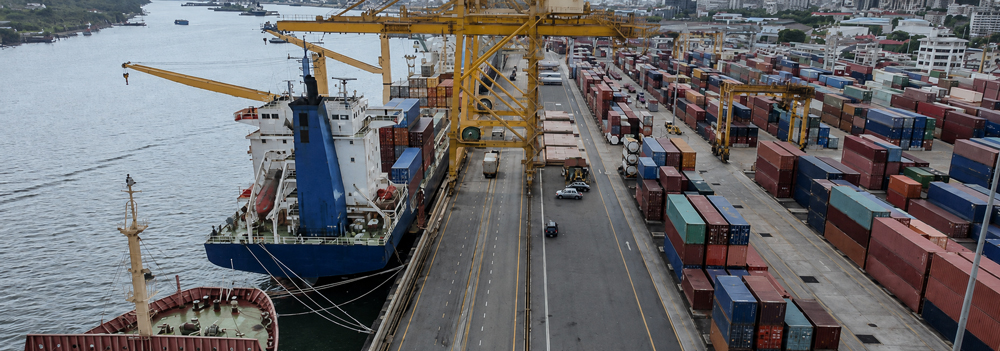
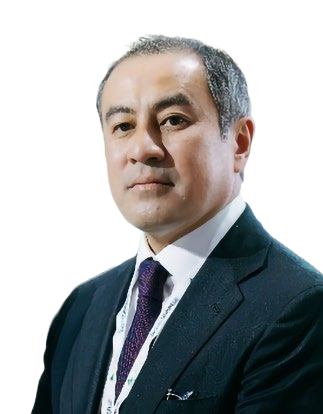
CHAIRMAN OF THE MANAGEMENT BOARD OF THE EXPORT CREDIT AGENCY OF KAZAKHSTAN
We are doing more than just insuring deals. We are building the long-term infrastructural connectivity of the region, which strengthens our country’s economic ties and broader trade potential. In this interview, Mr. Chaizhunussov outlines how the Export Credit Agency of Kazakhstan strengthens regional trade by de-risking transactions and integrating exporters into long-term value chains across Central Asia, the CIS, and Azerbaijan, with agribusiness, metallurgy, and infrastructure as priority sectors. He highlights the deepening reinsurance partnership with ICIEC, now spanning 29 issuing banks across multiple markets with 50% ICIEC risk participation, as a cornerstone for scaling insurance capacity and enabling cross-border financing.
Mr. Chaizhunussov, what is the contribution of the Export Credit Agency of Kazakhstan to strengthening trade and investment flows across Central Asia, the CIS region, and Azerbaijan?
Our primary contribution to strengthening trade flows is delivered through direct support for exporters and the systemic mitigation of risks for all participants in foreign trade operations. In 2025, the volume of insurance liabilities we assumed across Central Asian countries reached an impressive milestone, totalling approximately 170 billion tenge, which is around USD 326 million.
Central Asia, the CIS, and Azerbaijan are key strategic priorities for us. Due to geographical proximity and streamlined logistics, these markets already account for a significant share of our efforts to deepen economic integration and expand non-resource exports. We see our role not just in facilitating one-off transactions for Kazakhstani manufacturers but in integrating them into sustainable, long-term regional production and trade chains.
Uzbekistan remains our anchor market in Central Asia, driving the largest share of our supported operations. At the same time, we are observing a steady, progressive strengthening of our positions in Kyrgyzstan and Tajikistan, driven by a consistent demand for ECA support instruments.
We recognise that expanding exports requires a local presence and a deep understanding of market-specific nuances. Our regional directors in Uzbekistan, Tajikistan, Kyrgyzstan, and Azerbaijan serve as critical links in our institutional infrastructure. They focus on three vital objectives: building a robust project pipeline, providing hands-on operational support to cut bureaucratic red tape, and fostering direct collaboration with local banks and importers.
The Export Credit Agency of Kazakhstan provides a comprehensive toolkit that covers everything from the FMCG sector to heavy industry, including metallurgical exports. This ensures that trade flows remain resilient regardless of short-term market volatility.
In your opinion, what are the most promising sectors and corridors for expanding regional trade and economic cooperation in the coming years?
Over the next few years, the most promising sectors will be those where economic complementarity already exists and where Kazakhstan offers a competitive edge capable of scaling within regional value chains.
First and foremost, this applies to agribusiness and the food industry. There is a resilient demand across Central Asia, the CIS, and Azerbaijan for food products, processed raw materials, ingredients, and packaging. Kazakhstan is well-positioned to strengthen its market footprint here through grain, oil and fat, flour milling, meat, and dairy products, as well as highvalue deep processing. This represents one of our most natural and sustainable growth paths.
The second key area is metallurgy and industrial manufacturing, including the chemical and petrochemical industries, which serve as the foundation for scaling our export volumes. The boom in infrastructure development and industrial activity across the region guarantees steady demand for rolled metal, polymers, fertilisers, construction materials, and industrial chemicals. Crucially, these segments offer higher added value and longer contractual horizons.
Another priority is mechanical engineering and equipment, which involves supplying machinery, components, and technical
Kazakhstan is well-positioned to strengthen its market footprint here through grain, oil and fat, flour milling, meat, and dairy products, as well as high-value deep processing. This represents one of our most natural and sustainable growth paths.
solutions for agribusiness, energy, transport, and municipal infrastructure. We view this as a highly strategic area that drives domestic manufacturing localisation and moves Kazakhstan further up the global value chain.
Finally, services and IT, such as engineering, digital solutions, logistics, maintenance, and educational services, are rapidly growing segments that enable Kazakhstani firms to seamlessly integrate into regional and global supply networks.
However, the primary bottleneck to further growth is no longer market demand but rather transaction viability. Today, competitiveness is defined by an exporter’s ability to provide efficient logistics, viable financing, and robust contract structures. Consequently, the focus is shifting away from spot deliveries toward long-term export models backed by financial and insurance mechanisms.
While our current volume of operations in Azerbaijan is still smaller than in Central Asia, this destination is of vital strategic importance in the context of the Trans-Caspian International Transport Route. Building reliable trade corridors between Central Asia, Türkiye, and Europe depends entirely on having a dependable financial infrastructure in place, where export credit and insurance solutions play a foundational role.
Looking back to 2015, the ECA supported a landmark project involving the delivery of cargo locomotives manufactured by Lokomotiv Kurastyru Zauyty to Azerbaijan Railways. This successful initiative laid the groundwork for Kazakhstan to be recognised as a serious industrial and engineering partner in the region.
The Export Credit Agency of Kazakhstan has played an important role in supporting transactions related to infrastructure. How do you see the contribution of export credit and insurance solutions to the development of strategic regional infrastructure?
The ECA of Kazakhstan plays a highly practical, enabling role in infrastructure development. Given the high capital requirements and risks inherent in these large-scale transactions, our instruments serve as a foundation of trust. By shielding clients and investors from commercial and political risks, we make projects bankable and attractive to commercial lenders.
Through export credit mechanisms, we offer buyers access to funding on competitive terms, while our insurance solutions guarantee that all parties honour their contractual obligations. Ultimately, by backing Kazakhstani companies participating in foreign construction and equipment supply contracts, we are doing more than just insuring deals. We are building the long-term infrastructural connectivity of the region, which strengthens our country’s economic ties and broader trade potential.
Today, our portfolio features over 20 distinct instruments that offer flexible support across all stages of the export cycle, from the initial investment phase to final contract execution. We co-insure loans and project financing alongside the Development Bank of Kazakhstan and local commercial banks. We also provide risk coverage for deferred payments granted to importers and secure exporters’ obligations to foreign buyers.
We place a special emphasis on trade finance. By insuring letters of credit with post-financing and establishing credit limits for foreign banks, we help build a stable, cross-border financial infrastructure that benefits exporters, importers, and financial institutions alike.
Agriculture and food security are gaining increasing importance in the region. How does the ECA of Kazakhstan support these sectors, and what opportunities for deepening regional cooperation do you see?
Agriculture and food security have indeed become paramount for the region, and this is a top strategic priority for the ECA of Kazakhstan. By the end of 2025, our export support for agribusiness and food products reached 270.6 billion tenge. Out of this total, 68.6 billion tenge was directed toward Central Asian countries, and 620.5 million tenge went to Azerbaijan.
For the agricultural sector, successful exporting requires more than just moving product; it demands secure settlement mechanisms, predictable demand, and
Agriculture and food security have indeed become paramount for the region, and this is a top strategic priority for the ECA of Kazakhstan. By the end of 2025, our export support for agribusiness and food products reached 270.6 billion tenge. Out of this total, 68.6 billion tenge was directed toward Central Asian countries, and 620.5 million tenge went to Azerbaijan.
reliable access to working capital. To address this, the ECA of Kazakhstan offers tailored support via export credit and accounts receivable insurance, loan insurance, pre-export financing for manufacturers, and trade finance instruments structured in partnership with foreign financial institutions. This comprehensive backing allows Kazakhstani exporters to not only enter foreign markets but also to establish a permanent, sustainable presence.
From a regional cooperation standpoint, there is immense potential in building resilient food supply chains across Central Asia and neighbouring territories. Kazakhstan can serve as a primary food supplier, while neighbouring countries participate as vital links in the broader cooperative chain, including processing, logistics, and distribution. Further opportunities are emerging through the development of trade corridors like the Trans-Caspian Route, which broadens our export geography and enhances regional food security.
How would you assess the value of cooperation between the ECA of Kazakhstan and ICIEC in expanding insurance capabilities and facilitating cross-border transactions?

Our partnership with ICIEC dates back to 2015 and has evolved into a deeply resilient, strategic alliance. Our first landmark project was the reinsurance of the 10-locomotive delivery to Azerbaijan mentioned earlier, where ICIEC covered 70% of the risk. This ten-year facility was successfully concluded in August 2025, proving the efficiency and reliability of our joint framework.
Since 2021, our cooperation has moved to a quota share treaty basis. We run a joint reinsurance programme for export letters of credit issued by banks in Uzbekistan, Tajikistan, and Kyrgyzstan. In 2025, we expanded this geographic footprint to include Türkiye and Azerbaijan. Today, our joint coverage spans 29 issuing banks, with ICIEC taking a 50% risk-participation share in each transaction. Looking ahead, we plan to onboard Mongolian banks into the programme as well. What began as project-based cooperation has matured into a systemic, institutionalised mechanism that expands insurance capacity and drives cross-border operations for Kazakhstani businesses.
What priorities or areas of cooperation would you like to see in the further development between the ECA of Kazakhstan, ICIEC, and other regional partners?
Moving forward, the key priority for the ECA of Kazakhstan is the development of structured transactions, specifically investment projects focused on supplying machinery to Kazakhstani export-oriented manufacturers and developing new export-centered production facilities. Blending our insurance and reinsurance capabilities will allow us to scale up capacity, unlock access to long-term financing, and minimise risks for everyone involved.
Expanding joint insurance coverage for large, complex projects across infrastructure, industry, agribusiness, and logistics remains high on our agenda. The more effectively we can co-insure and mitigate risks, the easier it becomes for regional enterprises to venture into new international markets.
Another critical focus area is the expansion of trade and interbank financing to scale up export volumes. By expanding our network of partner banks, setting up dedicated credit limits, and aligning our risk assessment methodologies, we can significantly accelerate transaction times and make financing much more accessible for international importers.
In this context, maintaining a strong regional presence and deepening institutional cooperation becomes more important than ever. Continuing to build out our network of regional representatives will be essential to engaging directly with local partners, identifying market demand, and providing seamless, on-the-ground transaction support.
Corridors of Opportunities: From Azerbaijan to Central Asia Enabling Bankable Delivery through Risk Mitigation
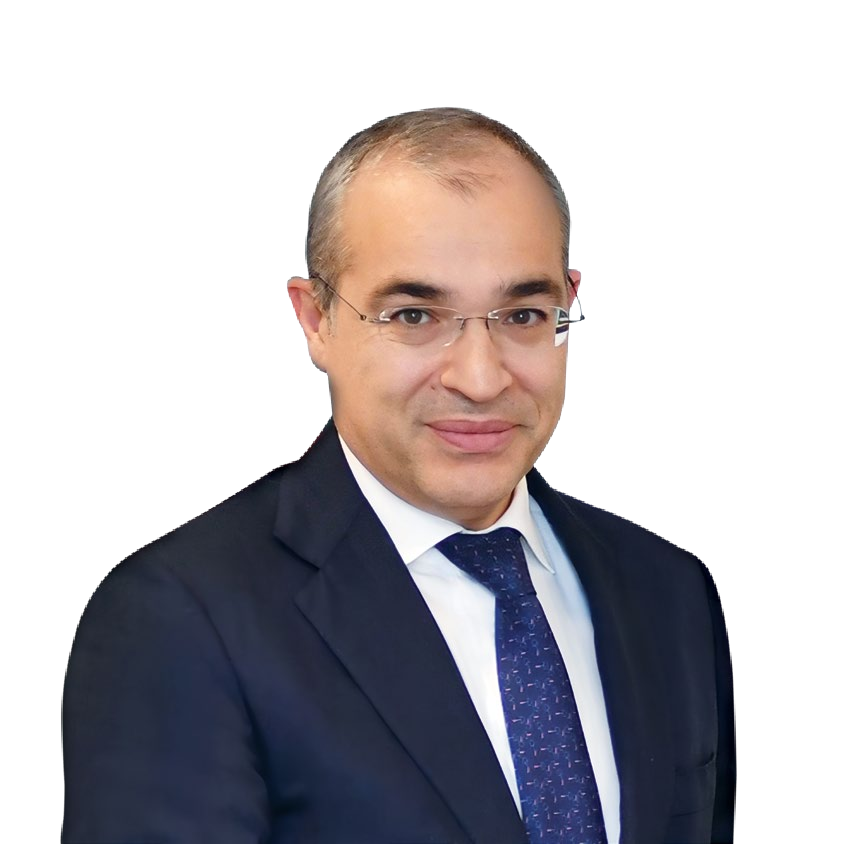
IsDB GROUP GOVERNOR FOR THE REPUBLIC OF AZERBAIJAN,
MINISTER OF ECONOMY OF THE REPUBLIC OF AZERBAIJAN
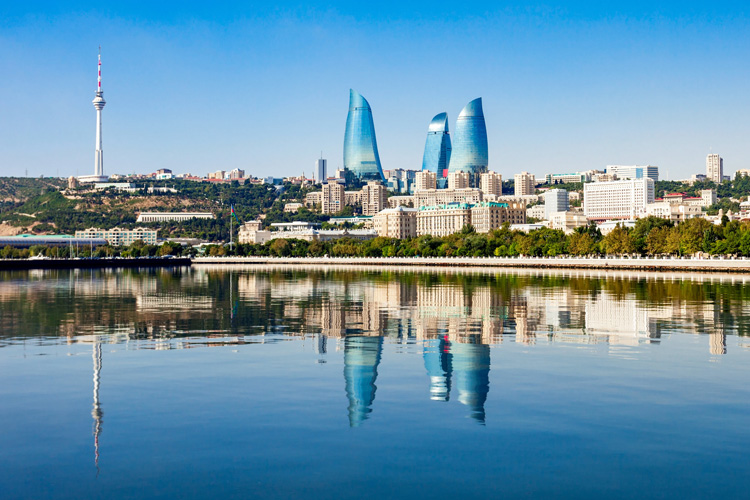
As Azerbaijan prepares to host the 2026 IsDB Group Annual Meetings in Baku, the country is reinforcing its role as a strategic bridge between Central Asia, the South Caucasus, Türkiye, Europe, and the wider Islamic world. Its growing importance in trade, logistics, energy security, investment, and regional connectivity makes it a timely focus for ICIEC’s Special Issue.
In this interview, H.E. Mr. Mikayil Jabbarov, Minister of Economy of the Republic of Azerbaijan and IsDB Group Governor for Azerbaijan, shares his perspective on the country’s economic priorities, including non-oil growth, industrial development, private-sector participation, renewable energy, and the reconstruction and reintegration of Garabagh and East Zangezur.
He also reflects on Azerbaijan’s deepening cooperation with Central Asia and the role of institutions such as ICIEC in de-risking strategic investments, mobilising private capital, and helping turn regional connectivity into bankable opportunities for sustainable growth and shared prosperity.
As host country of the 2026 IsDB Group Annual Meeting, how would you assess Azerbaijan’s growing importance as a regional platform for economic dialogue, partnership, and investment cooperation?
Hosting the 2026 IsDB Group Annual Meetings in Baku for the second time is both an honor and a reflection of Azerbaijan’s growing role as a regional platform for economic dialogue, partnership and investment cooperation. This distinction demonstrates the confidence placed in Azerbaijan’s development path, modern infrastructure, institutional capacity and commitment to multilateral cooperation. This occasion also highlights the depth and continuity of Azerbaijan’s long-standing partnership with the IsDB Group.
The Islamic Development Bank Group has supported Azerbaijan’s sustainable economic journey through a comprehensive partnership that combines sovereign financing, private-sector development, trade support, and investment risk mitigation. This strong and multifaceted cooperation has played an important role in supporting Azerbaijan’s broader development objectives and economic transformation agenda.
The Annual Meetings will take place at an important stage of Azerbaijan’s economic development. Our current economic agenda places particular emphasis on expanding non-oil production and exports, improving the business environment and increasing private-sector participation. Over recent years Azerbaijan has made significant progress in strengthening the non-oil economy, expanding industrial and export capacity, and creating new opportunities across priority sectors.
Against this backdrop, the 2026 IsDB Group Annual Meetings will offer an important opportunity to present Azerbaijan’s economic progress and investment potential to a broad international audience. We expect the Meetings to generate practical discussions on financing strategic infrastructure, investment in priority sectors, regional trade and cooperation with IsDB member countries.
Azerbaijan is increasingly recognized as a strategic bridge between Central Asia, the South Caucasus, and global markets. How do you see the country’s economic role evolving in this wider regional context?
Azerbaijan’s economic role is evolving beyond that of a transit route, as the country assumes a broader role in regional trade, logistics, investment, energy security and digital exchange. Located at the intersection of the South Caucasus, Central Asia, Türkiye, Europe and the broader Islamic world, Azerbaijan is increasingly positioned as a practical economic bridge connecting production centers, consumer markets, energy systems and strategic transport corridors.
This transformation is supported by a range of strategic infrastructure projects that have strengthened Azerbaijan’s role in Eurasian connectivity. Transport assets such as the Baku–Tbilisi–Kars railway and the Baku International Sea Trade Port have enhanced East–West trade flows and reinforced the Middle Corridor. At the same time, major energy projects, including the Baku–Tbilisi–Ceyhan pipeline and the Southern Gas Corridor, have expanded Azerbaijan’s contribution to regional energy security and diversified supply routes to international markets. Together, these investments have strengthened Azerbaijan’s position as a reliable logistics, trade and energy hub serving Central Asia, the South Caucasus, Europe and other international markets.
The next stage is to translate connectivity into economic value creation. This is particularly evident in the growing importance of the Middle Corridor. Azerbaijan’s objective is to develop the corridor into a broader economic ecosystem that supports logistics services, industrial activity, processing capacity, private-sector participation and deeper regional integration.
Regulatory and operational coordination is equally important. Physical infrastructure must be supported by digitalized procedures, efficient customs and border management, transparent logistics services, and stronger coordination among corridor countries. These reforms are essential to reduce bottlenecks, shorten delivery times and make regional routes more predictable for investors and exporters.
A further dimension of this agenda is the TRIPP, which is expected to strengthen unimpeded links between the main part of Azerbaijan and the Nakhchivan Autonomous Republic. It is also worth mentioning that TRIPP has the potential to become an important component of both the Middle Corridor and North–South corridors, further enhancing regional connectivity and reinforcing the country’s role as a strategic logistics and trade hub across Eurasia.
Azerbaijan has significant potential in solar, wind, and other clean energy sources, including offshore wind in the Caspian Sea. In this context, Azerbaijan also supports several green energy corridor initiatives linking the Caspian region with European markets, including the Central Asia–Azerbaijan–Europe, Caspian–Black Sea–Europe, and Azerbaijan–Türkiye–Europe corridors.
The Black Sea Submarine Power Cable project and the trilateral cooperation among Azerbaijan, Kazakhstan and Uzbekistan are intended to expand renewable electricity generation and cross-border transmission.
At the same time, trans-Caspian digital infrastructure projects are strengthening data connectivity between Asia and Europe. Taken together, these initiatives combine transport infrastructure, energy transmission and cross-border digital networks within a broader regional framework. In this regard, the IsDB Group is a valued and natural partner for Azerbaijan as we advance this long-term vision of regional integration and sustainable development.
What are the key priorities currently shaping Azerbaijan’s economic agenda, particularly in relation to trade, investment, industrial development, and connectivity?
Azerbaijan’s current economic priorities include the expansion of the non-oil economy, higher productivity, increased private investment and the economic reintegration of the liberated territories. These priorities are supported by macroeconomic stability, continued improvements in the business environment and new opportunities arising from reconstruction and regional cooperation.
A key priority is to accelerate the development of the non-oil economy. This includes manufacturing, agriculture and agro-processing, information technologies, renewable energy, tourism and services. Growth in these sectors is important for creating skilled employment, expanding exports and reducing dependence on hydrocarbon revenues.
An equally important dimension of this agenda is the restoration and reconstruction of our liberated territories – Garabagh and East Zangezur. Beyond physical reconstruction, this process is focused on economic reintegration, the development of modern infrastructure, the return of economic activity, and the creation of new opportunities in agriculture, industry, tourism, renewable energy and logistics.
Another important priority is to improve the investment climate and expand private-sector participation through regulatory reforms, the digitalization of public services, stronger support for SMEs, public-private partnerships, and the continued development of industrial and free economic zones.
Transport and logistics also remain central to the economic agenda. Azerbaijan has invested significantly in transport and logistics infrastructure, including ports, railways, highways and air cargo capacity. The next priority is to increase the use of this infrastructure by expanding logistics services, industrial activity and export-oriented production.
Renewable energy and lower-carbon industrial development are also receiving increased attention. Ongoing solar and wind projects, together with regional electricity transmission initiatives, support energy security and create new opportunities for investment and industrial cooperation. These priorities are closely aligned with the IsDB Group’s work in infrastructure, private-sector development and trade facilitation.
Azerbaijan has been advancing major efforts in transport, logistics, and industrial development. Which sectors do you see as holding the strongest potential for future investment and cross-border collaboration?
Several sectors stand out as particularly promising for future investment and cross-border cooperation.
Azerbaijan’s position on the Middle Corridor creates strong opportunities in port services, rail and road logistics, warehousing, multimodal transport, customs modernization, and digital trade facilitation. Investment opportunities extend beyond transport infrastructure to port services, warehousing, freight operations, processing facilities and industrial production along the main routes. In this regard, Azerbaijan offers a number of important investment platforms, including the Baku International Sea Trade Port, the Alat Free Economic Zone (AFEZ), industrial parks, logistics centers and new infrastructure in the liberated territories and Nakhchivan.
Strategically located at the intersection of major railways, highways and maritime routes, and adjacent to the Baku International Sea Trade Port, AFEZ is emerging as a key industrial and logistics hub with seamless access to multimodal transport networks and international trade corridors. Supported by its tax and customs incentives, simplified administrative procedures and competitive regulatory framework, the zone provides an attractive location for high value-added, export-oriented manufacturing and internationally traded services.
The emerging peace agenda also creates an additional regional dimension for this sector. The outcomes of the Washington meeting on 8 August 2025, together with progress in the peace process, could further strengthen Azerbaijan’s role in regional transport, logistics and trade. This evolving framework is expected to enhance connectivity across the wider region and support the development of more integrated and resilient supply chains.
Industrial sectors with significant potential include petrochemicals, construction materials, pharmaceuticals and food processing linked to regional supply chains. At the same time, agriculture and agribusiness offer strong potential for value chain development, while tourism and the wider services sector present growing opportunities for investment, diversification, and employment creation. Renewable energy also offers significant investment opportunities, with Azerbaijan advancing large-scale solar and wind projects that support both domestic energy supply and regional electricity trade.
Beyond these areas, the liberated territories – Garabagh and East Zangezur – create new opportunities for investment in manufacturing, logistics, construction materials, agro-processing, renewable energy and tourism. The special incentive mechanisms applied in these territories, including tax and social insurance benefits and other support measures for entrepreneurs, are designed to encourage investment, accelerate economic reintegration and support the return of business activity.
Nakhchivan is another important investment geography. With its strategic location and improving connectivity prospects, Nakhchivan can become an important platform for production, logistics and trade between Azerbaijan, Türkiye and the wider region. The tax, customs and social incentives available to entrepreneurs operating in Nakhchivan further strengthen its potential as an investment destination.
Digital trade, fintech, e-commerce, smart logistics and public-sector digitalization also offer significant scope for cooperation with IsDB member countries. These areas complement Azerbaijan’s transport and energy infrastructure by expanding cross-border data flows, digital services and innovation partnerships.
In your view, how can multilateral institutions such as ICIEC contribute more effectively to Azerbaijan’s development priorities by helping de-risk strategic investments, mobilize private capital, and support cross-border economic cooperation?
Institutions such as ICIEC can play an important role in helping Azerbaijan prepare strategic projects for financing. Access to funding depends substantially on investor confidence, including predictability, transparency and effective risk mitigation.
ICIEC’s instruments are particularly relevant to export credit, investment protection and political risk mitigation. Export credit insurance, investment insurance and political risk insurance can help reduce perceived risks in strategic sectors such as infrastructure, energy, logistics and industrial development. This support is especially important for cross-border projects, where investors may be exposed to regulatory, payment, currency convertibility, transfer and other noncommercial risks.
ICIEC can also encourage greater private-sector participation by improving the risk-return profile of projects. Properly structured risk mitigation can help attract commercial banks, institutional investors, export credit agencies and private companies into long-term development projects, particularly where investors require additional comfort at early stages.
Additionally, ICIEC can support trade and export development by facilitating trade finance, protecting exporters and encouraging companies to enter new markets. For Azerbaijan, this is highly relevant as we seek to expand non-oil exports and strengthen our role as a regional trade and logistics hub.
We also see strong potential for closer cooperation between ICIEC, the wider IsDB Group, the Government of Azerbaijan, and the private sector in structuring well-prepared and financially viable solutions. The goal should be to move from project concepts to effective implementation – with clear allocation of risks, strong governance,
Azerbaijan’s position on the Middle Corridor creates strong opportunities in port services, rail and road logistics, warehousing, multimodal transport, customs modernization, and digital trade facilitation. Investment opportunities extend beyond transport infrastructure to port services, warehousing, freight operations, processing facilities and industrial production along the main routes.
and measurable development impact. The 2026 Annual Meetings in Baku will be an important opportunity to advance this conversation in concrete terms.
Looking ahead, what is your vision for deeper economic cooperation between Azerbaijan, Central Asia, and international partners in order to promote sustainable growth and shared prosperity?
Azerbaijan’s accession as a full-fledged participant in the Consultative Meeting of the Heads of State of Central Asia marks an important new stage in its engagement with the region. It reflects the growing recognition of the deep historical and cultural ties between Azerbaijan and the Central Asian countries, as well as their shared interests in trade, investment, transport, energy, industrial cooperation and regional development.
This format provides a stronger institutional platform for regular dialogue, closer coordination and the advancement of joint regional initiatives. It enables Azerbaijan to contribute more actively to discussions on transport corridors, regional trade, energy security, investment cooperation and sustainable development, while complementing its expanding bilateral relations with the countries of Central Asia.
Azerbaijan is also reinforcing these relations through practical investment and financing mechanisms. The Azerbaijan–Uzbekistan Investment Company supports joint investments, facilitates access to finance and promotes partnerships between the business communities of the two countries. It provides a practical mechanism for supporting joint projects and broadening access to finance in priority sectors.
The Azerbaijan–Kyrgyz Development Fund similarly supports the implementation of joint projects and the expansion of economic cooperation with the Kyrgyz Republic. By providing financial and institutional support, the Fund can help address financing constraints and encourage stronger links between businesses in both countries, particularly in areas requiring long-term investment.
Kazakhstan is another key economic partner of Azerbaijan in Central Asia. Cooperation covers trade, investment, transport, logistics, energy and industry. Particular importance is attached to the development of the Middle Corridor, stronger transport links across the Caspian Sea and more efficient connections between Central Asia, the South Caucasus and European markets. The joint investment fund established by Azerbaijan Investment Holding and Samruk-Kazyna Joint Stock Company provides an additional practical mechanism for bilateral cooperation. The Fund is intended to support the development of the Trans-Caspian International Transport Route and facilitate investment in various sectors of the Azerbaijani and Kazakh economies.
Relations with Turkmenistan are particularly important in transport, transit, logistics, trade and energy. Its geographic position and connections across the Caspian Sea make Turkmenistan an important partner in strengthening east–west connectivity. Closer coordination between ports, transport operators and relevant institutions can improve transit efficiency and contribute to more reliable regional supply chains.
Azerbaijan is also expanding its strategic partnership with Tajikistan. There is significant potential to develop cooperation in trade, investment, agriculture, industry, energy and transport. Stronger contacts between the private sectors and the identification of viable joint projects can further broaden the economic basis of bilateral relations.
Cooperation among Azerbaijan, Kazakhstan and Uzbekistan in the field of green energy also demonstrates the potential for largescale regional initiatives with long-term economic and environmental benefits. Joint efforts in renewable electricity generation and transmission can strengthen regional energy security, support the transition to cleaner energy sources and create new opportunities for investment and technological cooperation.
At the regional level, further progress will require simpler procedures, more efficient customs and border processes, compatible technical standards and better-prepared infrastructure projects. The IsDB Group, ICIEC and other international partners can support these efforts through financing, insurance and risk-mitigation instruments.
Looking ahead, Azerbaijan will continue to deepen its economic relations with the Central Asian countries and facilitate their access to markets in the South Caucasus, Türkiye and Europe. Priority will be given to joint investment projects, more efficient transport links and practical cooperation in trade, energy, industry and logistics.
De-risking climate-resilient trade and investment in the MENA region
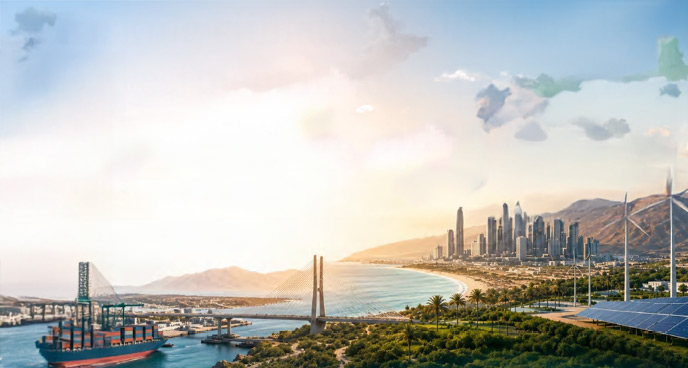
Climate change risk in the MENA region has evolved into a core economic and investment challenge, shaping infrastructure planning, trade competitiveness and long-term capital allocation. Risk-mitigation instruments, including specialised insurance and credit enhancement solutions, can serve as catalysts in mobilising sustainable growth across the region.
Rising temperatures, prolonged droughts, increased flooding and water scarcity are undermining agricultural output, supply chains, energy systems and investment decisions across the region. For governments, lenders, exporters and project sponsors, climate resilience has now become a central component of economic security, infrastructure planning and long-term growth.

Chief Executive Officer, ICIEC
MENA sits at the centre of this transition. Countries across the region see the utility in diversifying their energy mix beyond hydrocarbons through scaling renewable energy to meet ever-increasing demand for electricity. These countries are also addressing the inter-connected challenges of water and food security and secure value chains. These projects require substantial long-term financing and strong risk mitigation structures to achieve bankability and attract private capital. This is where export credit insurance, political risk insurance, reinsurance and credit enhancement can help unlock climate-resilient development.
A region of strategic opportunity
Many ICIEC Member States have programmes in renewable energy, water security, transport and logistics, food systems and industrial diversification. With the MENA region having renewable energy corridors, desalination infrastructure, green hydrogen projects and a regional logistics network, it is poised to be one of the most important markets for trade credit and investment guarantees over the coming decade. These projects often involve long maturities, require international partners and sovereign-backed counterparties. In many cases, there is a high perception of risk, which raises financing costs and limits private sector participation.
ICIEC, as a multilateral insurer, offers credit enhancement instruments that help reduce the cost of lending, whilst its risk mitigation covers non-payment risk for financing parties and project sponsors due to commercial and political risks, making transactions and projects more viable overall. The result is greater participation by international and regional banks, stronger trade resilience and more diverse sources of long-term capital providers for various sectors that are crucial to climate adaptation and green growth.
Where de-risking is needed most
The strongest de-risking needs are concentrated in the water–energy–food nexus, a central pillar of MENA’s resilience agenda. Renewable energy projects, including solar, wind, waste-to-energy, and both blue and green hydrogen, require long-term financing and dependable offtake arrangements. Desalination, water reuse and sanitation infrastructure are capital intensive and often benefit from credit enhancement. Climate-resilient irrigation systems and localised agricultural value chains are crucial to reducing food import volatility and supporting rural economies.
Sustainable transport, green industry and climate-resilient urban infrastructure and social infrastructure also require substantial de-risking support. The same is true for trade in essential goods and services. Emerging carbon markets may become another area where insurance and guarantees provide market stability as regulatory frameworks mature. Across these sectors, ICIEC’s role is not only to support capital mobilisation but also to improve project bankability by reducing commercial and non-commercial risks that might otherwise keep lenders and investors on the sidelines.
ICIEC’s mandate and instruments
ICIEC is a member of the Islamic Development Bank Group and the only multilateral insurer operating exclusively on a Shariah-compliant basis. Its mandate is to facilitate trade and investment among Member States through Shariah-compliant export credit insurance, political risk insurance, reinsurance and credit enhancement tools. These instruments enable banks, investors, exporters, contractors and sovereign-backed entities to manage payment default, currency transfer restrictions, expropriation and breach of contract as well as non-honouring of sovereign obligations in long-term projects with a transboundary investment element. In practice, ICIEC helps direct capital toward projects and trade corridors that might otherwise struggle to secure financing.
A track record anchored in climate-relevant business
ICIEC’s track record shows how risk mitigation can support sustainable development at scale. Since ICIEC’s inception in August 1994, cumulative business insured has reached $138.9bn, including $17bn in 2025 alone. These figures underline the ICIEC’s continuing relevance as Member States seek to mobilise capital for development and resilience.
MENA represents ICIEC’s largest regional footprint. Total business insured in Member States located in MENA stands at about $110.9bn, nearly 80% of ICIEC’s overall portfolio since inception. Approximately $100bn relates to trade and $10.8bn channelled to inward and outward investment. This concentration reflects both the scale of economic activity in the region and strong demand for Shariah-compliant, development-oriented risk mitigation solutions.
Over the past decade, engagement in climate-related sectors has expanded significantly. ICIEC has supported clean energy projects since its inception, with $6.8bn insured for a renewable energy mix, including solar, wind and waste-to-energy. ICIEC has also facilitated $1.42bn in clean water and sanitation projects and $7.7bn in non-energy green projects between 2015 and 2025. Regional examples supported by ICIEC include political risk insurance for equity investors in the Benban Solar Complex in Egypt, which was the largest project of its kind; reinsurance for two wind farms in Türkiye; reinsurance support for the Sharjah Waste-to-Energy Facility; and major reinsurance support for the Riyadh Metro construction project under Saudi Arabia’s Vision 2030.
ICIEC’s developmental impact goes beyond sectoral coverage. In 2025 alone, ICIEC de-risked transactions and projects worth $450m of private sector capital, supported over 294,000 jobs and enabled 5,998 small and medium-sized enterprises to access essential goods and services. ICIEC also supported with $889m in coverage for social infrastructure and $408m in other key social development categories, as reported for the year. These outcomes and positive momentum encompass climate-resilient trade and investment, which will translate into tangible benefits for people, businesses and the planet. The ICIEC Climate Change Policy continues to embed climate considerations in underwriting, risk management and impact assessment, whilst membership in global partnerships such as IRENA’s Energy Transition Accelerator Financing Platform (ETAF) synergises the origination of green projects by connecting key stakeholders.
Challenges that warrant honest reflection
Scaling climate-related insurance in MENA holds great potential and necessitates de-risking solutions. In some markets, project pipelines remain thin and feasibility studies do not always meet international lender standards. Long tenors combined with currency convertibility and transfer risks can complicate structuring. Regulatory uncertainty, evolving carbon markets, limited climate-risk data and uneven local insurance and reinsurance ecosystems also continue to slow progress.
The water–energy–food nexus also demands more innovative coordination. Governments, multilateral development institutions, export credit agencies, reinsurers, financiers, investors and project sponsors need to work together more deliberately. None of these barriers are insurmountable; overcoming the challenges requires a more integrated public-private approach.
Practical pathways forward
Several practical steps could accelerate climate-resilient trade and investment. Multilateral insurers, export credit agencies, reinsurers, development banks and private insurers can embed and systemise risk-sharing arrangements to expand capacity and extend cover. Better project planning and preparation and stronger feasibility work would improve bankability earlier in the project lifecycle. Credit and political risk insurance and credit enhancement structures can crowd in private capital where its patrons are hesitant to commit.
Progress also depends on stronger climate finance ecosystems. It is important to coordinate national diversification strategies, local and regional reinsurance capacity, enhanced climate-risk data and objective impact measurement in a more optimal manner. More widely accepted regional frameworks for carbon trading and green investment would also reinforce market confidence. An overarching objective should be to connect risk mitigation solutions offered by ICIEC and peers, public-private partnerships in renewable energy, water, agriculture and transport, and to increase awareness of how insurance and guarantees can make projects viable.
Conclusion
Scalable capital alone will not deliver MENA’s climate transition. The MENA region needs effective institutional partnerships and risk management tools that can turn climate ambition into bankable, resilient and development-oriented projects. ICIEC’s role is to reduce the barriers associated with commercial and political risk in a way that catalyses trade and investment flows within a development-focused and Shariah-compliant framework. As Member States accelerate climate adaptation and energy diversification efforts, de-risking instruments will play an increasingly important role in mobilising effective capital, strengthening investor confidence and delivering impact at scale across the region.
Dr Khalid Khalafalla is CEO of The Islamic Corporation for the Insurance of Investment and Export Credit (ICIEC).
Making Ratings and Blended Finance Work for Impact Delivery in Sustainable Development


Country Manager at ICIEC
The achievement of the Sustainable Development Goals (SDGs) by 2030 is dependent on the ability of the global financial system to mobilise and distribute the capital on a level never experienced before (Lagoarde-Segot, 2020). It is empirically determined that the low- and middle-income countries are facing an annual financing gap of more than four trillion United States dollars in the quest to achieve both development and climate goals (Clark, Reed & Sunderland, 2018). Despite the growth in sustainable finance, ESG investment and impact-oriented approaches, capital flows are still not right in relation to development needs and are concentrated in less-risk and more-income situations (Theodos et al., 2024).
In this milieu, two processes, namely, ratings and blended finance play an important part in influencing decision making in investments. Although the functions of both mechanisms are to alleviate the information asymmetries and risk management, the existing structure and implementation usually do not contribute to meaningful impact reporting (García‐Sánchez & Noguera‐Gámez, 2017). To enhance sustainable development finance, therefore, a thorough knowledge of the functioning of these tools, their shortcomings, and how they can be re-focused to achieve development outcomes is needed.
The Power and Limits of Ratings in Sustainable Finance
Ratings play a pioneering role in international financial markets in terms of perception, pricing, and regulation of risk. The credit rating influences the cost of sovereign and corporate bonds, the qualification of institutional portfolios and the level of capital regulation (Grittersová, 2020). ESG ratings have also become authoritative through indicative effects on sustainability performance to any investor wishing to incorporate environmental, social and governance factors in decision-making (Ziolo et al., 2019). Within the development environment, ratings are used as a gatekeeping mechanism: they carry out whether nations, project or organisations are considered investment worthy by large groups of capitals (Fini et al., 2023). To this end, ratings have significant power in creating and affecting the flow of capital to the emerging and developing economies.
Sovereign credit ratings place more emphasis on the macroeconomic indicators that are short-term in nature such as fiscal balance, inflation control and external debt indicators that are medium-term in nature (Barta, 2024). Although these factors are key to the financial stability, they do not always reflect long-term drivers of growth such as investments in education, healthcare, climate change adaptability and institutional capacity. As a result, nations that pursue the needed, but capital-intensive development projects can face the burden of ratings and high interest rates on borrowing, despite the fact that the development projects increase resilience and productivity in the long-term (Apostolou et al., 2025). This dynamism creates a structural bias that shuns accurately the outlays necessary to meet the SDGs.
Different approaches used by the providers result in variations of evaluations, thus reducing their usefulness as tools of decisions (Hellweg et al., 2023). Most of the ESG ratings are on the effect of environmental and social matters on financial risks of firms instead of the practical impact of corporate operations. Good disclosure practices and risk management systems might enhance the scores but may not be translated into any measurable social or environmental results (Landi et al., 2022). ESG ratings are therefore often meritocracy-based, as opposed to outcome-based, and offer little direction on concentrating capital in high-impact development initiatives.
Impact Blind Spots in Current Rating Frameworks
The major weakness with the current rating systems is the fact that they cannot substantively measure the impact of development. The ratings seldom put additionality into consideration where additionality is whether an investment provides the effects that would otherwise not have been the case without the capital (Salzman & Weisbach, 2024). They also have complexities in taking into consideration contextual issues, including the base level of infrastructure, income or access to services in a particular country or community. Consequently, the impact of a particular project will have significantly varied outcomes of development across the geographical region, but ratings generally have a tendency to use homogeneous standards (Wang et al., 2023). Such blind spots lead to the capital allocation systems that tend to prioritise low-risk systems over high impact opportunities, and thus subversive to the transformational impetus of sustainable finance (Udohaya, 2025).
Blended Finance: Conceptual Promise and Practical Constraints
Blended finance has become a prominent approach to tapping into the private capitals by facilitating the development goals. It aims to correct market failures that would discourage private investments through a combination of concessional capital by the public or philanthropic sources with commercial investments (Havemann, Negra & Werneck, 2022). Blended finance fits well in the areas that are associated with the need to create a sustainable world such as renewable energy, climate resilience infrastructure, agriculture, healthcare, and affordable housing (Leal-Arcas et al., 2025).
Practically, blended finance has not been able to attain the preferred size and effectiveness. Mobilisation ratios (amount of private capital inflow raised on a unit of concessional capital) are often smaller than expected (Attridge, 2022). Development finance actors and the wide variety of public actors are characterised by risk aversion, which limits their readiness to support true first loss capital or to have uncertain returns (Lulek, 2025). As a result, blended finance is also used to finance projects and initiatives that would otherwise have probably gone on without concessional finance so in additionality and efficient allocation of limited public resources are questioned.
Weak Impact Accountability in Blended Finance
Lack of strong impact accountability is also another major threat facing blended finance. Despite development goals often being offered as the justification of concessional aid, the measurement of impact is often pushed to the second position in relation to financing structuring and raising capital (Dye, 2022). This poor accountability undermines trust among investors, policymakers and citizens and inhibits the ability to learn through experience and to improve on the coming transactions (Agu, Nkwo & Eneiga, 2024).
The Disconnect Between Ratings and Blended Finance
Ratings and blended finance are rarely developed in such a way that they complement each other and thus lose the chance to appeal to the private capitals. Conventional credit rating is often unwilling to give due credit to risk reduction conferred by blended finance instruments like guarantees, political risk insurances or subordinated capital (Sharma et al., 2023). Therefore, undermining the effectiveness of the blended structures in signalling and precluding many investments complete the requirements imposed by institutional investors.
On the other hand, blended finance deals in the rule of thumb are often short of standardised, plausible indications related to quality of impact and additionality to development (Yunita et al., 2023). As such, the engagement is still limited to development-oriented investors instead of the venturing into mainstream capital markets. Such a mismatch of ratings and blended finance consequently limits the effectiveness of these two mechanisms and their general effectiveness (Attridge, 2022).
Toward Impact-Adjusted Rating Frameworks
To contribute to the sustainability of development, rating approaches should transform to denote the risks and opportunities of long-term outcome of development. It requires the shift in the risk definition that should include climatic transition and physical risks, demography, human capital formation, institutional strength, and social connectedness (Di Febo, 2025). These dimensions are becoming known to be of substance to the economic performance and financial stability, but they have not been given enough weight that they deserve in traditional measurements.
Blended finance should also evolve if it is to have an effective influence in bridging the SDG financing gap. Replacement of transactions on a case-by-case basis with standardised platforms and vehicles can diminish expenditure.
Moreover, the additionality of development and the importance of concessional capital should be specifically noted in the ratings. Additional metrics or complementary evaluations may include find out whether investments increase access to fundamental services, strengthen resilience, or inclusive development, and these results would be improbable in the absence of blended finance assistance (Udohaya, 2025). More standardisation, transparency and outside validation of impact measures would be required to guarantee credibility and avert impact washing.
Reimagining Blended Finance for Scale and Effectiveness
Blended finance should also evolve in case it is to have an effective influence in bridging the SDG financing gap. Replacement of transactions on a case-by-case basis with standardised platforms and vehicles can diminish expenditure, light speed and create an acquaintance with investors (Lagoarde-Segot, 2020). Replications can be used to enhance the learning process, efficiency, and enable more participation by institutional investors.
More importantly, public and philanthropic capital should be prepared to take a real risk in situations where the impact of development is maximised (Clark, Reed & Sunderland, 2018). At the same time, the accountability of impact should be enhanced with the help of obvious goals, outcome measures, and incentives of a dependent nature. Different strategies can be used to match the financial terms and the delivery of impacts and improve the level of transparency (Theodos et al., 2024).
The Role of Public Policy and Institutions
The key role of matching ratings and blended finance with sustainable development goals is undertaken by governments, development finance institutions, and multilateral organisations. Reform of policies to enhance data quality, transparency and regulatory predictability is capable of minimising perceived risk and contributing to the attraction of investment (García‐Sánchez & Noguera‐Gámez, 2017). This change will increase fragmentation and streamline operations and multiply the retaliation of development finance actors.
Interaction with rating agencies is especially essential as it is necessary to make sure that the approaches are based on development reality and they are not strengthening structural bias (Grittersová, 2020). Through collaboration, both the public and the private actors might be useful in reformulating the financial norms to ensure greater resilience in the long run, inclusivity, and sustainability.
Conclusion
Blended finance and ratings are potent tools in the world financial system, but they are not ready to deliver at scale and efficacy to achieve sustainable development objectives. Ensuring that ratings and blended finance can become an effective delivery tool is not a technical issue alone, but it also represents a bigger set of concerns about incentives, institutional requirements, and political will. To transform sustainable development from a dream to a basement, the financial systems need to change in terms of perceiving not only risk and profits, but also the real-life performance supporting long-term wealth and stability.
Making Ratings And Blended Finance Work For Impact Delivery In Sustainable Development – Via Reinsurance


Manager, Reinsurance at ICIEC
Buyers of insurance, both retail and commercial, have generally no dealings with a reinsurance company because reinsurance is a business-to-business transaction. Therefore, most people are not even aware of the existence of reinsurers who, at their end, have historically maintained a relatively low profile. This has changed as reinsurers publicly emerged as safety nets for direct insurers hit by massive disaster losses.
In its simplest form, reinsurance can be defined as insurance of insurance companies. Most insurers generally operate within their national boundaries and often offer cover that is limited to certain regions and customer segments. The capital base of many of those companies is exposed to disaster risk and cannot be simply strengthened without affecting affordability. As such, insurance companies rely on “risk capital” from third parties, in the form of reinsurance, to absorb large losses that unexpectedly deplete claims-paying resources and reduce underwriting capacity (Culp and O’Donnell 2010). Insurers transfer some of their risks to reinsurers in order to protect their balance sheets and to free up capital which, in turn, enables them to provide more risk-bearing capacity to their customers.
Reinsurers can pay for catastrophic losses because of their global diversification of risk portfolios and investment, making protection more broadly available at lower cost and higher security. This is how reinsurance creates value. The essential role of reinsurance is to support recovery efforts after disasters (such as earthquakes, typhoons, and floods) strike. Reinsurers are able to support community recovery efforts by paying claims that help communities rebuild. Equally important is the contribution of reinsurers to alleviating the financial consequences of mortality and health shocks. The recent COVID-19 pandemic serves as a case in point where reinsurers support their direct insurance customers in paying the costs of those who fall ill with the virus and require medical attention as well as by compensating families that have suffered the death of the main breadwinner.
By paying a premium to their direct insurer(s), individuals, households and corporates seek protection against a wide spectrum of specific risks, ranging from car accidents to flood disasters. Direct insurers, in the reinsurance context known as cedants, pass on entire portfolios of risks (where usually all premiums and losses are shared) or large single risks (covering losses exceeding a certain threshold) to globally operating and diversified reinsurers. The original policyholder is not involved in this transaction — the direct insurer remains the contractual partner.
Reinsurers assume the risk and add it to their portfolio of diverse risks. Typically, reinsurers are careful to diversify geographically and by type of risk. In order to limit their own exposure, reinsurers may sometimes pass on some of their risks to other reinsurers (known as retrocession) or to institutional investors who invest in insurance-linked securities.
The Economic and Societal Benefits of Reinsurance
Reducing the cost of risk on the back of global diversification Insurance is fundamentally about pooling: individuals or companies pay a premium in return for financial compensation in the event of a covered loss. The premium paid by the insured (the ‘policyholder’) is calculated so that it allows the insurer to honour its claims payment obligations and meet its non-claims costs such as administration expenditure and the cost of capital. Insurance premiums are a function of the risk covered: the greater the probability of the risk occurring and/or the potential severity of the risk, the higher the premium.
Insurance essentially works as a redistribution mechanism: the premiums paid by policyholders who experience no (or little) claims finance the indemnification of those who are less fortunate. This mechanism works because not all policyholders suffer a large loss at the same time. It is in this sense that the ‘pluricentennial’ motto of Lloyd’s of London — which defines insurance as “the contribution of the many to the misfortune of the few” — shall be understood. This principle of “collective solidarity” which constitutes the very foundation of the insurance and reinsurance business model is rooted in science. The underlying mathematical principles are known as the ‘law of large numbers’ and the ‘central limit theorem’. Intuitively, they state that when one combines a large number of risks which, to a significant extent or at least to some extent, are independent from each other, there is a ‘compensatory’ effect between these different risks. In the case of insurance, this effect occurs between the policyholders who suffer a loss and the policyholders who are not impacted. On this basis, the aggregate loss experience over the entire risk portfolio becomes relatively ‘predictable’. In other words, aggregating a vast number of individual policyholders’ risks creates a risk portfolio which benefits from a lower volatility of claims. How does this mechanism enable the insurer to offer coverage at a lower cost?
Insurers are required by regulators to hold capital that is sufficient to absorb large losses and meet their commitments to all their policyholders with a certain probability, which can be seen as a ‘security level’. The corollary to the diversification effect is that, for a given security level, the total amount of capital that the insurer is required to hold decreases in relative terms when its risk portfolio becomes more diversified, everything else being equal. In other words, diversification reduces the amount of required capital for the coverage of a given policyholder risk and, consequently, lowers the ‘cost’ of insuring that risk.
Now enter the distinction between insurance and reinsurance. It primarily lies in the ability to pool risks. Most insurance companies — including the very large ones — have a local, national or regional footprint, due to the need to maintain distribution networks and close contact with their customers. Therefore, insurers only mutualize risks on a limited geographical scale. While this level of mutualization is sufficient for smaller risks that occur frequently, it may turn out to be insufficient for certain peak events such as a large natural catastrophe hitting a significant proportion of property insurance policies within a given country. For such a catastrophe, risk mutualization needs to be operated internationally or even globally. This is precisely the role of reinsurers. Contrary to most insurers, reinsurers generally have an international or even truly global footprint, allowing them to pool and mutualize risk exposures worldwide.
This is at the heart of the fundamental value proposition of reinsurance companies: they are able to assume a specific unit of risk at lower capital charges and cost than primary insurers who are limited to mutualization on a national level only. This differential in capital requirements for a particular block of business reduces the cost of risk and constitutes the added value of reinsurance, benefiting all insurance policyholders. It also explains why reinsurance is intrinsically a global industry, relying on diversification of risks across the globe, a wide spectrum of business lines and geographies.
Improving Availability and Affordability of Insurance
Narrowing protection gaps — increasing underwriting capacity
By leveraging global diversification, reinsurance is an efficient source of capital for direct insurers. Tapping into it increases insurers’ risk underwriting capacity and allows them to issue insurance policies with higher coverage limits, notably for those peak risks which need to be diversified globally and, in the absence of reinsurance protection, could remain completely uninsured. In other words, reinsurance allows insurers to provide more substantial and/or affordable insurance coverage to their individual policyholders, making the latter benefit from the diversification benefit afforded by global risk spreading through reinsurance. By enabling more and less expensive insurance, reinsurers make a vital contribution to narrowing global protection gaps, i.e. the difference between economic and insured losses.
Enabling innovation
In addition to providing cost-efficient capital, reinsurance is also an enabler or an outright source of innovation, not least due to the major players’ proprietary catastrophe modelling capabilities which have spurred the insurability of major natural disasters, for example. Efforts to model cyber exposures are a more recent example. Also, reinsurers play a major role in supporting their customers’ product development, for example in the areas of critical illness and occupational disability. Ultimately, reinsurers’ innovative credentials help expand the limits of insurability, deepening and broadening available insurance cover and narrowing protection gaps. Having said this, reinsurers face challenges, too, in this context as the frequency of non-modelled risks seems to be rising and climate change trends are blurring the ability to forecast natural disasters.
Disseminating risk knowledge and building risk awareness
Risk knowledge is in its essence, putting a price tag on risks, so society can allocate resources to risk mitigation in the most effective way. As many risks are interconnected and global in today’s world, reinsurers, based on their global pool of data and expertise, are a key resource for tracking these connections and making all stakeholders aware of them. Examples include:
- Longevity, which is influenced by food security, nutrition, climate change, public health care and education. All these influencing factors vary by country and region but are interconnected at the same time. Understanding these interconnections makes it possible to design sustainable pension solutions and provide (real-time) prevention and other services to insureds.
- Renewable energy is key to mitigating climate change. But the sun does not always shine, droughts make hydropower unavailable, and no wind means no energy. Insurance coverages for the lack of sunshine, water or wind smooth revenue streams and make renewable energy projects more attractive to investors. This ultimately accelerates the energy transition.
- Climate change affects the frequency and severity of natural catastrophes, something that the reinsurance industry generally expects and models. For example, 2020 was another active year for natural catastrophes in the U.S. with a record-breaking 30 named storms in the Atlantic and a widespread wildfire season on the West Coast. Insuring farmers, homeowners, businesses, etc. against these perils provides economic stability even if disaster strikes, thereby assuring better livelihoods for the growing population on our planet.
- The cyber space has developed into the backbone of modern economies. Today, cyber insurance helps companies to be back online fast, so that the damage from cyber attacks and incidents does not jeopardize their survival.
- All of the above is only possible if risks are identified, assessed for frequency and severity, and analyzed with an eye to their potential for mitigation so that affordable premiums commensurate with the risk can be determined.
The first step in the risk management examples above is the identification of new or “emerging risks”. Emerging risks come with high uncertainty. They have still to be modelled and are potentially unquantifiable, or they evade or challenge current modelling. Examples include risks associated with new technologies like genetic engineering, nanotechnology, robotics or artificial intelligence.
By identifying and analyzing emerging risks the reinsurance industry provides a societal service. As an absorber of peak risks, reinsurance has developed a unique focus and expertise when it comes to scanning for emerging loss accumulations.
By identifying and analyzing emerging risks the reinsurance industry provides a societal service. In an important second step, reinsurance is instrumental in translating these risks into widely available and affordable insurance solutions. As an absorber of peak risks, reinsurance has developed a unique focus and expertise when it comes to scanning for emerging loss accumulations. Also, reinsurers’ emerging risk research not only enables potential prevention measures but also helps identify limits of prevention and insurability.
Enhancing Macroeconomic Shock Resilience
Re/insurance cover significantly helps economic recovery following a natural catastrophe, as shown in various academic studies (Von Peter et al 2012, Breckner et al 2016, OECD 2018). According to these studies, a higher level of coverage in general is accompanied by significantly better economic performance following a catastrophe. This effect is measured by the long-term effects of large natural disasters on economic activity. If fully insured, these events do not have a significant lasting effect on a country’s GDP level over the longer term. On the other hand, in the absence of insurance cover, there is evidence of a lasting negative effect on economic activity.
Large-scale natural catastrophes have massive economic effects, both direct and indirect. Besides the immediate negative effects resulting from the destruction of production sites, infrastructure, etc., the longer-term consequences should be considered as well. Emerging and developing economies in general are more heavily affected by extreme natural disasters than industrialized countries, not least because their resilience and preparedness levels are (much) lower.
The role of (re-)insurance in limiting the negative implications of extreme events and the resulting macroeconomic costs, especially for the most vulnerable countries, is multifaceted. First, given the global scope of reinsurance, affected countries can draw on readily available international resources to pay for losses. As shown before, this risk-bearing capacity can be provided more cost-efficiently than through self-insurance on a national level. Secondly, (re-)insurance provides incentives for loss prevention, e.g. through incentivizing better building standards. And finally, by setting a price tag on insured properties or business activities, insurance mechanisms increase the efficiency of disaster prevention — as opposed to post-event foreign aid inflows.
Contributing to Sustainable Development — via Reinsurance
By its very nature, reinsurance is an important contributor to achieving sustainable development. By mitigating major losses reinsurers smooth economic volatility and reduce economic shocks. Their extensive expertise uniquely positions them to contribute to the assessment and understanding of new, emerging and changing risks. Furthermore, reinsurers have a long record of driving innovation and the implementation of new technologies such as space technologies (satellites) or, more recently, green tech solutions.
Reinsurers are also well aware of their “corporate responsibility” and are committed to global initiatives such as the UN Sustainable Development Goals (SDGs), the Paris Agreement on Climate Change and many others. Global partnerships for sustainable development as well as voluntary commitments to standards such as those embodied by the UN Global Compact (UNGC), the Principles for Sustainable Insurance (PSI) and the Principles for Responsible Investment (PRI) are common for the reinsurance industry. A good example of cooperation between (re-)insurers and supranational organizations is the production of “Global guidance on the integration of environmental, social and governance risks into insurance underwriting” (UNEPFI PSI 2020).
As major institutional investors, reinsurers’ sustainable investing practices support sustainable development. Given the risk competency of reinsurers, the integration of ESG criteria into the investment process is well established in the industry. The establishment of sustainable investment guidelines is common practice in the investment management of reinsurers as are large-scale investments in renewable energy and sustainable real estate and infrastructure. Reinsurers have taken on innovative sustainable finance instruments such as green bonds. Also, initiatives such as the Net-Zero Asset Owner Alliance are supported by several reinsurers.
Climate change is one of the main causes of sustainability management. Its societal implications are manifold, ranging from physical and economic risks to changing business models and climate-induced migration (Munich Re 2021). The global reinsurance industry has been vocal about climate change and started to explore this phenomenon as early as in the 1970s, accumulating extensive data, knowledge and experience over the past five decades (Munich Re 2015). Reinsurers understand climate risks and are compensated for assuming such risks in order to support recovery efforts after disasters strike by paying claims that help communities to rebuild.
Reinsurers play an important role in helping societies adapt to climate change. They assume a portion of the financial burden of those affected by natural disasters, allowing them to return to their daily lives more quickly after a loss event. This role is particularly relevant for emerging and developing countries which are most vulnerable to natural catastrophes.
In addition to assuming underwriting risk, reinsurers also engage in a number of other activities and support measures that enable a more rapid adaptation to climate change. For example, they share information and provide education to raise awareness of natural catastrophe risks in both the public and private sector. They also assist in designing policy measures to incentivize the development of private sector risk transfer solutions (e.g. through conducive accounting and taxation rules) as well as Public-Private Partnerships such as catastrophe pools. In addition to risk-reducing insurance solutions geared towards loss prevention and adaptation to climate change, reinsurers also act as enablers of climate-friendly and sustainable technologies and support the transition to a low carbon economy. Knowledge and innovative coverage concepts help expand the frontiers of insurability and facilitate the breakthrough of new technologies. Insurance solutions enabled by reinsurance can protect against specific risks, thereby enhancing the appeal of green technologies for investors and strengthening their financing viability. This includes performance guarantees for renewable energy technologies (offshore wind farms and solar parks, for example) and support for hydrogen or methane fuel cell technology.
Conclusions and Recommendations
ICIEC has strategically leveraged the international reinsurance market to enhance its operational efficiency and expand its capacity. This prudent approach has strengthened portfolio diversification through effective risk transfer while improving financial flexibility. Notably, the reinsurance cession transfer rate increased from 66% in 2020 to 77% as of 2024, reflecting the continued strong support from the reinsurance market and ICIEC’s ability to optimise risk management by offloading exposures from its balance sheet. The risk transfer strategy also enhances ICIEC’s capacity and ability to support strategic and impactful projects in its Member States.
For reinsurance to benefit the economy and society it needs to operate globally. Global scale and risk diversification allows reinsurers to assume very large and complex risks in an affordable way. As such, reinsurers are a major source for stable and shock-resilient domestic insurance markets. In countries like Chile and New Zealand, for example, global reinsurers generally pay for the lion’s share of earthquake disasters, which otherwise may not be insurable at all, falling on domestic households, businesses and taxpayers in their entirety.
Reinsurance can play its economically and societally beneficial role only if certain basic policies and regulatory conditions are met. A key prerequisite is reinsurers’ unfettered ability to operate on a cross-border basis, i.e. the freedom to provide services. Reinsurers also require the ability to use their worldwide pot of premium to pay for local claims. Restrictions on the free flow of capital, e.g. through deposit requirements imposed on foreign reinsurers, impair their ability to move capital to cover major events which would ultimately drive up the cost of cover. (Source: GRF 2021)
Reinsurance Exposure (USD Mn)
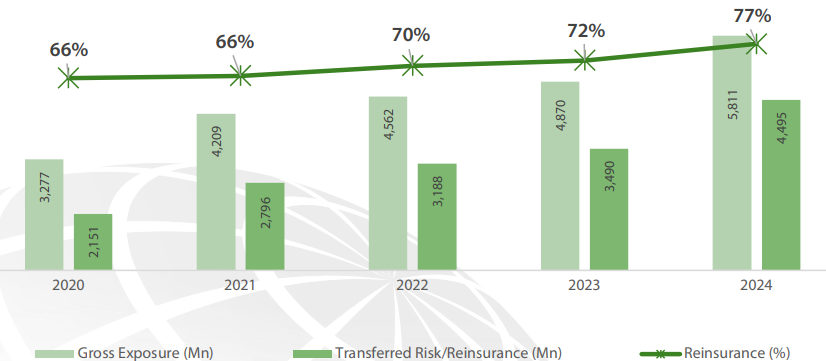
Oman's Macroeconomic Situation And Growth Momentum

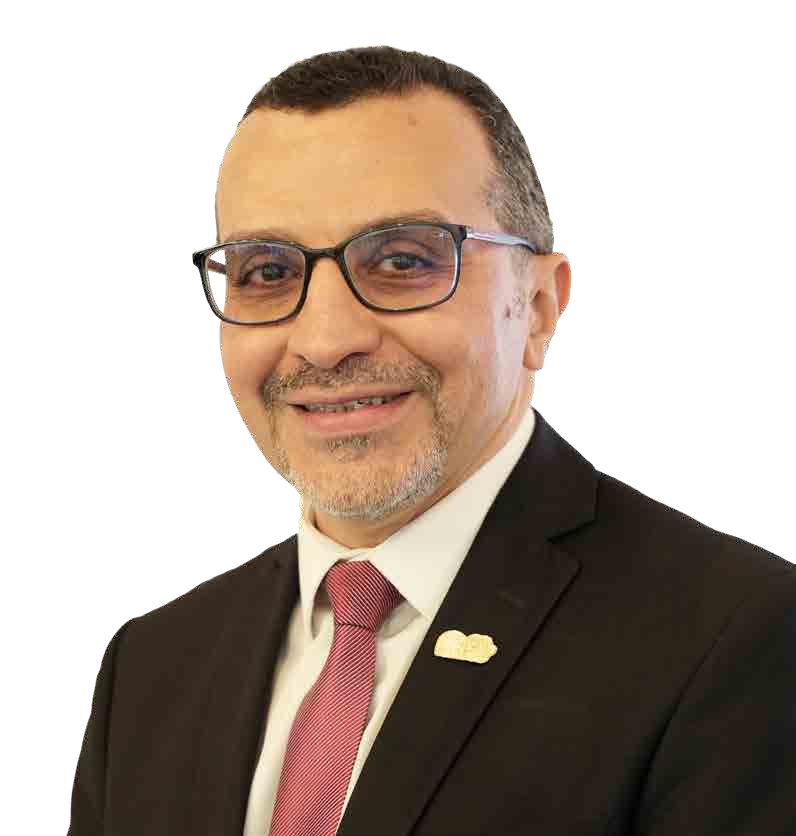
Lead Underwriter (Operations, Sovereign Risks) at ICIEC
Oman’s economic outlook for 2025 reflects moderate growth, supported by ongoing structural reforms. Both the Ministry of Economy and the IMF estimate real GDP growth of around 2.2%–2.3%. Growth is driven mainly by the non-oil economy, which includes manufacturing, logistics, tourism, and services. These sectors continue to outperform hydrocarbon activities, which remain constrained by OPEC+ production caps.
Preliminary data from Q1 2025 showed GDP expanding by 4.7%, largely fuelled by robust non-oil activity. While crude oil production has been capped, natural gas output has partially offset this decline, helping maintain stability in hydrocarbon revenues. This diversification underscores the success of Oman’s long-term development agenda, which seeks to reduce reliance on oil while cultivating new engines of growth.
Government policy remains firmly anchored in Vision 2040, which emphasizes fiscal discipline, diversification, and structural reform. Fiscal performance has been strong, with surpluses recorded in 2024 followed by only a modest deficit projected in 2025. Public debt has fallen dramatically from a pandemic-era peak of more than 68% of GDP in 2020 to around 35% today, thanks to prudent fiscal management and conservative budgeting.
Monetary policy complements these efforts, focusing on price stability and investor confidence. Oman has one of the lowest inflation rates in the region, helping preserve household purchasing power and reinforcing business sentiment.
The manufacturing sector has become a critical driver of growth, expanding across petrochemicals, food processing, metals, and pharmaceuticals. Meanwhile, Oman’s strategic location at the crossroads of Asia, Africa, and the Middle East supports its transformation into a global logistics hub, underpinned by world-class port and transport infrastructure.
Vision 2040 and Growth Drivers
Oman Vision 2040, launched under the guidance of His Majesty Sultan Haitham bin Tariq, serves as the nation’s long-term blueprint for achieving economic resilience, social well-being, and environmental sustainability. It articulates a clear strategy to transition from an economy historically dependent on hydrocarbons toward one that is diversified, knowledge-based, and globally competitive.
Oman’s development trajectory is guided by Vision 2040 and the Tenth Five-Year Development Plan (2021–2025). Both place emphasis on non-oil sector expansion, foreign investment, and modern infrastructure. Non-oil GDP is forecast to grow by 2.7% in 2025, supported by investments in ports, industrial clusters, and logistics corridors.
Recent reforms, including the Foreign Capital Investment Law, have further liberalised the business environment and encouraged international participation. The Vision 2040 agenda enjoys support from key multilateral institutions such as the IsDB Group, IMF and World Bank, which have commended Oman’s steady progress on fiscal consolidation, legal modernisation, and private sector development.
Progress to Date
- Oman has already diversified its non-oil revenues to account for more than 30% of GDP, supported by strong performance in logistics and manufacturing exports.
- The successful issuance of green sukuk and the establishment of frameworks for Public-Private Partnerships (PPPs) demonstrate tangible steps toward achieving fiscal and environmental goals.
- The roll-out of initiatives under the National Energy Strategy 2040 confirms Oman’s leadership in green transition within the Gulf Cooperation Council (GCC).
Creditworthiness has improved significantly. In 2025, Moody’s upgraded Oman to Baa3 and S&P confirmed BBB-, both with stable outlooks. These investment-grade ratings reflect strong fiscal discipline, lower debt ratios, and greater policy predictability.
Renewable energy is emerging as another major pillar. Large-scale solar and wind projects are underway, alongside ambitious plans in green hydrogen, positioning Oman to become a regional leader in sustainable energy. These initiatives align with global climate commitments while also generating new industries and long-term employment opportunities.
Despite ongoing global uncertainties, including volatile oil prices, geopolitical risks, and supply chain disruptions, Oman continues to deliver steady growth. Its ability to adapt to shocks highlights growing institutional capacity and a clear commitment to reform continuity.
Fiscal and Monetary Policy
Oman’s fiscal strategy remains cautious and disciplined. The 2025 budget anticipates a modest deficit of OMR 0.62 billion, consistent with conservative oil price assumptions of USD 60 per barrel. Public debt is expected to fall further below 35% of GDP, reinforcing long-term sustainability and supporting the country’s upgraded credit ratings.
The Central Bank of Oman (CBO) continues to prioritize monetary stability. Inflation has been well contained: the annual rate fell to 0.5% in August 2025, the lowest since late 2024, with an average of just 0.8% for the year through August. This reflects stable housing and fuel prices, effective supply chain management, and timely government subsidies. Price stability is central to economic confidence. By maintaining predictable inflation, the CBO provides an enabling environment for investment and supports household welfare. Together, prudent fiscal and monetary policies form a strong macroeconomic anchor for Oman’s medium-term outlook.
Development Agenda and Operational Resilience
The government’s development agenda is firmly anchored in Vision 2040, aiming to transform Oman into a diversified, innovation-driven economy. Key elements include:
- Digitalization of government services to increase efficiency and transparency.
- SME empowerment and entrepreneurship support to foster private sector-led growth.
- Labour market reforms to improve productivity and attract talent.
- Human capital investment, with a focus on education, skills, and youth employment.
Operational resilience has been evident in Oman’s capacity to maintain policy discipline despite volatile global conditions. Adequate foreign reserves and moderate debt sustainability risk provide buffers against external shocks. This resilience underpins investor confidence and strengthens Oman’s reputation as a stable destination for long-term projects.
Islamic Finance Proposition and Sukuk Developments
Islamic finance has become one of Oman’s fastest-growing financial segments. Shariah-compliant banking now represents over 16% of total sector assets, with steady growth expected as new players enter the market.
Sukuk issuance has expanded rapidly, attracting both domestic and international investors. Major issuers such as Energy Development Oman (EDO), Omantel, and the Oman Electricity Transmission Company have successfully tapped Sukuk markets to finance infrastructure and energy projects. This demonstrates the sector’s ability to mobilise long-term funding while aligning with ethical investment preferences.
Beyond traditional Sukuk, Oman has embraced Commodity Murabaha and Islamic trade finance solutions, particularly in manufacturing and logistics. Innovative instruments, including green and sustainability-linked Sukuk, are gaining traction, placing Oman at the forefront of Islamic financial innovation in the region.
By broadening funding channels and deepening the capital market, Islamic finance is helping diversify Oman’s financial system and support national development priorities.
Infrastructure and Project Pipeline
Oman maintains a strong pipeline of strategic projects designed to enhance connectivity, industrial capacity, and renewable energy integration. Key initiatives include:
- Expansion of Sohar, Duqm, and Salalah ports, creating world-class maritime and logistics hubs.
- Development of new highways and rail networks to improve regional connectivity.
- Modernisation of airports to accommodate rising passenger and cargo volumes.
- Upgrading of electricity transmission grids, supporting renewable integration and industrial growth.
Special Economic Zones (SEZs), particularly in Duqm and Sohar, are attracting international investment through public-private partnerships and targeted incentives. These clusters are set to become anchors of Oman’s diversification strategy, boosting export competitiveness and job creation.
Oman’s Relationship with the IsDB Group
Oman has been a founding member of the Islamic Development Bank (IsDB) Group since 1974, with a subscribed capital share of ID 185 million (≈USD 530 million). Over the decades, Oman has received more than USD 2.5 billion in cumulative approvals from the Group, financing projects across transport, health, water, social infrastructure, and industrial development. These engagements are closely aligned with Vision 2040, supporting diversification, private sector growth, and sustainable development.
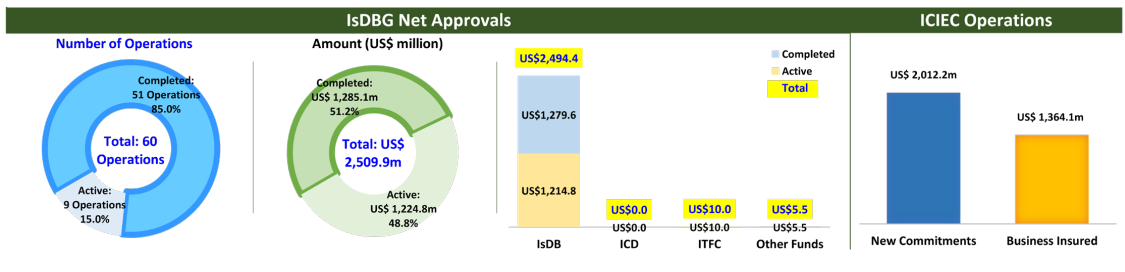
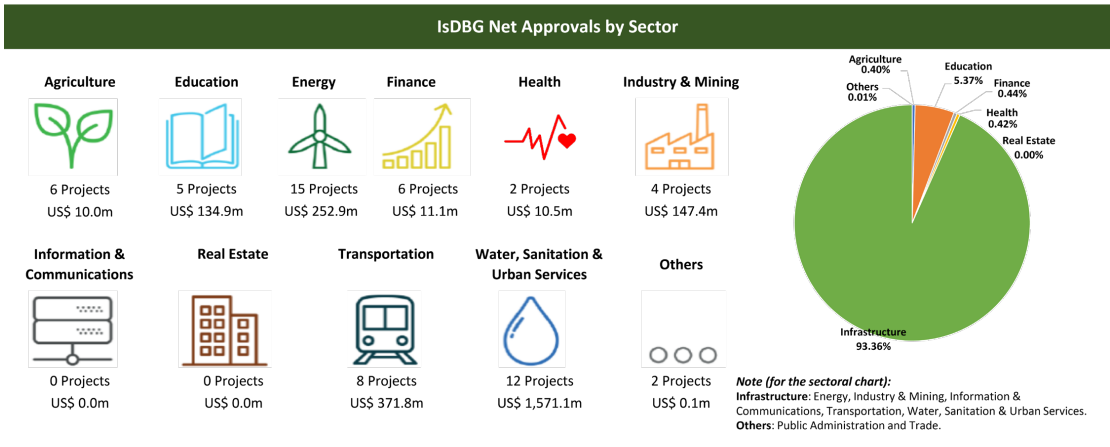
ICIEC’s Engagement with Oman
Oman joined ICIEC in 2009 and has since developed a strong working relationship with the institution. ICIEC provides risk mitigation and credit enhancement tools that support both sovereign and private transactions in Oman. Coverage spans short-term trade credit, medium-term investment guarantees, and customized products for infrastructure and energy projects.
Selected Case Studies
Duqm Port Project (2018): ICIEC provided USD 114 million in reinsurance cover to Atradius, supporting the construction of a liquid bulk berth terminal in the Duqm Special Economic Zone. This project strengthened Oman’s logistics competitiveness by reducing transport distances and costs and enhancing export potential.
Sohar Port Expansion (2025): ICIEC signed a USD 40 million policy with Royal Boskalis for dredging and development works at the Sohar Port and Freezone South Expansion. The project will deepen navigation channels and upgrade jetty infrastructure, positioning Sohar as a leading regional maritime hub. It also supports the launch of MARSA LNG, the Middle East’s first LNG bunkering facility, underscoring Oman’s commitment to clean energy solutions. ICIEC’s coverage enabled smoother access to financing and ensured project bankability.
Through such transactions, ICIEC plays a catalytic role in mobilising foreign investment, promoting sustainable trade, facilitating Oman’s broader diversification strategy, and contributing directly to Vision 2040 objectives.
Opportunities for Deeper ICIEC–Oman Collaboration
- Green and sustainable projects: ICIEC can support Oman’s ambitious renewable energy and green hydrogen agenda, particularly in attracting global investors to solar, wind, and hydrogen clusters.
- PPP frameworks: As Oman advances public-private partnerships in ports, utilities, and logistics, ICIEC’s guarantees can help mobilise Foreign Direct Investment (FDI) and support the financial sustainability of these ventures.
- Export diversification: With non-oil exports already accounting for over a third of Oman’s trade, ICIEC’s credit insurance products can further expand access to new and higher-risk markets in Africa and Asia.
- SME support: By tailoring risk mitigation solutions for small and medium exporters, ICIEC can contribute directly to job creation and private sector empowerment, both key pillars of Vision 2040.
Outlook and Strategic Implications
Oman’s economy is projected to grow at 2.4%–3.4% in 2025, accelerating to as high as 3.7% in 2026 as OPEC+ production caps are gradually eased and non-oil momentum builds further.
Key Growth Drivers
- Ambitious investments in logistics and industrial clusters.
- Expansion of renewable energy, with a special focus on green hydrogen.
- Digital transformation and SME development.
- Continued reforms to the business environment and labor market.
Fiscal and external buffers will remain strong, supported by cautious budgeting and a policy of channelling hydrocarbon surpluses into debt reduction and infrastructure upgrades. Public debt is projected to remain below 35% of GDP, compared to more than 68% just five years ago, a clear sign of reform success.
Risks persist, including global oil market volatility, potential trade disruptions, and regional geopolitical uncertainties. However, the growing share of non-hydrocarbon exports (over one-third of the total), coupled with steady gains in manufacturing and services, provides important safeguards.
Over the medium term, Oman is set to redefine the Gulf development model—transitioning from resource dependence to a balanced, innovation-driven economy. Strategic partnerships with multilateral institutions such as the IsDB Group will continue to play a pivotal role, ensuring access to risk mitigation tools, strengthening investor confidence, and accelerating the realization of Vision 2040 objectives.
Conclusion
Oman’s economic transformation is gaining traction. The combination of fiscal discipline, strong credit ratings, growing Islamic finance, and an ambitious infrastructure agenda positions the Sultanate for sustainable and inclusive growth. With Vision 2040 as its compass and active partnerships with the IsDB Group, particularly ICIEC, Oman is steadily emerging as a regional benchmark for economic sustainability and diversification.
The Republic of Iraq – Economic Transition and Development Priorities
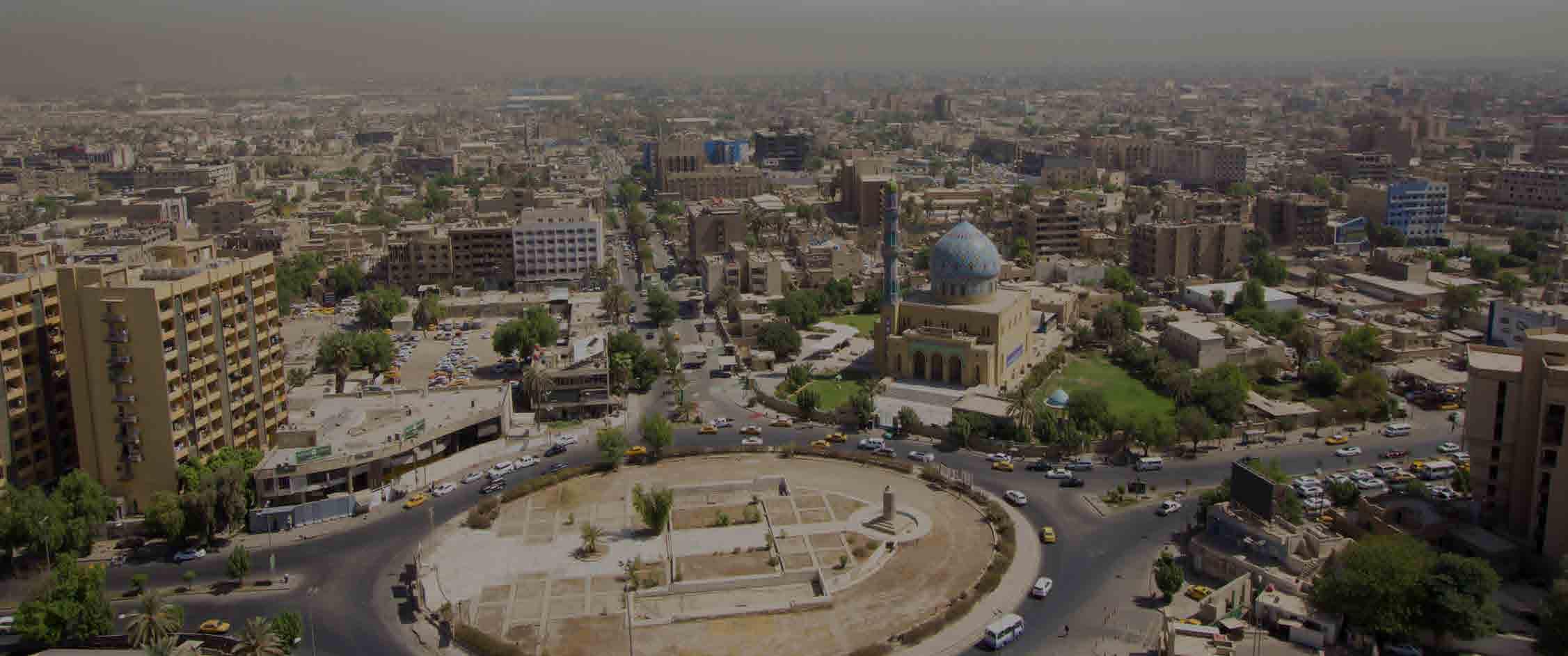

Country Manager, MENA Region Division

Associate, Risk Management at ICIEC
Following years focused on reconstruction and stability, the Republic of Iraq is working to transition its economy from heavy dependence on oil exports toward a more diversified and sustainable growth model. The government’s development priorities include strengthening the private sector, improving infrastructure such as electricity and transportation, and modernising public financial management. Investment in agriculture, manufacturing, and digital services is seen as essential to create jobs for Iraq’s young and rapidly growing population. Anticorruption reforms and regulatory improvements are also central to attracting foreign direct investment and rebuilding investor confidence. This transition agenda is guided by Iraq’s Vision 2030 and translated into action plans through the National Development Plan (NDP) 2024–2028, which sets medium-term priorities across infrastructure, public services, and institutional reform. Long-term economic stability depends on fiscal reform, human capital development, and reducing vulnerability to fluctuations in global oil prices.
Hydrocarbons continue to play a central role in Iraq’s economy, providing the bulk of fiscal revenues and foreign exchange earnings. As a result, economic performance remains influenced by oil prices and production levels. At the same time, the authorities are increasingly focused on strengthening the foundations for broader-based growth, supported by gradual reforms and targeted investment.
Iraq enters this phase supported by stable financial foundations. Foreign exchange reserves remain sizeable, and external debt service obligations are relatively low. These conditions provide flexibility to manage volatility and support medium-term priorities, particularly in areas that enhance productivity, service delivery, and private sector participation.
At the institutional level, progress has been made in streamlining budget approval and improving execution rates, particularly for priority infrastructure programmes. Continued efforts to strengthen coordination, improve administrative effectiveness, and support implementation capacity are helping to sustain reform momentum.
From a macroeconomic perspective, growth prospects remain closely linked to developments in the oil sector. Medium-term projections point to gradual strengthening supported by public investment and infrastructure expansion; fiscal balances are expected to remain expansionary in the near term and the external position may face moderate pressure under lower oil price scenarios. Nevertheless, foreign exchange reserves and the exchange rate framework provide important buffers that support macroeconomic stability.
Infrastructure continues to sit at the heart of Iraq’s development priorities, with capital increasingly directed toward large-scale transport, logistics, power, and gas projects. Flagship initiatives such as the Grand Faw Port and the Development Road Corridor are progressing in phased implementation, with the strategic objective of positioning Iraq as a regional trade and transit hub linking the Gulf to Turkey and Europe. Parallel investments in gas capture, power generation, and grid rehabilitation—alongside emerging renewable energy projects—are aimed at strengthening energy security and improving service reliability. While public–private partnership (PPP) activity remains at a developmental stage, ongoing institutional and regulatory reforms are gradually laying the groundwork for broader private sector participation.
Flagship initiatives such as the Grand Faw Port and the Development Road Corridor are progressing in phased implementation, with the strategic objective of positioning Iraq as a regional trade and transit hub linking the Gulf to Turkey and Europe.
Islamic finance is also emerging as a complementary channel to support development financing. In 2023, Iraq’s parliament approved a sukuk law covering both sovereign and corporate issuance, marking an important institutional milestone. Building on this framework, the Ministry of Finance issued reconstruction sukuk under the “Sukuk Al-Imar” programme in January 2024, totalling IQD 2 trillion (approximately USD 1.5 billion). The issuance, distributed through authorised banks and tradable on the Iraqi Stock Exchange, helped broaden domestic participation and support the gradual development of Shariah-compliant capital markets.
ICIEC will continue to play a key role in supporting Iraq’s economic transition by mitigating political and commercial risks that often deter foreign investors and exporters. ICIEC’s Shariah-compliant investment and export credit insurance will help international financiers and companies enter the Iraqi market with greater confidence. By covering risks such as expropriation, currency inconvertibility, breach of contract, and political violence, it facilitates foreign direct investment in priority sectors like infrastructure, energy, agriculture, and manufacturing.
ICIEC also supports Iraqi banks and exporters by enhancing their creditworthiness, enabling access to trade finance and integration into global markets. Through these risk-mitigation tools, ICIEC will continue to contribute to private sector development, economic diversification, and sustainable growth in Iraq.
ICIEC and the IsDB Group conducted a mission to Iraq in 2025 to engage with government stakeholders and discuss priority sectors where structured support could add value. These discussions focused on establishing a practical framework through which IsDB Group institutions can extend financing and advisory support, particularly in infrastructure and other strategic sectors aligned with national development priorities.
In 2025, ICIEC also supported Iraq’s critical power infrastructure project, Karbi Substations, a major transmission upgrade that will strengthen electricity supply and energy security for Baghdad, Karbala, and Basrah. The project insured by Euler Hermes (Germany) and financed by a consortium led by Standard Chartered Bank, covers the turnkey delivery of three 400/132/11kV Gas Insulated Switchgear (GIS) substations by Siemens Energy Global GmbH & Co. KG. ICIEC’s reinsurance cover amounted to EUR 99 million, supporting a total insured amount of EUR 336 million, and helping mobilise international financing for infrastructure delivery. Once completed, the substations are expected to expand transmission capacity by 4,500 MVA, improve grid stability and reliability for households and industry, and contribute to SDG 7, SDG 8, SDG 9, SDG 11, and SDG 13 through more resilient and efficient electricity infrastructure.
Iraq’s economic outlook remains closely linked to developments in the global oil market, with fiscal and external balances highly sensitive to fluctuations in crude prices and production quotas. While elevated oil revenues can support public spending and reconstruction, volatility poses risks to budget stability and long-term planning. In the near to medium term, growth is expected to be driven by a combination of oil sector performance and gradual recovery in non-oil activities such as construction, trade, and agriculture. Structural reforms aimed at improving the business climate, strengthening public financial management, and expanding private sector participation will be critical to sustaining momentum.
ICIEC remains committed to supporting Iraq’s evolving development agenda through targeted risk mitigation and structured engagement across sovereign and private sectors.
Navigating Risk and Unlocking Capital in Emerging Markets

Head of Credit & Political Risk at Specialist Risk Group
As global markets navigate heightened uncertainty, credit and political risk insurance (CPRI) remains a cornerstone for enabling investment in emerging economies. In this Q&A, John Lentaigne, Head of Credit & Political Risk at Specialist Risk Group (SRG), shares insights on market trends, the role of multilaterals, and innovations shaping the future of sustainable finance.
Setting the Global Context
The CPRI market has undergone significant change in recent years. How would you describe the current state of the global credit and political risk insurance industry, particularly in terms of capacity, pricing dynamics, and sentiment toward emerging and frontier markets?
The market has undergone a revolution in the last decade, in particular with Lloyd’s removing their prior regulations that boxed Lloyd’s syndicates into narrow trade-related credit and sovereign non-payment risk. This means that CPRI insurers these days can consider a far broader subset of risks and asset classes. But from a specific development perspective, this evolution has meant that emerging and developing nations form a smaller portion of CPRI insurers risk portfolios than they previously did. Another interesting trend has been the intensifying specialisation of CPRI insurers, increasing the need for specialised intermediation. We’d argue, the market 10-15 years ago was relatively homogeneous compared to the current state of play; where ‘the market’ is, in our view, a series of adjacent sub-markets with insurers employing varied strategies as to which areas to participate in and to what extent. Market capacity remains robust and continues to grow year on year, as does the market’s capabilities around tenor (where insurers are having to respond to a phenomenon being labelled ‘tenor creep’ — the gradual, but seemingly continual, lengthening of the duration of risks insured). Pricing has stabilised for investment-grade sovereign and quasi-sovereign exposures, while frontier markets and distressed credits attract significant premium differentiation. Sentiment toward emerging markets is cautiously constructive: yields are presently compressed and lenders are active, but they demand robust risk-mitigation structures, particularly for long-tenor transactions.
MDBs, ECAs, and Multilateral Insurers — Complementarity in Practice
In your experience, what differentiates multilateral insurers such as ICIEC from private CPRI providers? Where do you see the strongest complementarities between MDBs, ECAs, and private market insurers in supporting high-risk or long-tenor transactions?
Multilateral insurers such as ICIEC bring unique advantages: preferred creditor status, deep regional knowledge, significant influence in member countries, and an alignment with development objectives (rather than national export priorities). Private insurers excel in speed, flexibility, and bespoke structuring. The strongest complementarities arise when MDBs provide anchor guarantees, enabling private markets to extend tenor or access capacity that would otherwise be unavailable — particularly for infrastructure, energy transition, and sovereign-linked deals.
Studies increasingly show that risk-mitigation instruments can materially reduce the cost of finance. How do private lenders and institutional investors view multilateral guarantees/insurance when assessing pricing, tenor, and credit risk in emerging markets?
Private lenders and institutional investors increasingly recognise multilateral guarantees as catalytic. These reduce perceived sovereign and political risk, which directly influences pricing and tenor decisions. For many credit committees, the presence of a multilateral insurer signals enhanced recovery prospects and improved governance standards, making transactions more attractive relative to standalone emerging-market risk. For single-B rated sovereigns, we think that the presence of a multilateral guarantor can be a major mobiliser of private reinsurance, allowing for longer and larger transactions, and also the sort of complex structuring that is often required to bring institutional investors into such funding structures.
De-Risking and the Cost of Capital
Based on your interactions with banks and institutional investors, how do tools such as credit enhancement and risk mitigation instruments offered by multilaterals translate into tangible reductions in financing costs?
Credit enhancement tools translate into tangible benefits by lowering risk-weighted asset charges and improving internal ratings. For many institutional investors, they simply cannot by mandate contemplate the financing without such de-risking. Multilateral guarantors, such as ICIEC, tend to target transactions that enable private capital but also generate what we term quasi-concessional all-in pricing. In some cases, these instruments can compress margins by 50–150 basis points, especially for long-tenor or high-risk jurisdictions.
From a purely market-driven perspective, what makes a transaction “bankable” in emerging markets today? What risk-mitigation elements most reliably shift investor appetite or credit committee decisions?
Bankability today hinges on predictability, enforceability and clarity of risk location. Transactions that combine strong contractual frameworks, transparent governance, and credible risk-mitigation — such as the insurance solutions ICIEC provides — are far more likely to clear credit committees. Investors also value blended structures that align their need to make commercial returns with development impact.
Private Sector Lens — What Investors Actually Need
Working closely with private lenders and corporates, what are the key concerns they raise when considering long-tenor or frontier-market exposures? How do issues such as FX liquidity, governance, sovereign behaviour, or climate vulnerability shape their risk appetite?
The top concerns remain FX liquidity, sovereign behaviour under stress and of course ultimately default risk, and regulatory unpredictability. Climate vulnerability is increasingly material, as it affects both physical risk and fiscal resilience. We think for instance that it is not coincidental that so many sovereigns in the Sahel region are currently experiencing serious challenges. Governance and debt transparency are critical — lenders want assurance that projects will not be derailed by policy shifts or arrears episodes.
How can multilateral insurers — including ICIEC — better present, structure, and communicate their insurance solutions to achieve stronger traction with private investors?
Clear communication of product features and claims history is essential. Private investors respond well to simplicity and certainty — concise term sheets, standardised documentation, and transparent pricing models. Demonstrating how coverage interacts with Basel capital treatment or rating agency methodologies can significantly boost uptake.
Blended Finance, MDB Reform, and Sustainability
The FFD4 Conference formally recognised the role of ECAs and multilateral insurers in private capital mobilisation. What practical impact do you believe this recognition will have on market behaviour or blended-finance structures going forward?
Formal recognition of ECAs and multilaterals as mobilisers of private capital should accelerate blended-finance adoption, but we think the role of multilateral guarantors for instance needs to be better factored into other frameworks such as the Common Framework. We expect greater use of risk-sharing platforms and co-guarantee structures, enabling MDBs to stretch balance sheets while crowding in private liquidity. This could be transformative for climate and infrastructure pipelines in high-risk jurisdictions as truth be told there is insufficient concessional funding to meet all needs.
How do you see the intersection of CPRI, climate finance, and sustainable development evolving? Are you observing greater interest in Green or SDG-linked transactions where guarantees can be catalytic?
Despite short-term political noise, there remains clear long-term momentum behind green and SDG-linked transactions. Guarantees are increasingly viewed as enablers for sustainability-linked bonds and climate-resilience projects, particularly where tenor and risk profile would otherwise deter private investors. We anticipate more hybrid structures combining political risk cover with performance-linked incentives such as margin adjustment mechanisms relating to ESG criteria.
Looking ahead, what innovations in underwriting, data analytics, stress testing, or risk modelling are needed for the insurance industry to support the next generation of climate-transition and resilience projects in emerging markets?
Underwriting must evolve to incorporate climate stress testing, more granular and reliable ESG data, and scenario modelling for transition risk. Advanced analytics — including satellite data for physical risk and even AI-driven credit scoring — will be critical. The industry also needs dynamic pricing tools that reflect both climate exposure and resilience measures. What we don’t want to see is that entire regions becoming unbankable due to climate risk, which is a real possibility. Insurance companies are probably more realistic about climate risk than other investors as they see it daily in their modelling, and through their balance sheet via losses.
Looking Forward
What advice would you offer to ICIEC Member States seeking to leverage CPRI, multilateral guarantees, and blended-finance partnerships to reduce borrowing costs, strengthen resilience, and attract larger volumes of private capital?
Leverage ICIEC’s guarantees strategically to unlock longer tenors and lower margins. Engage early with insurers and lenders to structure risk-sharing frameworks that address FX, governance, and climate vulnerabilities. Transparent disclosure and alignment with sustainability objectives will not only reduce borrowing costs but also attract institutional capital seeking impact-driven opportunities. Insurers are an unfunded investor class with significant appetite for ICIEC member countries, and through ICIEC Member States, they can be better engaged.
Final Thoughts
ICIEC stands at the intersection of risk mitigation and development impact, offering solutions that go beyond insurance to unlock sustainable investment in challenging markets. By combining preferred creditor status with deep regional expertise, ICIEC provides confidence to private lenders and investors, enabling longer tenors, lower costs, and greater resilience. As global capital seeks both returns and impact, ICIEC’s role as a catalyst for blended finance and climate-linked projects has never been more critical — helping Member States attract private capital and deliver on their development ambitions.
Guarantees in Support of Sustainable Development in Africa


Chief Financial Analyst, Client Solutions Division, Syndications, Co-financing and Client Solutions Department, African Development Bank
Africa faces major financing gaps which are constraining its progress on many fronts. The continent needs USD 1.3 trillion annually to achieve the Sustainable Development Goals (SDGs) by 2030. The need to mitigate and adapt to a changing climate and meet global commitments on climate action adds to the funding gap. To finance their Nationally Determined Contributions (NDCs) under the Paris Climate Agreement, African countries require USD 277 billion per year until 2030, yet current climate finance flows to Africa amount to only USD 30 billion annually, concentrated in a few countries.
African countries have emerged from the COVID-19 pandemic with worsened fiscal balances and rising debt, just when they need to invest more in national development. There is an urgent need to broaden the range of financing available to Africa for both sovereign and private sector entities and diversify beyond fiscal and development finance sources.
African countries’ ability to access international debt capital markets has been constrained by several factors including heightened risk aversion from global investors towards Emerging Markets and challenging macro-economic conditions. As a result, international debt capital markets were shut for African issuers and the few investors with appetite to Africa are requesting credit enhancement and de-risking solutions as a pre-requisite to lending to African borrowers.
The African Development Bank Group (AfDB Group)’s Ten Year Strategy 2024-2033 places significant emphasis on the mobilisation of finance particularly from private sector capital. This aims to address Africa’s development financing needs in an increasingly challenging global aid and regional operating landscape. Leveraging its AAA rating and international standing, the AfDB Group is deploying its guarantee instruments to crowd in institutional investors and commercial banks and assist African borrowers access development resources on international debt capital markets.
By mitigating credit and political risks, guarantees enhance the bankability of projects and crowd in investors who might otherwise be reluctant to engage in African markets. Guarantees increase financing volumes and improve financing terms available for sovereign and non-sovereign borrowers including access to longer maturities and grace periods, customised repayment profiles and lower borrowing cost. The guarantee instruments have been deployed under both the AfDB and the African Development Fund (ADF, the concessional arm of the AfDB Group) windows.
Since 2014, the AfDB Group has executed 15 guarantee transactions valued at USD 3.7 billion, which have mobilised approximately USD 6 billion in private capital across more than 10 countries. In 2025 alone, over EUR 1.2 billion in guarantees were approved, underscoring the growing importance of guarantees in the Bank Group’s strategy for scaling development impact. Building on previous success in deploying guarantee transactions, 2025 saw further innovations. The ADF utilised for the first time, its partial credit guarantee under a Guarantor-of-Record structure combining country allocation and credit insurance to offer a higher guarantee amount. With such structure, the Republic of Togo was able to raise in one transaction almost 4 times its 3-year allocation. On the side of the AfDB window, the Bank achieved its first repeat guarantee transaction for the Republic of Côte d’Ivoire through the second Sustainable Financing Framework based guarantee and the first Sustainability-Linked guarantee (the latter featuring a guarantee fee reduction mechanism if Sustainability Performance Targets are met) under the private sector window in support of Mota Engil Africa. The projected pipeline for 2026 anticipates over USD 2 billion to be mobilised from commercial lenders via guarantees.
Guarantees offer opportunities to collaborate with various stakeholders including lenders, co-guarantors and insurers. ICIEC is a partner of choice for AfDB. This is enshrined in the long-term partnership between AfDB and the Islamic Development Bank (IsDB) formalized since 1987 and the collaboration under the African Co-Guarantee Platform (CGP) for which both AfDB and ICIEC are founding members.
The AfDB and ICIEC share the common goal to create synergies and scale trade and investment in Africa. In that perspective, they have started a knowledge-sharing initiative to introduce their respective staff to the financial products offered by the two institutions. The first event was held in September 2024 and allowed AfDB investment officers to better understand ICIEC’s Sukuk Insurance product. Following the success of this event, AfDB organized on 16 September 2025 a dedicated session with staff of IsDB Group to present its guarantee products and showcase how these instruments can be leveraged to mobilise financing at scale. Through practical examples and case studies, the session showcased AfDB’s experience in deploying Partial Credit Guarantees, Partial Risk Guarantees, and other innovative risk-sharing instruments. The aim is to deepen collaboration between AfDB and IsDB Group in leveraging guarantees as a catalytic tool to unlock investment opportunities for Africa.
One of the highlights of the session was the collaboration between AfDB and ICIEC in 2023 that helped Côte d’Ivoire mobilise an ESG loan from commercial banks. With the support of a EUR 194 million ICIEC Insurance Policy, AfDB was able to increase its guarantee cover from EUR 206 million to EUR 400 million allowing the country to raise EUR 533 million for a 15-year maturity at low pricing. The proceeds of the loan are used in line with the country’s sustainable financing framework (SFF). The SFF, as in a number of AfDB guarantee transactions, is developed by the country in line with international best practices and is externally verified by a reputable Second Party Opinion Provider. It clearly and transparently defines eligible projects and expenses, selection criteria, project monitoring, evaluation and reporting, verification and audit, liquidity management, the SFF institutional set-up and management process. The Côte d’Ivoire case further demonstrates how layered risk mitigation can generate catalytic multiplication: insurance enhanced guarantee coverage, which unlocked larger financing volumes, extended maturities to 15 years, reduced borrowing costs, and anchored the transaction firmly within an ESG-aligned framework.
The Côte d’Ivoire transaction supported by AfDB and ICIEC received external recognition, winning the ESG loan deal of the year at the 2024 Bonds, Loans and ESG Capital Markets Awards.
As a result, the Côte d’Ivoire transaction supported by AfDB and ICIEC received external recognition, winning the ESG loan deal of the year at the 2024 Bonds, Loans and ESG Capital Markets Awards. Beyond the accolade, the transaction underscores the strong complementarities between AfDB and ICIEC in advancing private capital mobilisation and effective de-risking across their common Member States.
In addition to guarantees, AfDB and ICIEC can also collaborate through balance sheet optimisation transactions (BSO). BSO are risk transfer transactions used by the AfDB to achieve three main objectives: (i) free up risk capital and increase lending capacity especially in times where the AfDB must play a counter cyclical role; (ii) address constraints on the prudential ratios to safeguard safety margins on key rating agency ratios and protect the AfDB’s AAA rating which underpins low funding costs passed onto borrowers; (iii) diversify and crowd in financial investors into African development finance. BSO transactions can be executed on a portfolio basis but also project-per-project on a single obligor risk basis. Since the 2015 G20 call to multilateral development banks (MDBs) to use the ‘billions’ in Official Development Aid to mobilise ‘trillions’ of investments through more efficient use of existing risk capital, the AfDB has streamlined BSO into its operations. The use of BSO has been further recommended in the 2022 Capital Adequacy Framework Recommendations’ report to G20.
The AfDB has been a pioneer in BSO innovations with notably the first MDBs Exposure Exchange Agreement in 2015 where the Bank exchanged with IBRD and IADB, USD 4.5 billion of its exposure to its top 9 African countries (reduction of exposure on borrowing countries) against equivalent exposure to 13 Latin American and Asian countries (diversification of exposure towards non-borrowing countries). An exposure exchange is a useful balance sheet optimization instrument for managing country concentration risk and freeing more lending capacity for constrained countries. Following the success of the first exposure exchange transaction, the AfDB has since executed 3 other exposure exchange transactions freeing around USD 12 billion in additional lending capacity for the benefit of African borrowers.
The AfDB also initiated in 2018 its Room to Run (R2R) programme consisting of BSO portfolio transactions aimed at addressing specific constraints on prudential metrics, improving AfDB’s credit risk profile and reducing risk capital consumption to free up capacity to finance new projects in Africa. As part of R2R, the AfDB executed in 2018 the first MDB Synthetic Securitization Transaction (SST) on a USD 1 billion reference portfolio of seasoned pan-African project finance loans and lines of credit to financial institutions. The SST freed up to USD 650 million in additional headroom for new loans and guarantees. Together with the SST, the AfDB also executed a portfolio Credit Insurance on a USD 500 million reference portfolio of non-sovereign financial sector loans to create USD 465 million in additional headroom. The latest transaction in the R2R programme is a USD 2 billion synthetic risk transfer where UK’s Foreign, Commonwealth & Development Office (FCDO) and private insurers covered the AfDB’s outstanding sovereign exposures to relevant regional Member States in October 2022. It has provided an estimated additional USD 2 billion in new lending capacity for climate finance.
In summary, guarantees and BSO are catalytic instruments that enable AfDB and ICIEC opportunities to collaborate and advance private capital mobilisation and de-risking in support of sustainable development projects across Africa. Leveraging their long-standing partnership and the African Co-Guarantee Platform, the two institutions can achieve greater impacts by unlocking higher financing volumes more quickly for the benefit of their common Member States. Scaling these instruments will be critical to closing Africa’s financing gaps and meeting the continent’s long-term development and climate ambitions.