Algeria - Islamic Finance and Takaful Snapshot
Algeria’s Islamic Banking Voyage of Discovery
Despite being a founding member of the IsDB and a member of ICIEC since 1996, Algeria is a relative latecomer to the Islamic finance industry per se. The country is keen to open up to the Islamic finance industry and the Ministry of Finance is mooting the issuance of Algeria’s debut sovereign Sukuk reportedly in First Half 2025. As Mushtak Parker maintains the potential for and the synergies between Islamic finance and a people-centred sustainable development agenda in Algeria are huge, particularly in the issuance of Sukuk for infrastructure and budget rebalancing, raising funds through Murabaha syndication for trade finance, and through the utilisation of ICIEC’s unique Shariah-compliant credit and investment insurance solutions in a world beset with growing uncertainties.
Algeria, a founding member of the OIC and the IsDB, is now poised to embrace the estimated USD5 trillion global Islamic finance industry.
Hitherto, the country has seen a modest but growing level of activity mainly through the IsDB, ICIEC and through its growing number of Islamic financial institutions including Al Baraka Bank Algeria and Al Salam Bank Algeria, and several Islamic Banking Windows of public and overseas banks such as Crédit Populaire Algérien (CPA), Exterior Bank of Algeria (BEA), the National Bank of Algeria, ABC Bank-Algeria, Banque de Dévelopment Locale (BDL) with its Islamic window Elbadil, and the Bank of Agriculture and Rural Development (BADR).
This follows the proactive policy support from Algerian President H.E. Abdelmadjid Tebboune and his government to embrace and promote Islamic finance in the country’s development agenda, which has manifested in the fact that Algeria is the host country of the 2025 Algeria key islamic finance indicators 2025 IsDB Group Annual Meetings on 19-22 May in Algiers along the theme “Diversifying Economies, Enriching Lives.” H.E. Mr. Abdelkrim Bouzred, Minister of Finance and current Chair of the IsDB Board of Governors, emphasized: “This event is of great significance for Algeria, offering an important opportunity to elevate its standing on the global economic stage by highlighting the reforms implemented and showcasing the country’s strengths in cooperation, investment, and sustainable development.”
Catching Up
The reality is that Algeria as an Islamic finance market has a lot of catching up to do in all the facets of the industry. The good news is that there is a new-found realisation in the government of President Tebboune that Islamic finance has much to offer Algeria in its development journey.
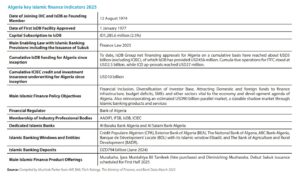
To facilitate this, the government has introduced several pieces of enabling legislation based on parity with the conventional finance sector over the last few years. The main legislation was the Finance Law 2018 which for the first time saw the facilitation of several Islamic banking products.
In October 2024, for instance the government introduced Islamic real estate and mortgage finance regulations which has allowed Algerians wishing to access Shariah-compliant mortgages for their house and commercial property as their financing choice. The government also started in 2022 to licence family and general Takaful operators and introduced legislation to facilitate Shariah-compliant auto financing products.
Islamic finance deposits according to the finance minister H.E. Laaziz Faid had reached DZD794 billion at end June 2024. In December 2024, he confirmed that the finance ministry was working on a Sukuk Issuance Framework and a new law to facilitate the offering of the country’s maiden sovereign Sukuk issuance, aimed at financing projects and infrastructure. funds for its infrastructure projects. Quoted by the local Aljumhuria newspaper, the Minister said that the plan was to issue a debut Sukuk in First Half 2025 to complement the funding needs of the 2025 National Budget, to attract a wider base of foreign investors by diversification the source of funding and investor base, and to boost confidence in the local capital market.
An important development also was in 2021 when the Bank of Algeria (the central bank) signed an MoU with the Bahrain-headquartered Accounting and Auditing Organization for Islamic Financial Institutions (AAOIFI) to collaborate to enhance the Islamic finance industry in Algeria.
Financial Inclusion
But the most important recent development is the repeal of existing legislation to make way for the introduction and adoption of the 2025 Finance Law which includes provisions for regulating Islamic consumer finance products in sectors such as tourism and hospitality, education and healthcare using Murabaha, Ijara Muntahiya Bil Tamleek (hire purchase) and Diminishing Musharaka structures targeting financial inclusion objectives, SMEs, real estate and infrastructure projects, and also reincorporating an estimated USD90bn parallel market, a sizeable shadow market through Islamic banking products and services.
The Islamic Banking Window (IBW) of Crédit Populaire Algérien (CPA), for instance had over 70,000 customer accounts at end 2024 and customer savings of DZD47 billion. According to CPA these initiatives point to the fact that the Islamic finance industry is entering a new phase of offering tailored solutions to customers in key sectors of the economy.
The proposed debut sovereign Sukuk has also been approved under the 2025 Finance Law. According to Al Majalla newspaper, the debut Sukuk issuance is likely to be denominated in local currency DZD. A major problem with all nascent Islamic finance markets is the dearth of reliable and regular market data and whether the data includes the official figures and the estimates for the unofficial black economy. The current Islamic finance data landscape of Algeria is at best sparse and fragmented, and information is ad hoc, dated and sometimes exaggerated depending on the source. This makes it difficult to assess the state of the Islamic finance sector in the country. Date disclosure and transparency is really the task of the financial regulator, the Bank of Algeria, to which all authorised and licenced financial institutions obliged to report to.
According to the Bank of Algeria in a February 2024 report, Islamic banking deposits rose by more than 14% in the last two years, from around USD4 billion in 2022 to USD4.7 billion by June 2023, when there were 12 licensed providers operating in Islamic banking (six state-run,six private providers). There was no delineation of whether they were dedicated or IBWs.
Algeria’s Islamic finance journey needs to transform from a fragmented approach to a more structured one, in which policy making, enabling legislation, various frameworks and guidelines, regulatory standards, acceptance and compliance with international standards, disclosures and clarity of purpose should be paramount. Industry bodies such as IFSB, IILM, AAOIFI and others, together with the IsDB Group could play a crucial role in market education and technical expertise to ensure better understanding of and Shariah certainty and confidence in the industry, which after all has a large natural constituency for Islamic finance products.

Exclusive Interview
Algeria’s Growing Interest in Islamic Finance and Development Tempered by a Lack of Structured Growth and Regulatory Developments
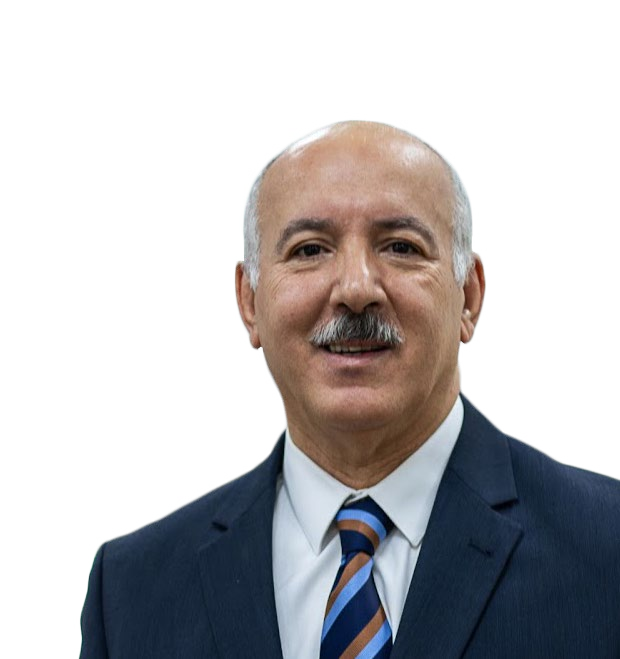
Mr. Zohir Laiche,
CEO of CAGEX
The State-owned Algerian Export Credit
Insurance Agency (ECA)
ICIEC Newsletter: To what extent is the culture of credit and political risk insurance embedded in the Algerian trade, investment and business architecture? What are the gaps and how is CAGEX trying to fill these gaps? What role can the AMAN Union and The Islamic Corporation for the Insurance of Investment and Export Credit (ICIEC) play to enhance the culture of credit insurance?
Mr. Zohir Laiche: Credit and political risk insurance (CPRI) is still developing in Algeria and have not yet been fully integrated into the country’s trade, investment, and business ecosystem. Although awareness is growing thanks to CAGEX’s effort and action on the spot, many companies, particularly SMEs, remain relatively unfamiliar with the benefits of credit insurance. The main gaps include limited market penetration, insufficiently structured demand from exporters, and a greater need for a risk management culture within companies.
CAGEX is actively working to bridge these gaps by strengthening its awareness programs, offering tailored insurance solutions and developing partnerships with banks and financial institutions to integrate credit insurance into their offerings. In addition, our credit insurance company is collaborating with regional and international stakeholders, such as the AMAN Union and ICIEC, to promote best practices, build capacity, and increase market visibility.
AMAN Union and ICIEC play a key role in promoting the culture of credit insurance in Algeria and beyond. Through their technical assistance, knowledge-sharing platforms, and reinsurance solutions, they contribute to assist national agencies such as CAGEX to strengthen their resilience and expand their reach. ICIEC brings valuable expertise in Shariah-compliant credit insurance, which aligns with Algeria’s growing interest in Islamic Finance.
CAGEX has a close collaboration with ICIEC, partly through its landmark Reinsurance Agreement signed during the 14th Annual General Meeting of the AMAN Union in Algiers last December. What is the status and progress of this collaboration as you expand your geographical reach and footprint beyond Algeria into new markets all over the world especially in Sub-Saharan African, where there are ever-evolving demands, geopolitical uncertainties and risks?
The partnership between CAGEX and ICIEC has just taken an important step forward after the signature of the Reinsurance Agreement at the 14th Annual General Meeting of the AMAN Union in Algiers. This agreement strengthened our risk-sharing mechanisms, enabling us to increase our underwriting capacity and provide more effective support to Algerian exporters.
As we expand, our geographic footprint beyond Algeria, particularly in Sub-Saharan Africa, our collaboration with ICIEC remains essential. This region offers numerous opportunities, not only but also complex challenges, such as constantly evolving geopolitical risks and liquidity constraints. By leveraging ICIEC’s multilateral expertise and reinsurance support, CAGEX may offer more robust coverage to Algerian and Regional exporters mitigating, in this way, commercial risks and facilitating access to new markets. We also work closely with ICIEC on capacity building and market information sharing initiatives, so that our clients benefit from risk management solutions adapted to the realities of emerging markets.
ICIEC is unique in that it is the only multilateral Shariah-complaint credit and Investment insurer in the world. Algeria is a latecomer to the global Islamic finance industry despite being a founder member of the OIC and the Islamic Development Bank (IsDB). Does Islamic finance and investment, credit and political risk insurance (PRI), fundraising through syndicated Murabaha and Sukuk, have a role to play in the Algerian economy and financial and business sectors? If so, what is CAGEX doing to promote the industry per se and the credit and PRI sector in particular?
Islamic finance is steadily growing in Algeria, despite the country’s late arrival at the global level. The government has taken steps to develop the industry, including launching Islamic banking products and exploring alternative financing mechanisms such as Sukuk. However, structured growth and regulatory developments are still needed.
Credit and political risk insurance (CPRI) within the framework of Islamic Finance plays a crucial role in securing investments and trade transactions, particularly for Algerian exporters seeking to enter OIC markets.
CAGEX is committed to support this development by collaborating with ICIEC and other Islamic financial institutions to promote Shariah-compliant credit insurance solutions. Additionally, CAGEX is actively working with local financial institutions to integrate Islamic credit insurance into their offerings, ensuring to businesses seeking Islamic financing to get appropriate risk management tools.
As the country explores syndicated Murabaha structures and Sukuk for raising capital, we see an opportunity for insurance mechanisms to complement these initiatives, thereby strengthening investor confidence and financial stability.
Algeria is hosting the IsDB Group Annual Meetings in May 2025. Do you think this will open the economy and market to further cooperation in Islamic trade, investment and development finance? Which countries and regions are the priorities for Algerian exporters and importers?
The organization of the IsDB Group’s Annual Meetings in May 2025 represents a strategic opportunity for Algeria to strengthen its role as a key player in Islamic trade, investment, and development finance. This event will bring together policymakers, investors, and financial institutions, creating a platform conducive to enhanced cooperation and new investment opportunities.
We expect increased interest from IsDB member states in exploring trade and investment partnerships with Algeria. This could lead to strengthened cooperation in export credit insurance, infrastructure financing, and SME’s development. For CAGEX, this is an opportunity to showcase Algeria’s potential as a trade hub and reaffirm our role in facilitating cross-border transactions.
Priority markets for Algerian exporters and importers include North Africa, West Africa, the Middle East, and selected Asian economies within the OIC. Strengthening trade ties with these regions will be essential to diversify Algeria’s economic partners and reduce dependence on traditional markets.
Looking ahead, what the priorities for CAGEX, its ongoing relations with ICIEC, the rest of the IsDB Group and in its efforts to expand to new markets especially in the OIC fraternity and beyond.
Looking ahead, CAGEX has set several strategic priorities:
- Strengthening our collaboration with ICIEC and the IsDB Group: We aim to deepen our partnership with ICIEC to improve our reinsurance capabilities, expand our product range and facilitate trade finance solutions for Algerian exporters.
- Expanding into new markets: We are focusing our efforts on expanding beyond Algeria, particularly in OIC countries and Africa, by developing solutions tailored to the needs of exporters operating in high-risk markets.
- Promoting the culture of credit insurance: One of our main challenges remains increasing the penetration of credit insurance in Algeria by conducting awareness campaigns and collaborating with financial institutions, mainly, banks.
- Investing in digitalization and innovation: We are implementing digital solutions to optimize our processes, improve the customer experience and improve our risk assessments.
- Managing economic and geopolitical uncertainties: CAGEX will continue to adapt its strategies to protect Algerian exporters against global risks.
In the end, our ambition is to position CAGEX as a regional leader in credit insurance industry building on our partnerships with ICIEC, AMAN Union and the IsDB Group.

Member Country Profile Algeria
Steady as It Goes – How to Uncap Algeria’s GDP Growth Potential
Algeria is country in transition. Though heavily dependent on oil and gas, its attempt to diversify its economy away from hydrocarbons remains a challenge. Mourad Mizouri, Manager, MENA Division at ICIEC profiles Algeria’s economy and its key sectors, and the close collaboration between the Corporation and Algeria, especially through CAGEX, the Algerian state Export Credit agency.
Mourad Mizouri ,
Manager, MENA Division at ICIEC
Algeria is a founding member of the OIC and the IsDB. Algeria joined the IsDB on August 12, 1974, and became a member of ICIEC in 1996.
Since the commencement of its operations, ICIEC has provided insurance coverage totalling USD 10 bn in Algeria as of mid-April 2025. This cooperation with Algeria is characterized by the close coordination between ICIEC and CAGEX, Algeria’s state-owned Export Credit Agency, particularly in the areas of reinsurance as well as joint engagement under the AMAN Union Umbrella. Furthermore, ICIEC supported key sectors in Algeria, notably the pharmaceutical and steel industries.
Economic Overview
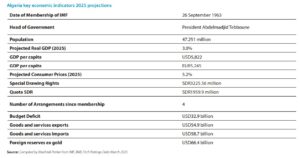
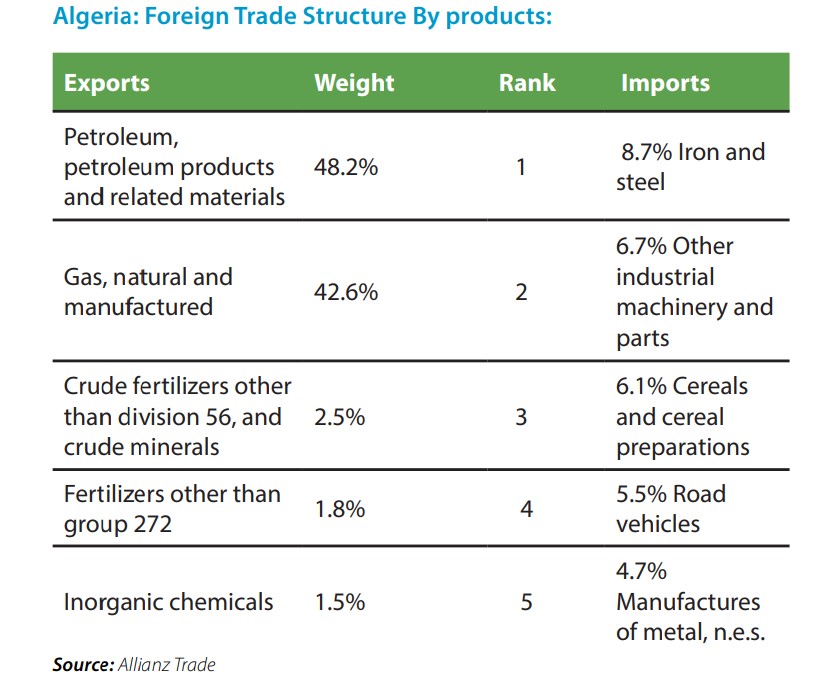
Algeria is Africa’s second-largest crude oil producer and the top natural gas producer. Strong demand for Algerian hydrocarbons, especially gas, will spur investment in the sector. The non-hydrocarbons economy will remain weak, undermined by the business environment. Real GDP growth will ease in 2025 as government spending growth slows and oil output remains constrained, but will be supported by services, industrial and construction activity, and by growth in natural gas output. Weak private-sector activity, an unstable business environment and limited economic diversification will cap Algeria’s growth potential.
Lower hydrocarbons revenue will be tempered, in part, by tax increases, and modest economic diversification, aided by foreign investment, will help to widen the tax base and boost non-hydrocarbons revenue. The fiscal deficit will remain large but will narrow modestly. The current account will remain in deficit, owing to robust import growth and declining hydrocarbons receipts as falling energy prices outpace modest output growth. Foreign exchange reserves will decline over 2025-29 but import cover will remain comfortable.
The reliance on hydrocarbons and fiscal deficit challenge
Despite efforts to diversify the economy, the hydrocarbons sector will remain the main driver of economic performance in the immediate to the medium term. Algeria is in a prime position to benefit from European demand for gas after the Ukraine war pushed European countries to seek alternative gas suppliers. Algeria’s state energy firm, Sonatrach, and Italy’s Eni have signed several agreements to gradually increase gas exports to Italy in the next few years, boost exploration efforts and develop green hydrogen in Algeria.
However, Algeria’s ability to meaningfully increase exports will remain limited, hampered by rising domestic gas consumption, which now accounts for about half of local production. The combination of elevated global prices and more involvement from foreign energy companies yielded several new oil and gas discoveries over 2022-23, but bringing these new areas into full production is likely to take four to five years, at least. The country’s modest reserves compared with some of its peers in the OPEC+ alliance will also limit production growth in the longer term.
In terms of mining, Algeria has substantial deposits of gold, zinc, phosphates and iron ore, which the government wants to develop in joint-venture agreements with foreign firms. Notable projects under development include the Gara Djebilet iron ore mine in south-western Algeria and a phosphate-processing plant in Tebessa—both involving Chinese investors—and the Tala Hamza zinc and lead mine in Bejaïa. The contribution of agriculture to the economy has increased in recent years; the sector accounts for about 12.5% of GDP. However, agricultural output remains well below its potential and local demand.
The Financial Sector
According to the World Bank, over the past decade, Algeria has attempted to modernize its financial system, despite social strife, and unique challenges posed by the large hydrocarbon sector. The banking sector is liquid, solvent, and profitable but non-performing loans (NPL) weigh on balance sheets. Aggregate solvency and liquidity ratios exceed regulatory minimums. The sector-wide NPL ratio stood at 21% at end2023. NPLs have been consistently higher for state-owned banks, with IMF data for June 23 showing NPLs at public banks reaching 21.4% of total loans, compared with 8.6% at private banks in the same period. Third-quarter 2024 data shows that annual credit growth increased to 5.7% year-on-year, sustaining its growth momentum.
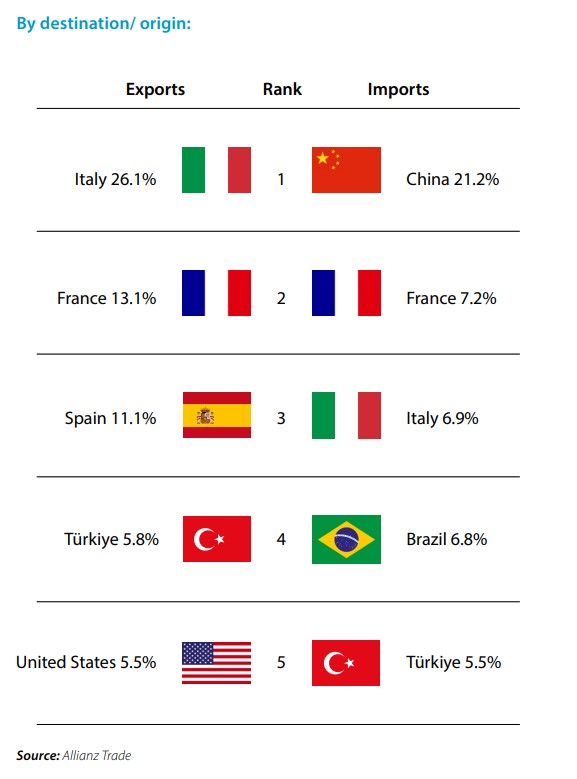
Algeria and the IsDB Group
Algeria joined the IsDB on August 12, 1974, among the founding members. The Board of Executive Directors approved the first IsDB operation for Algeria on January 01, 1977, and the latest operation was approved on March 19, 2017. Its capital subscription is ID1,285.6 million (2.5%).
Given the limited recourse to external debt. IsDB engagement in Algeria is limited to capacity building, reverse linkage, regional integration and vocational training. Other group entities have ongoing operations in Algeria such as ITFC who is exploring trade financing.
ICIEC operations in Algeria
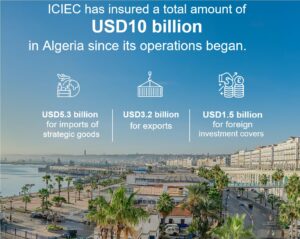
Key ICIEC Transactions with Algeria
- ICIEC provides reinsurance support to CAGEX, the Algerian national Export Credit Agency, for the export and domestic treaties. In support of Algeria’s economic efforts, ICIEC also works with CAGEX to enhance Non-Oil exports by offering tailored risk mitigation and credit enhancement solutions.
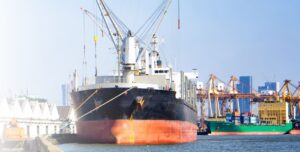
- ICIEC has been providing insurance coverage to several Jordanian pharmaceutical companies that have established separate legal entities in Algeria. This facilitated the transfer of know-how, leveraging Jordan’s strong comparative advantage in the pharmaceutical sector. Furthermore, this has supported Algeria’s domestic market by ensuring access to high-quality, affordable generic medicines, and over time contributed to the development of a solid platform for Algerian pharmaceutical exports to African countries.
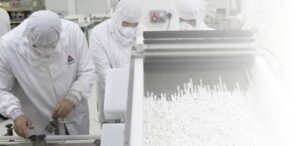
- ICIEC also supported syndications led by ITFC for financing gas imports from Sonatrach, Algeria to STEG Tunisia.

- ICIEC’s facilitated Foreign Direct Investments in Algeria aligned with the National Development Plan.
Re-imaging the Role of Murabaha Syndications and Sukuk as Development Drivers

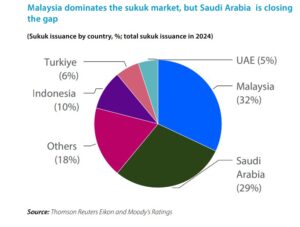
The theme of the ICIEC Quarterly magazine’s Q1 2025 edition, ‘Unlocking Development Finance – The Power of Sukuk and Syndicated Murabaha’ could not be more pertinent and opportune. At a time of great uncertainties in the global geopolitical, economic and financial landscape, largely exacerbated by the US administration’s tariff rises on 2 April , decision makers in the 57 OIC member countries could do well by re-thinking their development fund raising strategies – both for sovereign and corporate debt – to urgently embrace alternative mechanisms such as Sukuk and Murabaha transactions. Mushtak Parker, Consultant Editor, considers how the Islamic finance sectors in general and the takaful-based credit and investment insurance industry in particular can enhance the synergy of these instruments with the wider trade and infrastructure sectors and help withstand macro volatilities and crises.
It has already been illustrated in an iconic paper published by then IMF economists Mohsin Khan and Abbas Mirakhor a few decades ago that in times of crises the Islamic system of financial intermediation may be in a better position to withstand the associated shocks than its conventional counterparts. Similarly, at the G20 meeting in Antalya in November 2015, the leaders in their final communiqué stressed the suitability of “alternative financing structures, including asset-based financing (namely Sukuk),” for urban regeneration and infrastructure investment, and for funding SMEs, usually the backbone of economies. It was the first time Islamic finance was so mentioned by the organisation.
Fast forward to 2023 when ICIEC, the only Shariah-compliant multilateral credit and political risk insurer in the world, member of the Islamic Development Bank (IsDB) Group, surpassed the USD100 billion landmark with a cumulative business insured since inception of USD121billion and going strong.
Sukuk Market Dynamics
The data for the global Sukuk market is outstanding. According to Fitch Rating’s ‘Global Sukuk Market Monitor: 1Q25’, global Sukuk volumes grew by 10.8% y-o-y to USD961 billion, despite geopolitical escalations.
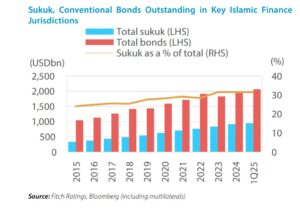
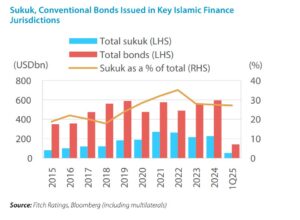
Going forward, Global Sukuk is set to surpass USD1 trillion outstanding in 2025, solidifying its role in OIC countries and emerging markets. Sukuk will remain a key part of the debt capital markets (DCM) in several OIC countries, and stay significant in emerging markets (EM), after representing 12% of all EM US dollar debt issued in 2024 (excluding China). However, growth could be affected by risks including Shariahcompliance requirements, geopolitical events, rising rates, and higher oil prices,” emphasises Bashar Al Natoor, Global Head of Islamic Finance at Fitch Ratings.
Sukuk were 25% of total dollar DCM issuance in the core markets of GCC countries, Malaysia, Indonesia, Türkiye, and Pakistan. ESG Sukuk reached USD44.5 billion outstanding, up 23% y-o-y.
Despite the current vagaries of the Sino-US tariff and trade war, the overall Sukuk funding environment seems favourable, driven by local demand and domestic issuance conditions. Around 28% of global Sukuk outstanding will mature in 2025–2027 with good potential of new issuances, supported by lower oil prices expected in 2025. While not their traditional funding source, Islamic banks and corporates could opportunistically diversify through Sukuk.

Sukuk Standards
AAOIFI Shariah Standard No. 62 (Draft) requires ownership transfer of the underlying sukuk assets to sukuk holders. which after initial consultations with the market will hold two final hearings in the coming months to present the draft developments. Among key proposals are the transfer of legal ownership and associated risks of the underlying Sukuk assets to the Sukuk holders, granting investors asset recourse to ensure closer adherence to Shariah principles.
“Any impact of AAOIFI Standard 62 implementation on Sukuk pricing compared to bonds,” maintains Bashar Al Natoor, “depends on the final version, which jurisdictions and entities adopt it, and, most importantly, how it is incorporated in Sukuk documentation. New Shariah-related requirements in Sukuk documents, which are not usually seen in conventional bonds, did not appear to have an impact on pricing in 2024. These includes terms in the Sukuk documentation related to asset-inspection, asset takeover, Shariah-compliant hedging, and partial payment of the periodical distribution amount in certain circumstances and for limited period.”
From a rating point of view, these factors will determine impact on Sukuk credit profiles, debt rankings, obligor IDRs, Sukuk issuance trends, issuer willingness, and market appetite. Investors however like clarity and certainty especially in policy, regulatory, accounting and legal matters. In the Islamic debt and capital market this pertains to documentation, standards and Shariah matters and governance. The question arises who regulates the Islamic Capital Market? Is it the securities regulators such as the Capital Markets Authorities or the Securities Commissions or the standard setting bodies and their Shariah advisories? The sooner the issues pertaining to AAOIFI Standard 62 are resolved the better for the market. It is not clear to what extent the regulators of those countries in which Islamic finance and Sukuk are of systemic importance are involved in the AAOIFI consultation.
Standard setting bodies and Shariah advisories are important players in the financial ecosystem and its stability and growth. All Islamic Finance standard setting bodies need to cooperate together in a synergetic framework in order to efficiently contribute to providing full transparency to the market.
No doubt, the assets ownership by the Sukuk investors substantiates the specific nature of Sukuk as an Islamic financial paper and differentiates it from the conventional Bond. It is quite expectable to witness some market resistance as it is not a familiar requirement in the conventional bonds. The gestation with the market regarding the Sharia standards is normally driven by the market players perspectives and should remain under the Islamic Finance precepts and fundamentals.
The Islamic Financial Services Board (IFSB) as the standard-setting body of regulatory and supervisory agencies that have vested interest in ensuring the soundness and stability of the Islamic financial services industry, should complement AAOIFI standards to cover this aspect. Indeed, IFSB has already issued standard 21 dealing with the Core Principles for Islamic Finance Regulation related to the Islamic Capital Market Segment. IFSB should clearly guide the financial supervisory authorities on the Sukuk structure including the required ownership transfer of the Sukuk underlying assets to the investors.
Democratising Capital Markets to Ultra Retail Investors
Two interesting trends are in democratising access to capital markets for SMEs and ultra retail investors in infrastructure related projects under financial inclusion policies. In Malaysia, for instance, Dana Infra Nasional, the infrastructure financing entity, has issued a number of Sukuk aimed at ultra retail investors which are guaranteed by the Ministry of Finance complete with tax and stamp duty remission incentives, the proceeds of which were used to fund the MRT1 Sungai Buloh-Kajang section, MRT2 Sungai Buloh-Serdang-Putrajaya section, and Phase 1 of the Pan Borneo Sarawak highway project.
Similarly, the Nigerian Debt Management Office of the Ministry of Finance in the period 2017 to 2023, has to date raised NGN 1,092.557 billion (USD1.43 billion) though six Naira-denominated Sukuk Al Ijarah issuances which are guaranteed by the Federal Government of Nigeria (FGN).
In a potentially important development in Saudi Sukuk origination, small and medium-sized enterprises (SMEs) are now turning to raise funds through small ticket Sukuk issuances. Hitherto, the preferred route to raising funds and credit facilities was through Murabaha credit facilities.
Saudi Arabia’s Rawasi Albina Investment Co. issued a 5-Year SAR50mn (USD13.3mn) in February 2025, the first in a series of riyal denominated Sukuk programme worth a total SAR500mn.
The total number of Sukuk subscriptions was 249,491 Sak, with a Bid-toCover ratio of 499.0%, and 15,991 subscribers.
Saudi multi-sector company Waja similarly issued a 2-year SAR10mn (USD2.7mn) Sukuk offering on 13 February 2025 via a private placement. The minimum subscription amount for both Sukuk transactions was pegged at SAR1,000, thus making the offering available to a wider universe of qualified retail and individual investors.
Murabaha Syndications Trend
Sukuk may yet turn out to be a preferred choice for Saudi SMEs to raise funds than even the seasoned Murabaha credit facilities which are dominated by the Kingdom’s Islamic banks and conventional banks’ Islamic banking windows.
Not that the days of Big Ticket Murabaha Syndications are numbered. On the contrary these have seen a huge proliferation in Q1 2025 with major new corporates now regularly accessing Murabaha financing in addition to Sukuk issuances as part of their fund-raising mix, which in some instances also include bond issuances and financing facility syndications. A case in point is the massive debut USD7bn Commodity Murabaha facility raised by the Public Investment Fund (PIF), the Saudi sovereign wealth fund (SWF) in January 2025.
In fact, the three main trends in the global Islamic finance market in Q1 2025 has been:
- Proliferation of Big Ticket Syndicated Murabaha transactions.
- The entry of Sovereign wealth funds into the Sukuk market.
- Sovereign Sukuk offerings continue to dominate.
Big ticket Murabaha transactions in Q1 2025 include:
A. The USD7 billion Syndicated Commodity Murabaha Facility raised by the Public Investment Fund (PIF), the sixth largest Sovereign Wealth Fund (SWF) in the world from a syndicate of 20 international, regional and local banks. The proceeds will be used to further diversify its sources of funding under its medium-term capital strategy, ensuring flexibility, competitive financing terms, and risk mitigation – initiatives which are all aligned with the Kingdom’s Vision 2030 plan.
B. The SAR3bn (USD800mn) Murabaha facility arranged by Al Rajhi Bank for Bahri, an affiliated company of the Saudi sovereign wealth fund, PIF, and a global leader in maritime transportation and logistics.
C. Renewal of an existing Murabaha credit facility amounting to SAR8.1bn (USD2.1bn) in March for Saudi Kayan Petrochemical Company by Alinma Bank, Saudi National Bank, and Banque Saudi Fransi.
D. The five-year SAR1.934bn (USD515mn) Murabaha credit facility extended by Al Rajhi Bank in February to Mobile Telecommunication Company Saudi Arabia (Zain KSA) the proceeds of which will be used to repay a current Murabaha facility with the Saudi Ministry of Finance.
E. A similar SAR2.5bn (USD670mn) Murabaha credit facility extended by Al Rajhi Bank in February to real estate developer Tatweer Company KSA) to support its expansion and development projects.
F. A USD400 million Commodity Murabaha facility for Africa Finance Corporation arranged by a consortium of 11 banks led by ADIB, Al Rajhi Bank and Emirates Islamic in February.
G. Ittihad International Investment LLC, an investment firm based in Abu Dhabi, successfully completed the arrangement of a USD450mn Islamic revolving credit facility (RCF), further strengthening its liquidity and working capital position.
H. Al Moammar Information Systems Co. (MIS), a regular user of Islamic finance facilities, renewed with amendments a 5-Year SAR1.65bn (USD440mn) Murabaha facility with Banque Saudi Fransi on 2 February 2025.
Sukuk Issuances in Q1 2025:
Perhaps the most important development is the entry of PIF in Sukuk origination, which opens huge new possibilities across the Sukuk playbook including increased Sukuk volumes and Assets Under Management thus also attracting new investor cohorts, unlocking of liquidity through secondary trading especially of AAA-rated debt paper, risk mitigation and credit enhancement opportunities.
The standout SWF Sukuk issuances in Q1 2025 include:
- The USD2.75bn dual-tranche senior unsecured Reg S Sukuk Murabaha/ Ijara issued in February by Saudi Electricity Company (SEC), majority owned by PIF.
- The maiden USD1.25bn Sukuk Ijarah/Murabaha issued by Ma’aden, the largest multi-commodity mining and metals company in the Middle East and one of the fastest growing in the world and also a subsidiary of PIF.
- The aggregate maiden USD2bn Sukuk issued by The Saudi Real Estate Refinance Company, similarly a subsidiary of the Public Investment Fund (PIF) in February.
- The National Central Cooling Company (Tabreed’s) USD500mn Sukuk Ijarah/Murabaha. Tabreed is majority owned by Abu Dhabi SWF, Mubadala Investment Company.
Similarly, the standout Sovereign Sukuk issuances in Q1 2025 include:
- Kingdom of Bahrain 7-year USD1.25bn Sukuk Ijarah/Murabaha.
- Bapco, the energy investment and development holding entity of the Government of Bahrain, issued a USD1bn Sukuk Ijarah/Murabaha.
- The Government of Ras Al Khaimah (RAK) USD1bn Sukuk Ijarah.
- The aggregate SAR9,434.322mn (USD2,515.36mn) raised in the First Quarter of 2025 by the National Debt Management Center of the Saudi Ministry of Finance through three Saudi riyal-denominated sovereign Sukuk issuances consecutively in January, February and March.
These issuances were complemented by regular Sukuk offerings by seasoned issuers in Q1 2025 such as Al Rajhi Bank (USD1.5bn AT1 Capital Sukuk), Kuwait Finance House (USD1bn Sukuk Wakala/Murabaha), First Abu Dhabi Bank (USD600mn Wakala/Murabaha), Banque Saudi Fransi (BSF) (USD750mn Wakala/Murabaha), Bank Al Jazira (SAR1bn AT1 Capital Sukuk), Riyad Bank (SAR2bn AT1 Capital Sukuk), DAMAC Real Estate Development Limited (USD750mn Sukuk Ijarah/Murabaha), Sharjah Islamic Bank (USD500mn Sukuk Ijarah/Murabaha), Aldar Investment Properties (USD500mn Green Sukuk Wakala/Murabaha), Emirates Islamic (5-year fixed rate USD750mn Sukuk Murabaha), and Arab National Bank (SAR3.35bn (USD 890mn AT1 Capital Sukuk)

By far the most proactive Sukuk issuer is the supranational IsDB which issued its first offering of 2025 in March – a USD1.75bn SOFR Public Benchmark Wakala Sukuk with a tenor of 5 years. The proceeds of this issuance will be used by the Bank continue supporting projects that deliver socio-economic growth in its 57 Member Countries and Muslim communities globally.
The projects are aligned with the Bank’s three overarching objectives under the Bank’s Realigned Strategy, i.e., (a) boosting recovery, (b) tackling poverty and building resilience, and (c) driving green economic growth.
The Way Forward
Looking ahead, the challenges are clear and present. The Sukuk market is at its most dynamic phase and the trend will continue for the next few years if not beyond. There is an urgent need for dramatically upscaling both the Sukuk market and the syndicated Murabaha market. This can be done through committed policy adoption, capacity building, technical advice, market education and synergies among the entities of the IsDB Group.
A significant development for the IsDB Group synergy and cooperation, is the signing of a landmark Documentary Credit Insurance Policy (DCIP) agreement on 2 March 2025 between ICIEC, and ITFC. “The policy will provide critical coverage for ITFC transactions, enhancing trade confidence and facilitating smoother financial operations in global trade involving Shariah-compliant products and services, thereby benefiting the broader economic landscape of the member states. It is designed to provide ITFC with a comprehensive risk management tool to safeguard its LCs Confirmation transactions,” explained Dr. Khalid Khalafalla, CEO of ICIEC.
ICIEC as a risk absorber and mitigator has an impressive business development and risk underwriting record for transactions whether Murabaha facilities, or lines of financing or any other such trade and project financing facilities, very often successfully crowding in private sector funding and making transactions and projects both ‘bankable’ and ‘affordable’.
The importance and efficacy of ICIEC risk mitigation and credit enhancement for its member states cannot be underestimated. Indeed, through its dedicated Sukuk Insurance Policy (SIP), ICIEC is willing to help sovereign Sukuk origination in member states especially those unrated or rated below investment grade, which has since also been refined and expanded into Green Sukuk Insurance Policy as Risk Mitigation, Credit Enhancement and Shariah-Compliant Third-Party Guarantee Solutions.
Therefore, the IsDB Group including a Shariah-Compliant Third-Party Guarantor, such as ICIEC is in a unique position to act as a market maker and help attract a new cohort of potential investors in member country sovereign Sukuk, especially the low-and-medium-incomecountries (LMICs). The knock-on effect could be positive through greater involvement in helping to develop the Islamic Capital Market in LMICs, and in the process dispel the biased, over valuation and hype of sovereign risk metrics about LMICs harboured by the major international credit rating agencies.

Future Proofing Current Volatilities in Tariffs, Trade and Taxes in the Global Economy by De-escalation and Preventing Fragmentation

In 2025, we find ourselves at the cusp of “once-in-a-century” event –tariff and trade war precipitated by the world’s largest economy, the US, which is leading the global economy into a recession in which there will be no winners. Geopolitical volatility and heightened uncertainty have played havoc with current forecasts and projections from gatekeeper institutions. Dr. Khalid Khalafalla, CEO of ICIEC, ponders a global economic playbook during these times of tariff, trade and tax disruptions against a prevailing background of subdued GDP growth and FDI flows, higher inflation, and the opportunities and challenges for ICIEC with its unique offering of Shariah-compliant trade and investment Insurance.
By any standard, the year 2025 is turning out to be extremely challenging for the global economy – and we are only in its First Quarter. What has been unfolding thus far is a landscape of arbitrary disruptions by the Trump administration in the US through the unilateral imposition of punitive tariffs and taxes, and rewriting trade rules. These actions have bypassed international gatekeeper organisations such as the World Trade Organisation (WTO) and UN Trade and Development (UNCTAD), rather than utilising them as proper platforms for coordinated negotiations and dialogue on necessary reforms. In the process, it seems that the language of negotiations and diplomacy have been replaced by the confrontational rhetoric – a shift that threatens the foundations of the post-World War II global economic order, which, while imperfect, has been rooted in free trade and multilateral rules. Given the United Nations’ position as the world’s largest economy, the consequences of these developments are global in scope.
Perhaps the biggest disruption due to the above developments is that of predicting and planning for the future. Given that the second term Trump presidency will shape the next four years, economic, monetary, fiscal, corporate, financial, development and social indicators and performance will be difficult to predict. For any government. organisation, corporate and multilateral institution such unpredictability is anathema – making efforts at futureproofing even more challenging. The measures adopted under the Trump administration disproportionately affect emerging and low-and-medium-income-countries (LMICs), which constitute most of the member states of ICIEC. These countries are among the most in need of preferential tariff and trade arrangements such as the U.S. flagship African Growth and Opportunity Act (AGOA) Programme, which is set to expire on September 30, 2025, and gives some 30 Sub Saharan African (SSA) member states tariff-free access to the U.S. markets on over 6,800 products. According to U.S. data, two-way trade under AGOA in 2023, totalled USD47.5bn, with the U.S. exporting USD18.2bn worth of goods and imports amounting to USD29.3bn. It is almost certain that AGOA will be abolished if not severely curtailed which would affect the export potential of several SSA member states of ICIEC.
These are not normal times. Multilateral insurers as risk absorbers and mitigators such as ICIEC may be forced into rethinking its strategies, which would inevitably require more resources and perhaps a revised risk management approach. Above all it is important for insurers not to overthink the implications nor to over-estimate the risks, but to adopt a measured yet compassionate and collaborative approach in helping their clients over the next few years.
Shifting Policy Priorities
Against such an uncertain backdrop – and subject to future revisionsthe IMF’s World Economic Outlook Update of mid-January 2025 projects a subdued Global GDP growth of 3.3% for both 2025 and 2026. The U.S. GDP growth is projected to decline to 2.7% in 2025 and to 2.1% in 2026. Perhaps GDP can be a very deceptive measure of the state and performance of an economy. At best it should be used in conjunction with other socio-economic indicators including income disparities and a spate of other inequality gaps, access to and cost of finance, and sovereign indebtedness. Each economy has its own compelling or distressing GDP story to tell. According to IMF’s Outlook, Sub-Saharan Africa is projected to be the second-fastest growing region, with an average growth rate of 4.2% over the next two years, led by Nigeria which is expected to grow at 3.2% in 2025 and 3.0% in 2026), following Emerging and Developing Asia, which is projected to grow at 5.1%.
These high growth rates which include India and China, the highest growing economies at a projected 6.5% and 4.6% for 2025, feign to flatter. They have structural shortcomings such as high population densities, massive unemployment, a mix of first and third world infrastructure. Saudi Arabia’s GDP is projected at 3.3% and 4.1% over the next two years. In contrast the Advanced Economies will have to contend with projected GDP rates of 1.9% and 1.8% in the same period, well below the 3.5% growth rates needed for sustaining a ‘normal’ economy.
World Economic Outlook Growth Projections
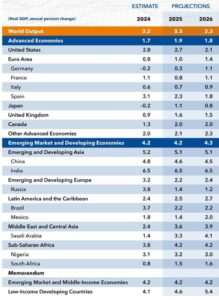
Source: IMF, World Economic Outlook Update, January 2025
Note: For India, data and forecasts are presented on a fiscal year basis, with FY 2024/25 (starting in April 2024) shown in the 2024 column. India’s growth projections are 6.8 percent for 2025 and 6.5 percent for 2026 based on calendar year.
Global trade growth levels off in 4th quarter of 2024
Annual growth in the value of trade in goods and services, 2019 Q1 – 2025 Q1
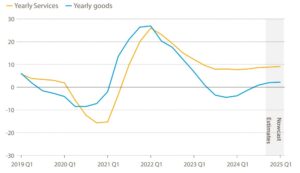
Note: The annual growth is calculated using a trade-weighted moving average over the past four quarters. Figures for Q4 2024 are estimates. Q1 2025 is a nowcast as of 5 March 2025.
The response of the global credit and investment insurance industry is interesting and perhaps predictable. Leading from the front is the Berne Union (BU), the international industry body for government backed official export credit agencies, multilateral financial institutions (including ICIEC), and private credit insurers, whose members provide around USD2.5 trillion of trade credit and political risk protection to banks, exporters and investors – equivalent to 13% of world cross-border trade for goods and services (calculated with respect to WTO statistics).
The BU’s Export Credit Business Confidence Trends Index (BCI) for First Half 2025, published in March which tracks perceived demand and claims in the export credit insurance industry based on half year surveys of BU members, is implicit. Members agree that opportunities are abound in supporting exporters amid a new wave of trade protectionism, although they may disagree on the basis for their optimism.
The key takeaways include:
A. Strong confidence exists in rising demand for short-term export credit insurance – driven by global trade growth, projected to grow at its fastest pace since 2021. Sentiment toward longer-tenor coverage remains stable, aligning with its historical average.
B. Members largely agree that business growth opportunities in their short-term portfolio lie in exporters seeking to mitigate risks from the latest wave of trade tariffs – however, a hardening pricing environment continues to challenge smaller providers.
C. New demand for longer-tenor coverage is supported by defence transactions, especially in Europe, and growing demand for infrastructure projects in developing economies, with multilaterals continuing to crowd-in private insurers.
D. The outlook for claims under short-term policies remains negative, as the expected normalisation to pre-pandemic levels proves slower than expected.
E. Geopolitical risk remains a primary concern for potential shortterm claims, now compounded by uncertainty over tariffs. Buyers in Germany raise alarm due to a weakening economy, alongside the European automotive sector, grappling with weak EV demand, Chinese competition, and factory closures.
F. Claims expectations under longer-tenor coverage show little change, sovereign debt risk remains a persistent concern for emerging claims, particularly in Western Africa, as a strong dollar pressures external financing costs.
Berne Union Export Credit Business Confidence Trends Index (BCI) Demand and Claims 1H 2025

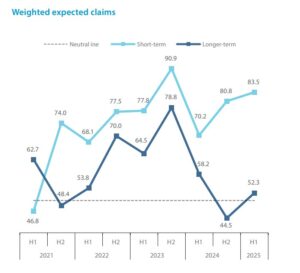
Short Term commercial and political risk insurance sentiments include:
i. For public providers, robust domestic export growth stands out as a key opportunity for business expansion.
ii. Private insurers highlighted demand from banks as a key driver of future growth, although tempered by a slowdown in new corporate business.
iii. Many providers – both public and private – cited challenges related to a competitive pricing environment, which they feel is pricing them out of new opportunities.
iv. Respondents displayed less consensus in their outlook for claims over the next six months.
v. The primary concern for most survey participants remains elevated geopolitical risk, now compounded by global trade tariffs that could lead to more payment delays—particularly for U.S. buyers facing the added burden of tariff costs, with private insurers exhibiting a deeper negative sentiment.
Similarly medium and long-term commercial and political risk sentiments include:
- Optimism persists overall for demand for longer-tenor cover, particularly among public providers. Current demand is driven by a surge in defence transactions, especially in Europe, as countries ramp up defence spending, alongside infrastructure projects in developing nations.
- Partnerships with multilaterals and development finance institutions (DFIs) continue to be a strong source of business for private insurers.
- Little movement is anticipated in claims paid out for longer-tenor cover.
- Both public and private providers expressed shared concerns about energy transition projects such as offshore wind and green technology—citing overcapacity and slower-than-expected adoption as key risks.
- Concerns persist regarding many sovereign borrowers, particularly in West Africa.
The International Credit Insurance & Surety Association (ICISA), which represents trade credit insurers, sureties, and their reinsurers and whose members accounted for over EUR3 trillion in insured exposure related to trade receivables, and billions more in surety bonds in areas such as construction, energy production, judicial processes, and other key economic activities, similarly is leading on various issues related to Trade Credit Insurance (TCI). In March 2025, it published a White Paper titled ‘Supporting the economic powerhouse – How Trade Credit Insurance supports SMEs, and how to build on this for growth and prosperity.
SMEs are the backbone of economies, and their success directly contributes to economic success and the overall wellbeing of society. Governments today are actively developing policy to support SMEs as a way of boosting productivity, innovation, jobs and growth. ICISA highlights the key role TCI plays in covering against the risk of nonpayment of trade receivables in support of these businesses, and offers recommendations to policymakers, regulators, insurers, and to SMEs themselves to benefit further from its protection. ICIEC also has a suite of similar and other risk mitigation products and solutions including the Documentary Credit Insurance Policy (DCIP), the Bank Master Policy (BMP), the Specific Transaction Policy (STP), and the Comprehensive Short-Term Policy (CSTP) available to serve TCI and SMEs.
Industry-wide, the key challenge in 2025 is to prevent global fragmentation, where nations form isolated trade blocs, while managing policy shifts without undermining long-term growth and embracing innovation through renovation and infusing a sense of urgency of action on debt restructuring or relief, climate finance including Green and blended finance and policy tools. Our international financial architecture needs to adapt to these rising challenges.

nor to over-estimate the risks, but to adopt a measured yet
compassionate and collaborative approach in helping
their clients over the next few years.
MEMBER COUNTRY PROFILE EGYPT
Balancing Egypt’s Dynamic Economic Landscape with its Persistent Macroeconomic Challenges
Harnessing A Unique Relationship with the IsDB Group and ICIEC
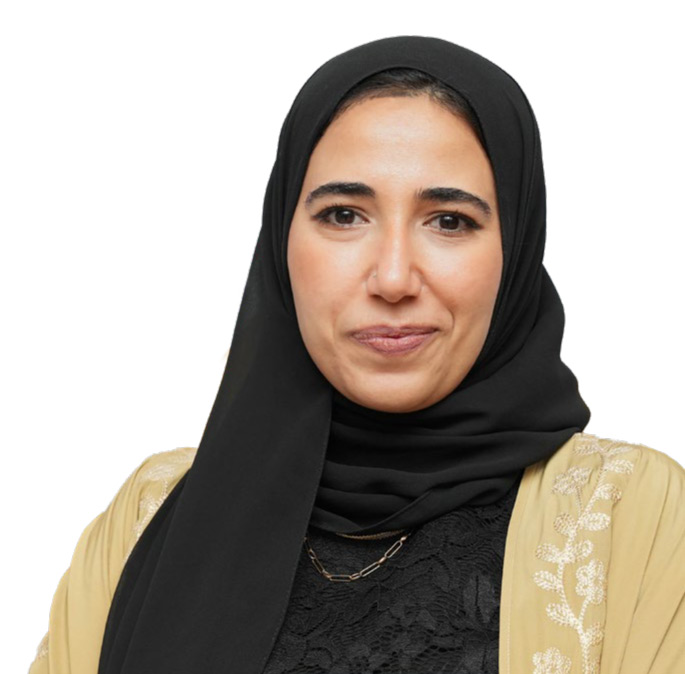
Egypt is a key founding member of the OIC, IsDB, and ICIEC. Cairo is keen to expand its relationship with ICIEC as evidenced by the activities of the Corporation’s Hub in Cairo and the sentiments of various Egyptian ministers, officials and corporates. Egypt’s economic landscape remains dynamic, influenced by both domestic and external factors. While the country has made significant strides in recent years, challenges persist, particularly in the areas of inflation, debt, and foreign exchange reserves. Eman Mahmoud Country Manager, Cairo Regional Office, ICIEC, profiles Egypt’s Economy, its development priorities and challenges, and its long-standing relations with the IsDB Group especially ICIEC.
Eman Mahmoud,
Country Manager Egypt, ICIEC IsDB Group Regional Hub Cairo
Economic Overview
The Egyptian economy demonstrated robust growth in FY2021/22, recovering from the COVID-19 pandemic. However, recent data suggests a slowdown in economic growth in Q3 FY2023/24, reaching a low of 2.2%. Nevertheless, the outlook for FY2024/25 remains positive, with projected growth of 4.2% driven by increased investment, a recovery in the manufacturing sector, and the anticipated end of the Gaza conflict.
The government plans to cut spending in response to the economic crisis. This includes delaying state projects that require significant foreign currency funding and reducing expenses related to travel, training, and conferences for officials. The government focuses on large-scale privatisation and asset sales as part of its economic stabilisation measures. These measures aim to address balance-of-payment stresses and stabilize the economy.
The Egyptian government sealed its largest investment deal with a consortium led by Abu Dhabi Developmental Holding Company (ADQ), one of the UAE’s sovereign wealth funds, for the development of Ras El Hikma city, spread over more than 170 million square meters of land on the Mediterranean coast. The deal is expected to be risk-positive, bolstering the country’s FX reserves and ensured adequate buffers for Egyptian authorities to devalue the pound, or at least move to a more flexible exchange rate regime, thus likely satisfying International Monetary Fund (IMF) requirements for a new and enlarged financing package. However, the deal is unlikely to ensure a sustainable turnaround for Egypt’s economy and needs to be complemented by long-awaited structural reforms.
ADQ will invest USD35 bn in Egypt that will retain 35% of the project’s profits. The project’s investment value could reach USD150 bn and may generate millions of employment opportunities, according to Egypt’s prime minister. ADQ will develop Ras El Hikma city that will include a business district, residential and commercial space, hotels and tourism resorts, healthcare and education facilities, and a free economic zone for IT industries and logistics hubs, among others.
Out of the USD35 bn being paid to Egypt, USD24 bn consists of new fund transfers (representing the consortium’s acquisition of development rights) and USD11 bn consists of existing UAE deposits at Egypt’s central bank that will be transferred to local currency and invested in prime projects. The Egyptian authorities also announced they are setting the ground for similar investment deals, notably the Ras Gamila land south of Sinai on the Red Sea coast, potentially to Saudi or Qatari investors.
The World Bank Group has approved a new Country Partnership Framework (CPF) for Egypt, which aligns with the Government of Egypt’s Sustainable Development Strategy and the National Climate Change Strategy. The new CPF intends to strengthen Egypt’s role in regional integration, which has positive implications for Egypt and potentially the broader region through enhanced regional trade and greater connectivity in infrastructure, transport, energy, and labour.
Egypt and the International Monetary Fund (IMF) announced on March 6, 2024, a staff-level agreement on a set of economic policies and reforms needed to complete the first and second reviews under the Extended Fund Facility, the amount of which is being raised to USD8 bn subject to IMF board approval. Noting that the IMF report in August 2024 indicated that program performance for the third review was satisfactory.
The Memorandum of Economic and Financial Policies for Egypt included in the IMF report in August 2024, included that the government will establish a repayment strategy to reduce arrears to international oil companies. The Egyptian General Petroleum Company (EGPC) has accumulated payment arrears on supply contracts of about USD, denominated in U.S. dollars. The buildup of arrears reflects several factors including foreign exchange shortages, elevated cost of borrowing, a cyclical downturn in the domestic production of gas, higher domestic consumption reducing the scope for gas exports, significant price deviations from cost recovery, and increased subsidies from EGPC to the electricity sector. The government is developing a repayment strategy to ensure that no new arrears are accumulated and that existing arrears are cleared, noting that an anticipated payment before the end of 2024 would lower the arrears to around USD3.5–3.8 bn.
Moreover, the authorities plan a series of actions to improve EGPC’s financial situation over time. The authorities raised electricity prices by 7–20 percent in January 2024 and retail fuel prices in March by 8–20 percent. While its financial position gradually improves, EGPC has the capacity to fully service its obligations on time due to an anticipated increase of EGP10-11bn of monthly revenues from recent and upcoming energy price hikes.
It was noted in the IMF August 2024 report that the program has a target to have a Ceiling on Government Guarantees. The Ministry of Finance will report to the IMF the stock of guarantees and such data will show guarantees on domestic currency and foreign currency borrowing by Economic Authorities (EGPC, GASC, Transport, NUCA, other) and state-owned enterprises (NIB, Electricity, other). It is worth noting that Guarantees issued on behalf of EGPC account for about half of government guarantees.
The increase of the IMF aid package to USD8 bn from USD3 bn is risk-positive for the economy and is likely to help draw in further foreign investments. Egypt is likely to get USD55 bn-USD60 bn in the next few years from the Ras El Hikma deal, the IMF, the EU, the World Bank and others. In June, Egypt and the EU signed 35 agreements and memorandums of understanding worth EUR67.7 bn (around USD72.4 bn at the time of signing) aimed at intensifying private sector investments in Egypt.
It is worth noting that on November 1, 2024, Fitch Ratings has upgraded Egypt’s Long-Term Foreign-Currency Issuer Default Rating (IDR) to ‘B’ from ‘B-’, citing improved external finances supported by significant foreign investments and enhanced policy measures. Key developments include the Ras El-Hekma investment, which contributed USD24 bn, and a substantial increase in non-resident holdings of domestic debt.
Also, S&P Global Ratings has affirmed Egypt’s credit ratings at B-/B, maintaining a positive outlook on October 21, 2024, instead of stable outlook, highlighting the country’s progress in implementing reforms since the liberalization of its exchange rate regime in March.
The Inflation Challenge
Inflationary pressures persist, with an average forecast of 27% YoY in H2 2024. The Central Bank of Egypt (CBE) is expected to maintain a tight monetary policy stance to curb inflation. A significant decline in inflation is anticipated in early 2025 due to base effects, which may prompt the CBE to ease monetary policy.
The Central Bank of Egypt (CBE) policy rate reached 27.75% since March 2024, and 1,900 basis points since March 2022. And it has been stable ever since. The CBE’s policy rate hike brings monetary policy nearer to neutral after an extended period of negative real interest rates. The tightening of fiscal policy and the slowdown in infrastructure spending agreed with the IMF should over time reduce inflation and support debt sustainability while fostering an environment that enables private sector activity and restore investor confidence.
To alleviate the pressures on purchasing power, the Egyptian authorities also decided to increase minimum wages and spending on social safety programs. Government spending on interest payments, social benefits and salaries remains high and will likely offset to some extent intended investment and other spending restraints and the impact of revenue-boosting developments. Higher debt servicing costs are likely to lead the fiscal gap to peak at 7% of GDP in fiscal year 2024–25.
A Widening Current Account Deficit
Egypt’s current account deficit widened in the fiscal year FY2023/2024, which ended on 30 June, to record USD20.8 bn, against USD4.7 bn in the same period of the previous fiscal year, primarily due to the increase in trade deficit by 27.0% and the decline in Suez Canal transit receipts by 24.3%, according to the latest figures published by the Central Bank of Egypt (CBE). This performance was led by the shift of the oil-trade balance into a deficit of USD7.6 bn from a surplus of USD410 mn, as the decline in oil exports surpassed that of oil imports, according to the CBE.
Egypt’s current account balance is sensitive to import prices and the country’s ability to enhance gas exports to Europe given the current high domestic gas demand. Also, a pick-up in FDIs likely rests upon the disbursement of IMF loan tranches that would send positive signals to the investor community and entice further GCC inflows. The current account deficit is projected to narrow to 4.2% of GDP in FY2024/25, supported by increased remittances and a wider services surplus.
Egypt will be challenged with a large budget deficit in the medium term owing to high commodity prices, rising interest rates and the impact of the pound devaluation on Egypt’s import bill. Egyptian authorities expected the budget deficit for 2024/25 to record 7.3%. Noting that 2023/24 budget deficit recorded 3.6% of GDP compared to 6.1% of GDP in 2022/23, due to one-off revenue from the Ras El Hekma deal.
Fitch expects that over the medium term, the deficit to gradually narrow but to remain around 4.5% of GDP due to sticky spending profile. The forecast assumes that the elimination of fuel and electricity subsidies will take longer than the government’s plan. The authorities plan to eliminate the fuel subsidy by 2025 and the electricity subsidy by 2026 and shift to a targeted subsidy system by FY2025/26.
Foreign Exchange Liquidity
Egypt’s foreign exchange liquidity position has deteriorated in recent years, but it improved gradually during 2024. Foreign exchange reserves have strengthened and are expected to continue growing, supported by capital inflows and potential debt issuance. According to the CBE, as of the end of September 2024, Egypt’s foreign exchange reserves stood at around USD46.74 bn. This is compared to USD35.22 bn at the end of December 2023 (USD34.0 bn at the end of Dec. 2022). Reserves are expected to cover around half a year’s worth of imports in the next 12 months, above the global adequacy metrics.
On 6 March, the Central Bank of Egypt (CBE) floated the official exchange rate which converged to the parallel rate at about EGP 51 per USD from EGP30.9 per USD. While this has helped the country to progress in terms of partially clearing trade backlogs, the market has not yet been fully liberated. The CBE also announced it would allow new currency derivatives to unlock liquidity in the local market, making available instruments to hedge against risks to the pound. According to IHS September 2024 report, a clear commitment of Egyptian authorities to announced reforms and further foreign currency inflows are needed to help improve Egypt’s situation. The source of this liquidity injection could also come from accelerating asset sales deals with the Gulf Cooperation Council countries or looking for new ways to attract more foreign exchange to the market.
Egyptian authorities must show their determination to commit to a durable flexible exchange rate regime, in line with the USD8 bn IMF loan agreement announced in early March 2024, and ensure a sustainable improvement of confidence in the foreign exchange regime and the currency. Although costly in the near term (high interest rates), this trajectory would maximize the likelihood of capital inflows, ease foreign exchange liquidity shortages and help to contain a future increase in inflation from currency weakening.
Debt Sustainability
The IMF estimates that the government debt to GDP ratio remains high at around 96.4% for the year 2024, and external debt to GDP be around 46.6% by the end of June 2024.
Egypt’s overall debt declined by the end of FY2023/2024, which ended on 30 June 2024, to 89% of GDP, down from 95.7% posted at the end of the FY2022/2023, according to July’s fiscal monthly report published by the Ministry of Finance. According to the report, the local debt eased to 66.7% of the GDP at the end of FY2023/2024, compared to 70.5% at the end of FY2022/2023. Moreover, the external debt declined to 22.3% at the end of FY2023/2024, down from 25.2% at the end of FY2022/2023.
Moody’s expects domestic borrowing costs will consume almost 65% of revenue at the end of fiscal 2024, a ratio that may temporarily deteriorate further considering the observed official currency devaluation. The agreed allocation of a large share of divestiture proceeds directly to the treasury to support debt sustainability will partly mitigate the highly adverse metrics.
Egypt aims to reduce the debt-to-GDP ratio to less than 85% by the end of the next fiscal year; as stated by the Minister of Finance in August 2024. And he added that the external debt balance of the budget agencies decreased by more than USD3.5 bn by the end of June 2024, by a reduction rate of more than 4% compared to June 2023. Noting that 7 years is the average life of the external debt of the budget agencies by the end of June 2024. Egypt pledged to decrease the high debt level to below 80 percent in 2027, in line with its commitments under the International Monetary Fund’s (IMF) programme.
The CBE’s report highlighted a decrease in Egypt’s overall external debt, which fell to USD160.6 bn by March 2024 from USD164.5 bn in September 2023. The CBE announced that Egypt made payments totalling USD23.8 bn towards its external debt between July 2023 and March 2024. External debt payments amount to USD34.9 bn in 2024, USD19.4 bn in 2025, USD25.2 bn in 2026, USD12.7 bn in 2027, and USD8.1 bn in 2028, as per the latest central bank disclosures. The government remains committed to fiscal consolidation and debt reduction through measures such as tax reforms, subsidy rationalization, and expenditure control.
Egypt and the IsDB Group
Egypt joined the IsDB on 12 August 1974 as one of its founding members. Since then, the Bank’s involvement in Egypt has focused on fostering sustainable, inclusive economic growth and poverty reduction through financing projects in infrastructure and supporting Youth employment and job creation.
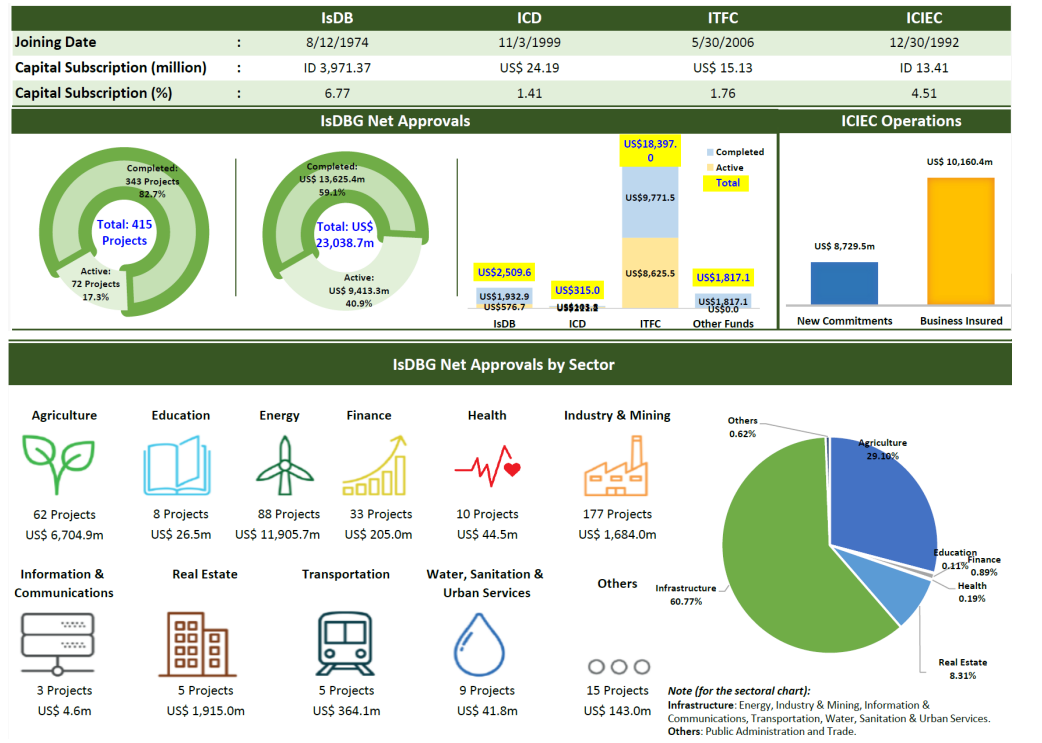
The first IsDB operation in Egypt was in September 1977. Egypt’s capital subscription to IsDB is ID3,971.37 mn, at 6.77%. Egypt is also a member of all IsDB Group Entities (ITFC, ICD, ICIEC, and IsDBi). Egypt is among the largest beneficiaries of the IsDB Group’s development financing. All IsDB Group entities have been active in Egypt. Since its inception, the IsDB Group has approved a total funding of about USD23.04 bn for Egypt. This includes about USD2.5 bn project financing by IsDB; USD315 mn supported by ICD; USD18.4 bn trade operations by ITFC, and USD1.8 bn by other IsDB Group funds and operations.
IsDB Group Cumulative Net Financing Approvals for Egypt Since Inception
 Source: IsDB December 2024
Egypt’s Special Relationship with ICIEC?
Egypt has joined ICIEC since 1992 as a founding member state and has been one of its top 10 shareholders.
ICIEC and Egypt share a robust and enduring partnership, particularly with prominent entities like Elsewedy Electric, Afreximbank, and Arab Contractors. This strong foundation enables ICIEC to expand its collaboration with Egyptian businesses, unlocking new opportunities in Sub-Saharan Africa (SSA) through the Arab Africa Trade Bridges Programme. This initiative aims to facilitate trade and investment between Arab and African nations, positioning ICIEC as a key catalyst for regional economic integration. ICIEC has provided USD10.2 bn as business insured and USD8.7 bn as new commitments, as of September 2024.
Key ICIEC Transactions with Egypt?
ICIEC has made significant contributions to Egypt’s economic development through various projects and initiatives:
- Support to the government to import strategic commodities; both oil and food commodities to secure the country’s needs by collaborating with ITFC; where ITFC arranges for syndicated facilities and ICIEC insures some of the participants in those facilities to attract debt investments from foreign banks.
- Benban Solar Power Complex: ICIEC’s involvement in financing this massive solar power project in Aswan underscores its commitment to sustainable energy and infrastructure development.
- Lines of Financing to the Ministry of Finance: By providing a crucial financial support, ICIEC has helped the Egyptian government implement vital economic and social development programs.
ICIEC MEET THE TEAM

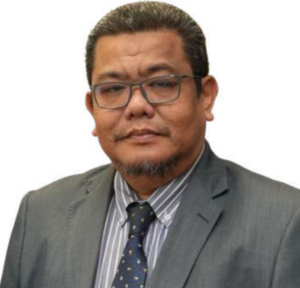
Head of Reinsurance, ICIEC
The Integral Role of Reinsurance in ICIEC’s Operational Model
“A trajectory based on network expansion and capacity enhancement”.
ICIEC has demonstrated its commitment to bolstering its operational capacity and strategic leverage through a third round of capital increase. This capital augmentation is not merely a financial milestone; it represents a significant enhancement of ICIEC’s ability to underwrite more extensive and complex business transactions. Moreover, the increase amplifies the Corporation’s reinsurance capacity, a cornerstone of its operational model.
Reinsurance plays an integral role in ICIEC’s strategy, acting as both a risk management tool and a mechanism for capacity expansion. At its core, reinsurance allows ICIEC to manage its risk exposure effectively by sharing it with other financial entities. By leveraging its capital, ICIEC can optimize its capacity to engage with the global reinsurance market, ensuring that its coverage meets the growing and diverse needs of its clients. This leverage not only mitigates risk but also ensures that ICIEC remains a reliable partner for its stakeholders, even in volatile market conditions.
The Role of Retakaful in ICIEC’s Strategy
Retakaful, the Islamic equivalent of conventional reinsurance, is a critical component of ICIEC’s risk management framework. Unlike traditional reinsurance, Retakaful operates in compliance with Shariah principles, ensuring that all transactions align with Islamic ethical standards. In this system, Takaful operators—who provide insurance based on cooperation and shared risk – seek protection from Retakaful providers to safeguard themselves against the risks they underwrite.
However, the Retakaful market faces several challenges, including limited reliable data, constrained capacity, and a small pool of Retakaful providers and underwriters. These challenges are particularly pronounced in the lines of business that ICIEC specializes in, such as credit and investment insurance. Despite these obstacles, ICIEC’s strategic approach to Retakaful has proven to be both innovative and resilient.
One of the key aspects of ICIEC’s Retakaful strategy is its ability to forge strong partnerships with reputable and financially robust Retakaful providers. The Corporation has signed several Outward Quota Sharing Treaties and Outward Facultative Contracts of Reinsurance Agreements with these partners. These agreements are instrumental in protecting ICIEC’s capital against significant insurance losses, ensuring the sustainability and reliability of its operations.
ICIEC as a Reinsurer
In addition to leveraging reinsurance to manage its risks, ICIEC also acts as a reinsurer for various insurance providers, Export Credit Agencies (ECAs), and Exim Banks within its Member Countries. This dual role underscores ICIEC’s versatility and its commitment to supporting the broader insurance ecosystem in its Member Countries.
ICIEC provides capacity and technical expertise to these entities through Inward Quota Share Treaties and Inward Facultative Reinsurance Agreements (IFRPs). These agreements cover a range of products, including:
- Export and Domestic Trade Credit Insurance.
- Foreign Investment Insurance.
- Excess of Loss Reinsurance, which protects portfolios and limits losses.
Recent collaborations in this domain include agreements with key institutions such as Indonesia EXIM, Malaysia EXIM, Saudi EXIM, and Uzbekinvest. These partnerships not only enhance the operational capacity of the participating entities but also promote the development of robust insurance frameworks within ICIEC’s Member Countries.
The Strategic Importance of Reinsurance
Reinsurance is a vital function within ICIEC’s organizational framework, serving several critical purposes:
- Risk Mitigation: Reinsurance allows ICIEC to share the risks associated with large and complex transactions, reducing the potential impact on its capital reserves.
- Capacity Building: By transferring a portion of its risk to reinsurers, ICIEC can underwrite larger and more diverse portfolios, meeting the growing demands of its clients.
- Market Development: ICIEC’s engagement with reinsurers fosters the development of the insurance and reinsurance markets in its Member Countries, promoting economic stability and growth.
- Operational Efficiency: The support received from reinsurance partners enhances ICIEC’s operational efficiency, particularly in areas such as Short-Term and Medium-Term Insurance and Foreign Investment Insurance.
ICIEC’s Reinsurance Partnerships
ICIEC has established robust relationships with leading reinsurance providers across the globe. Its primary reinsurance partners are based in traditional markets such as London, Germany, France, Switzerland, and Bermuda. These partnerships are pivotal in providing the capacity and expertise required to support ICIEC’s operations. Recognizing the importance of diversification, ICIEC is actively exploring opportunities to collaborate with reinsurers in non-traditional markets. Potential new partners include entities in the United States, Singapore, Australia, and other countries within the Asia-Pacific (APAC) region. This strategic expansion not only broadens ICIEC’s reinsurance network but also enhances its ability to respond to emerging market trends and challenges.
Enhancing Reinsurance Efficiency
The reinsurance support that ICIEC receives has proven to be particularly beneficial in areas such as Short-Term, Medium-Term, and Foreign Investment Insurance. This support provides the necessary capacity to manage high-value transactions and enhances the efficiency of ICIEC’s operations. Moreover, ICIEC’s strong relationships with its Member Countries serve as an additional layer of assurance for its reinsurance partners. The Corporation’s reputation as a trusted and reliable entity within the Islamic financial ecosystem further strengthens its position in the global reinsurance market.
Future Outlook
Looking ahead, ICIEC is committed to further strengthening its reinsurance strategy. The Corporation will continue exploring additional arrangements and relationships with both existing and new reinsurance partners.
This proactive approach ensures that ICIEC remains at the forefront of the credit and investment insurance industry, capable of meeting the evolving needs of its clients.
ICIEC’s ongoing efforts to expand its reinsurance network and enhance its operational capacity underscore its role as a key player in the global insurance and reinsurance markets. By leveraging its unique position within the Islamic financial ecosystem, ICIEC continues to provide innovative and sustainable solutions that drive economic growth and stability in its Member Countries.
Conclusion
Reinsurance is more than just a financial instrument for ICIEC; it is a strategic enabler that underpins the Corporation’s ability to fulfill its mandate. Through its comprehensive reinsurance strategy, ICIEC not only safeguards its operations but also contributes to the development of robust insurance frameworks in its Member Countries. The Corporation’s commitment to innovation, collaboration, and diversification ensures that it remains a cornerstone of the Islamic financial ecosystem, delivering value to its clients and partners alike.
Powering the Renewables and Green Finance Revolution with Affordable and Accessible Trade Finance, Credit and Investment Insurance

Research suggests that renewables and green finance is the new powerhouse for trade finance and project guarantees in 2025, fuelled by rising demand for sustainability finance and investment especially from private capital, and greater regulatory, reporting and disclosure compliance standards and requirements. A new goal that emerged from the UAE Consensus at COP28 in Dubai in 2023 is the tripling of renewable power capacity by 2030 – a key role in rapidly and drastically reducing global greenhouse gas emissions to keep the world on a 1.5°C pathway. In 2024, the COP28 Presidency designated the International Renewable Energy Agency (IRENA) as the custodian agency for tracking and reporting on the various goals each year through 2030. The latest data is sobering and finds that across almost all metrics – excepting Solar PV capacity growth – the world has fallen further behind the trajectory of renewable power capacity additions and energy efficiency improvements needed to meet the UAE Consensus goals. Mushtak Parker surveys the initiatives to enable a course-correction that will re-align energy transition with the Paris Agreement goals and the 2030 UN SDG targets, and considers the role of trade finance, credit and investment insurance and ICIEC in supporting renewable energy through innovative funding and risk management solutions.
Despite a record growth in renewables in 2023, the global net zero and energy transition targets risks are falling well short. Where there is deployment, significant regional disparities emerge with the Global South increasingly being left behind.
Low-and-Medium-Income-Countries (LMICS) whose carbon emissions are miniscule compared to the Western economies and the large greenhouse gas emitters such as China, India, Russia are disproportionately affected especially in catastrophic climate-related events such as an increased incidence of floods, landslides, drought, tornadoes and hurricanes.
As Mr. Flavien Joubert, Minister for Agriculture, Climate Change and Environment of Seychelles, comprised of an archipelago of small islands and very vulnerable to rising sea levels and other climate-related events, stressed at COP29 in Baku “while the potential for renewable energy is vast, the road to harnessing it effectively is laden with obstacles. It’s imperative that we approach these challenges with determination, innovation, and solidarity.”
Several climate scientists, policymakers from the Global South, NGOs and activists maintain that what is needed is a fundamental cultural change across all stakeholders to support climate change policy, the urgency of resource mobilisation, risk management, implementation and collaboration. There are signs that global goal or tripling renewables by 2030 is starting to gain momentum uniting behind the UAE Consensus at COP28 in Dubai. The danger is without the traction and investment, this may be misconstrued as a mere gesture of doing too little too late. Institutions across the board are scurrying towards establishing committees, working groups and their own sustainability, ESG, energy transition and climate action playbooks, strategies and assessments. Platts, part of S&P Global Commodity Insights, similarly, launched Renewable Transport Fuel Certificate (RTFC) assessments Platts, has launched daily assessments for UK Renewable Transport Fuel Certificates (RTFC), effective Jan. 6.
These new assessments follow the launch of the German greenhouse gas quota (THG) assessments in November 2024 and the Netherlands renewable energy units (HBE) assessments in January 2024, reflecting the growing importance of the relevant tickets markets in determining biofuels prices in Europe.
Another major development is the introduction of the European Green Bond Standard (EGBS) by the European Union, which enabled new issuers now choosing to use the new “European Green Bond” label, launched on 21 December 2024, when marketing a euro-denominated green bond to investors. According to the Institute for Energy Economics and Financial Analysis, this could see billions of euros of green bonds aligned with the EGBS.
Part of the problem is that these playbooks are based on overlapping concepts and taxonomies which creates confusion and cynicism and gives succour to the rising populist push back against climate related and clean energy policies in some countries including the US. The number of taxonomies – more than a dozen thus far – makes a mockery of any semblance to collaboration as countries or regional groups try to jockey for ascendancy more to do with economic self-interest than climate mitigation and adaptation. Whether it is the UNEP, OECD, EU or any other gatekeeper organisation, it is high time the COP process designs and embrace a dedicated, unified and globally accepted taxonomy relating to the components of climate change perhaps in the form of a Treaty or Convention. This is vital because it would create a level playing field for all actors and deal with the issue of fragmentation and de-globalisation.
The stand-off between continued fossil fuel activities and transition to renewables is one reason why the latter has not flourished at the required pace. This so-called stand-off is NOT a zero-sum game as it is often perceived by some governments and stakeholders. We have long past the metric of “Let the Polluters Pay’ and of the large economies and carbon emitters such as China, India and Brazil crying foul over the unabashed historical emissions related to the largely western economies which fuelled their development and prosperity whether through the Industrial Revolution and the scramble for colonial largesse. While compromise should be the order of the now, progress towards the Paris and UN SDG goals will depend on the stated acknowledgement of a shared solution based on pragmatism, urgency, resource commitment and achievable goals, devoid of ideology, hubris and obfuscation.
Energy-related CO2 emission trajectories
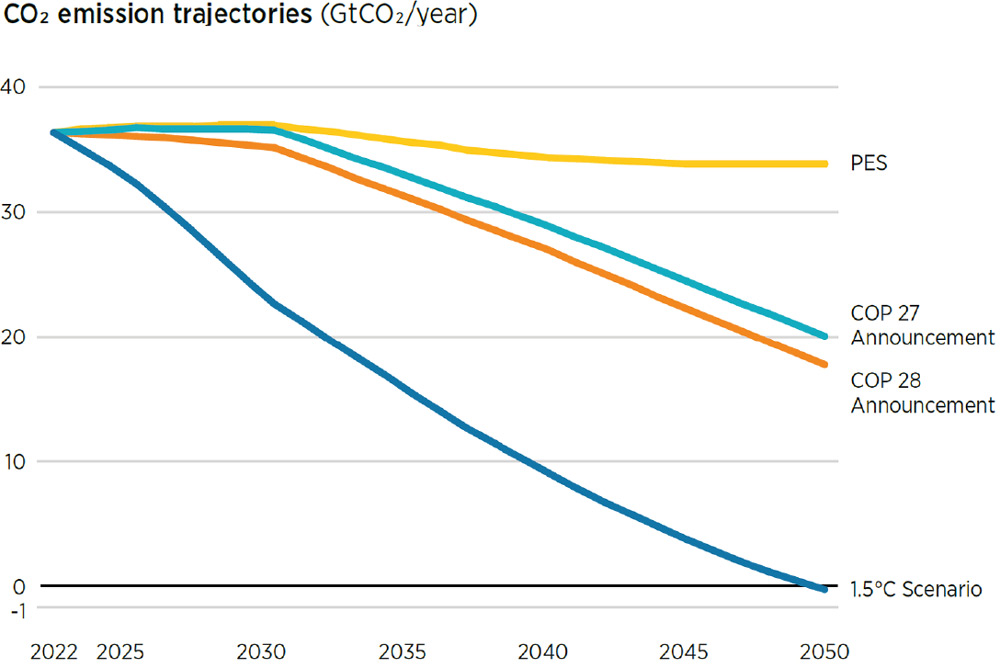
Source: IRENA (2024), World Energy Transitions Outlook at www.irena.org
Proactive Engagement on Climate Finance and Risk Mitigation
The credit and investment insurance (CII) industry has proactively engaged with the climate action ecosystem. Many multilateral insurers such as ICIEC and MIGA, and national and private export credit agencies are signed up to the Principles of Responsible Insurance. Similarly, the Net Zero Export Credit Agencies Alliance (NZECAA) launched by a group of ECAs led by UK Export Finance (UKEF) under the aegis of the United Nations Environment Programme Finance Initiative (UNEPFI) has the simple mandate of promoting the role of export credit in achieving net zero emissions by 2050 and limiting global warming to 1.5°C, in collaboration with the Glasgow Financial Alliance for Net Zero (GFANZ).UKEF, which has a long-standing collaboration with ICIEC, also launched the Greatest Opportunities and Risks for Export Credit and PRI Industry in 2024 support package for transactions supporting climate adaptation and sustainability across Africa and the Middle East, including a GBP226 mn facility for the Iraqi Government to develop clean water and sewage treatment infrastructure in Hillah City.
The Berne Union (BU), the leading global association for the export credit and investment insurance industry of which ICIEC is a proactive member, has a well-established Climate Working Group which organises regular multi-stakeholder workshops and meetings on credit insurance and climate-related topics. The latest one scheduled is at end of February 2025 in London and will focus on the practical implementation of sustainability in the export credit and investment insurance industry. “The objective,” says BU, “is to establish a dialogue which can connect the thread of sustainability implementation across the industry, from policy and strategy through technical analysis to delivery in concrete transactions.” Of note is the focus on “exploring an overarching framework for sustainability in export credit and investment insurance industry.”
Cumulative carbon dioxide emissions by region, 1850-2020

Based on: Global Carbon Budget, with major processing by Our World in Data (Andrew and Peters, 2024).
Notes: The United States had the highest share (25%) of cumulative global emissions between 1850 and 2020. It was followed by the EU27 + the United Kingdom, at 22.5%, and China, at 14%. Africa’s cumulative share is just 2.7%. Further, the average American had a carbon footprint of 14 tonnes of carbon dioxide equivalent (tCO2eq) in 2020, while the average African had a footprint of 0.95 tCO2eq. The required global per capita average to achieve the 1.5°C target is 2.0 tCO2eq (AfDB, 2022). EU27 = 27 Member States of the European Union; Gt = gigatonnes.
At the same time the 15th Assembly of IRENA themed ‘Accelerating the Renewable Energy Transition – The Way Forward (Energy security, Socio-economic development and Financing options)” convenes in Abu Dhabi in January 2025 coinciding with the 5th World Energy Transition Day, basically to evaluate progress and outline actions to accelerate the global renewable energy transition.
The various sessions aim to address emerging global trends and pressing issues, such as achieving the tripling the renewable energy goal by 2030 through international cooperation, raising ambitions for the upcoming Nationally Determined Contributions (NDC 3.0), charting energy transition pathways in emerging economies, ensuring financial flows for an inclusive transition, and leveraging innovative investment tools.
Erstwhile BU President, Ms. Maëlia Dufour, also a seasoned credit insurer as Chief International Officer, BPIfrance Assurance Export, confirmed in a recent interview with ICIEC Newsletter that “the two top priorities in demand according to our members is a big increase in demand to underwrite SME business and all aspects of climate related projects involving green and transition projects. We deal a lot with clean energy transition projects and green projects. Regarding climate action and finance, we look at three things: i) Decarbonisation of our portfolio; ii) Creating financial incentives to better insure green and transition projects; iii) Government policies and strategies and considering the statements of the various COPs.”
The phasing out of fossil fuels will take some time, she added. “The credit insurance industry is no longer interested in underwriting the coal, oil and gas industries. There are some countries that have been very clear in that that they will not support investments in fossil fuels. There are new emerging sectors such as critical minerals – nickel, manganese, lithium, cobalt etc. We see greater movement in this direction, and it is now becoming a priority sector for our members.”
Ms. Dufour’s successor, Mr. Yuichiro Akita of NEXI, who was elected as the new President of the BU in October, has lost no time in articulating his new forward-thinking “STRIDE” framework, ‘Sustainability Through Resilience, Innovation, and Diversity for Empowerment,’ which emphasises the need for deep collaboration across BU’s diverse membership base and unprecedented adaptability in confronting climate change, geopolitical shifts, digitalisation, and technological risk.
The changing landscape of the CII industry is highlighted by the latest data from the BU where the industry supported USD2.46 trillion in new export credit commitments the first half of 2024. This compared with BU members annually providing around USD2.5 trillion of payment risk protection to banks, exporters and investors – equivalent to 13% of world cross border trade for goods and services.
Thus, it is not surprising that Members of the Berne Union in its Business Confidence Index Survey (BCIS) for Second Half 2024 signalled that opportunities for growth lie in supporting SMEs and investment in renewables and the green transition. According to the Survey findings, “a recurring theme among members is the anticipated surge in demand from investment in renewable energy projects, with renewable energy and the green transition identified as the two greatest opportunities for their organizations over the next six months. Regionally, higher demand is expected to materialise in Sub-Saharan Africa and the MENA region, where many members have a strategic focus.”
These two regions are where the overwhelming majority of IsDB’s and ICIEC’s membership are located and could not illustrate the business case for more ICIEC involvement in underwriting such business. On a 1-4 scale, 4 being most important, 70% of respondents ranked Renewables as a 3 or 4, and 63% ranked Green Transition as a 3 or 4 in terms of greatest opportunities for their organisation in the next six months.
Renewables – the State of the Sector
No sooner had IRENA Director-General Francesco La Camera proclaimed that 2024 marks a year of records and a pivotal moment in the global energy transition as renewable energy surges to unprecedented heights, in the same breath he gave a health warning that “despite the remarkable progress, the pace of change remains insufficient to meet the ambitious goal of tripling renewable energy capacity by 2030 – a critical milestone for keeping global temperature rise below 1.5°C.”
The entire narrative relating to climate change, action, adaptation, mitigation and finance is couched in this fundamental dichotomy. As if the march towards a world bereft of fossil fuel generated power, towards a sustainable renewable energy dispensation encompassing hydro, solar, wing, bioenergy, geothermal and marine energy, is held hostage by this perversity of a clash of energy resources harnessing pitting the evidence-led science of global warming against the climate sceptics, distractors and deniers.
There is no doubt that the fossil fuel-driven growth model has proven to be unsustainable for both people and planet, and the immediate future is that of an evolving energy landscape – one in which fossil fuels inevitably play a diminishing role. The latest data from IRENA confirms global renewable generation capacity (GW) of 3865 GW in 2023, 16.2 million jobs created in renewable energy sector albeit almost half of them in China, and power generation costs (2023 USD/kWh) flattening out for PV, Onshore Wind, Offshore Wind, and Concentrating Solar Power since 2020.
Today, even without subsidies, says IRENA, solar and wind power stand cost-competitive with fossil fuels and have emerged as the preferred choices for new power generation. In fact, renewables accounted for 86% of all new power generation in 2022. The sector now employs more people than the fossil fuel sector. In the UK in 2024 wind power contributed more to the national grid than natural gas for the first time.
Trade route disruptions, conflicts, and economic uncertainties, have all served to undermine or at least slow down the transition to clean energy. The LMICS despair because as disproportionate victims of climate change, they want more emphasis on a just transition which incorporates a fair financial allocation for mitigation and adaptation and removing the inequalities and barriers to affordable and equitable climate finance.
The reality according to the latest IRENA data which also draws from the International Energy Agency data, annual investment in renewable capacity would have to triple, from a new record high of USD570 bn in 2023 to USD1.5 trillion every year between 2024 and 2030, thus confirming the first official progress report of the landmark energy goals established by the UAE Consensus at COP28 in Dubai. Tripling renewable power capacity and doubling of energy efficiency to meet the global goals, installed renewable capacity would have to grow from 3.9 terawatt (TW) today to 11.2 TW by 2030, requiring an additional 7.3 TW in less than six years. Yet, current national plans are projected to leave a global collective gap of 3.8 TW by 2030, falling short of the goal by 34%.
In addition, notes the progress report, the annual energy intensity improvement rate must increase from 2% in 2022 to 4% on yearly base up to 2030. This will require faster progress in efficiency measures and electrification across multiple sectors, including transport, building and industry.by 2030 are critical enablers for keeping the 1.5°C goal within reach.
These shortfalls, says IRENA’s Francesco La Camera highlight the inadequacy of existing policies and plans to limit global temperature rise to 1.5°C, underscoring the need for urgent policy interventions and massive investment. The third round of Nationally Determined Contributions (NDCs) under the Paris Agreement in 2025 must close the gap towards 2030.
World Energy Transitions Outlook 2024
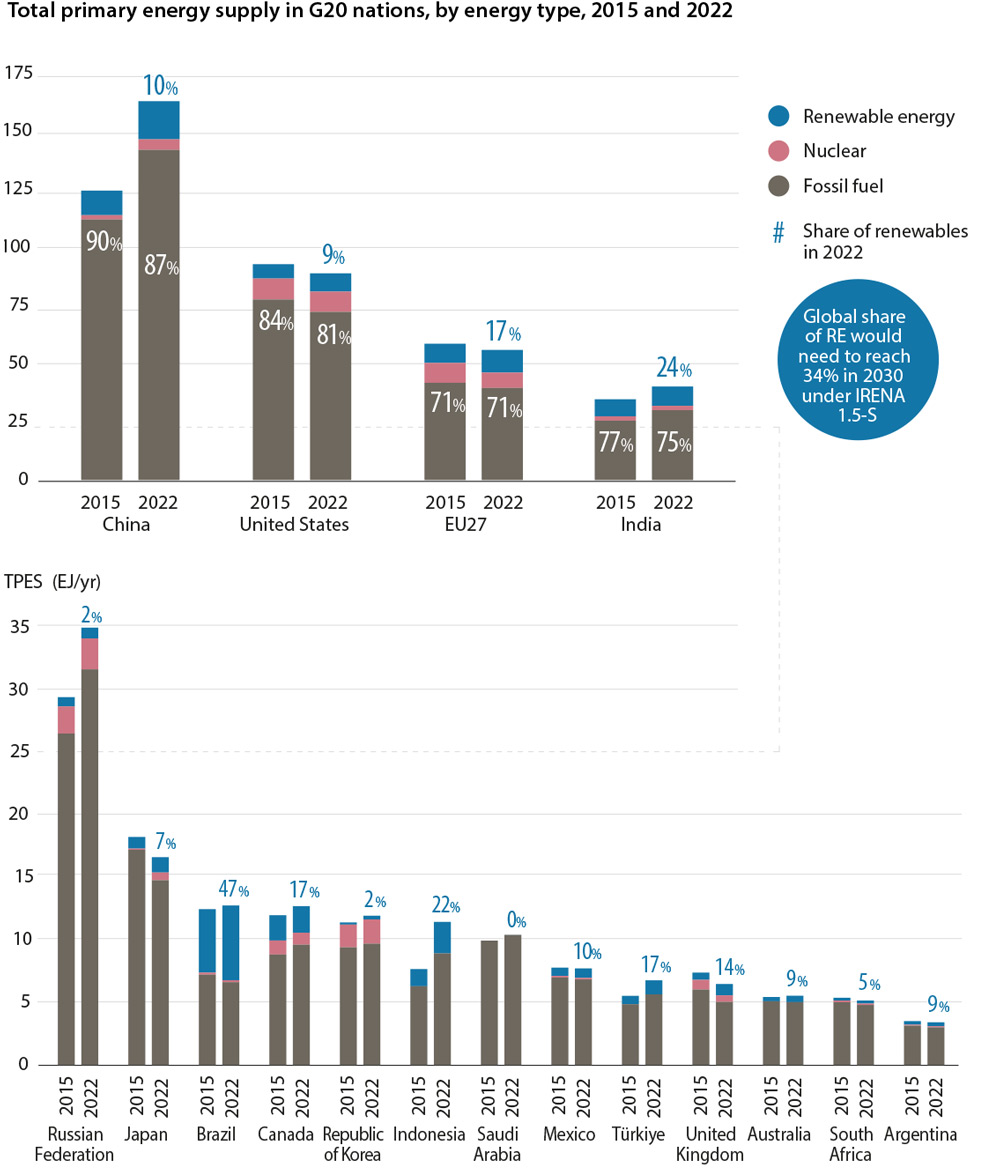
Note: Historical data from (IEA, 2024); Renewables include hydro, solar, wind, bioenergy, geothermal, and marine energy; TPES = total primary energy supply; EJ = exajoule; yr = year; RE = TPES = t otal primary energy supply; EJ = exajoule; yr = year; RE = renewable energy; 1.5-S = IRENA’s 1.5°C scenario.
Source:IRENA World Energy Transitions Outlook 2024
“While the momentum behind renewable energy is unprecedented,” says an exuberant Mr. La Camera, “it’s clear that we are still falling short of where we need to be by 2030. Industry has proven time and again that we can deliver – and even surpass –expectations when the right frameworks and policies are in place. Now is the time for governments to seize the opportunity of the NDC review, to set ambitious, specific and actionable plans that bridge the current gap and achieves the global 3xRenewables target by 2030. Our message is clear: Now Deliver Change.”
The progress report concludes that to deliver the UAE Consensus goals on the ground, significant advances will be required across the key enablers of the energy transition, namely: infrastructure and system operation, policy and regulation, supply chains, skills and capacities, finance, and international collaboration.
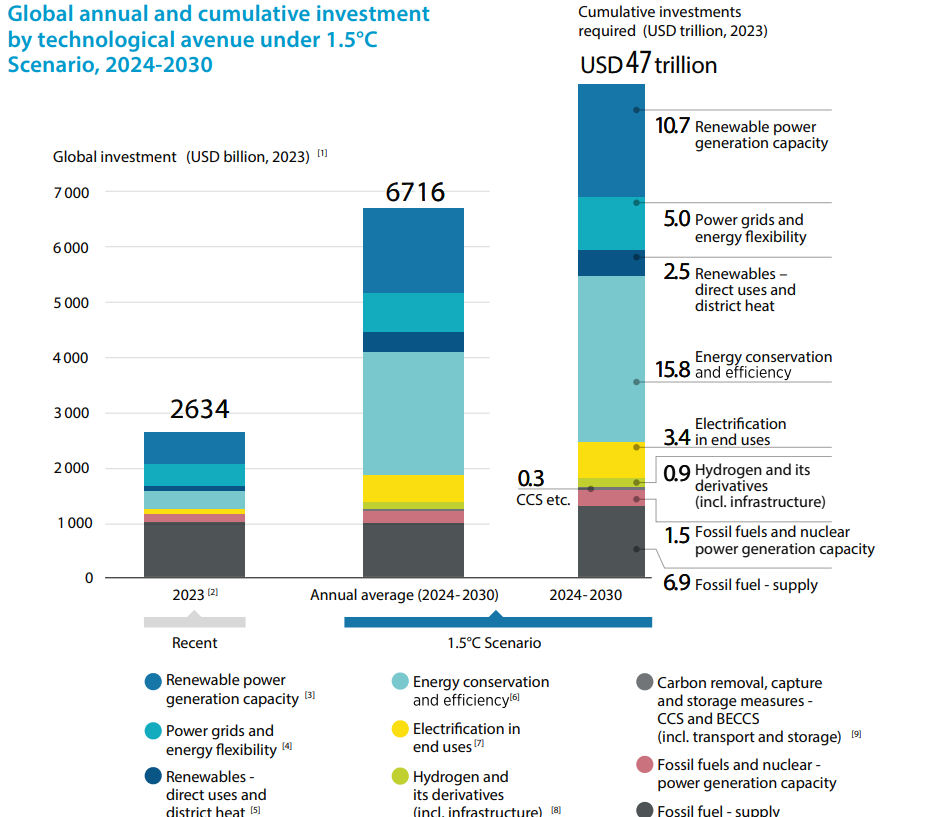
Source: IRENA World Energy Transitions Outlook 2024
Bruce Douglas, CEO of the Global Renewables Alliance, implies an effective apartheid system in funding renewables in developing countries. “Emerging and developing economies continue to face financing gaps that undermine access to capital-intensive energy transition technologies. Renewable power investments in Africa declined by 47% between 2022 and 2023. Sub-Saharan Africa received 40 times less than the world average per capita transition-related investment. Reducing this gap involves securing financing at better terms by mitigating country risks and increasing the availability of concessional finance, mostly from multilateral and bilateral development funds and financing institutions and philanthropies,” he stressed in the progress report. International collaboration, maintains Mr. La Camera, will be crucial to better channel funds to achieve climate, development and industrialisation goals for a more equitable world. Agreement on a robust New Collective Quantified Goal (NCQG) of climate finance at COP29 will be vital for enhancing financial support for climate action as well as inspiring ambitious targets in the NDC 3.0 submission process in 2025.
Off-grid renewable power data and capacity by technology
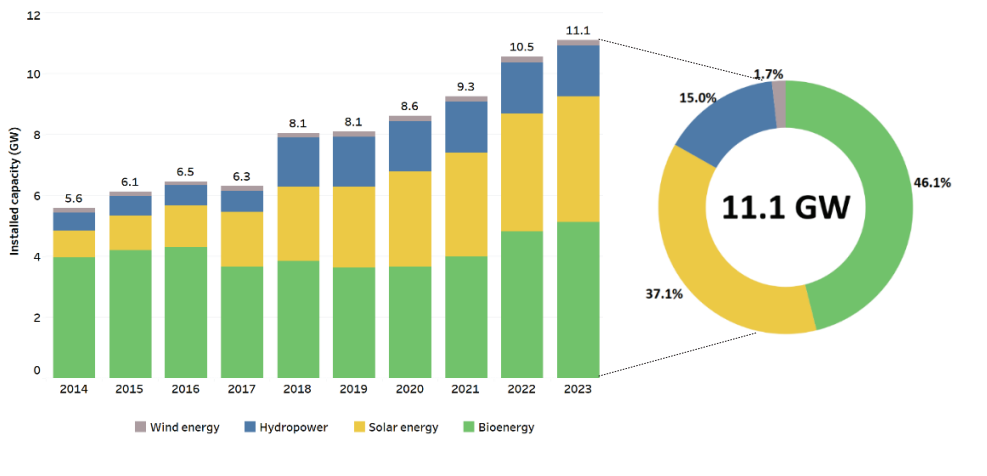
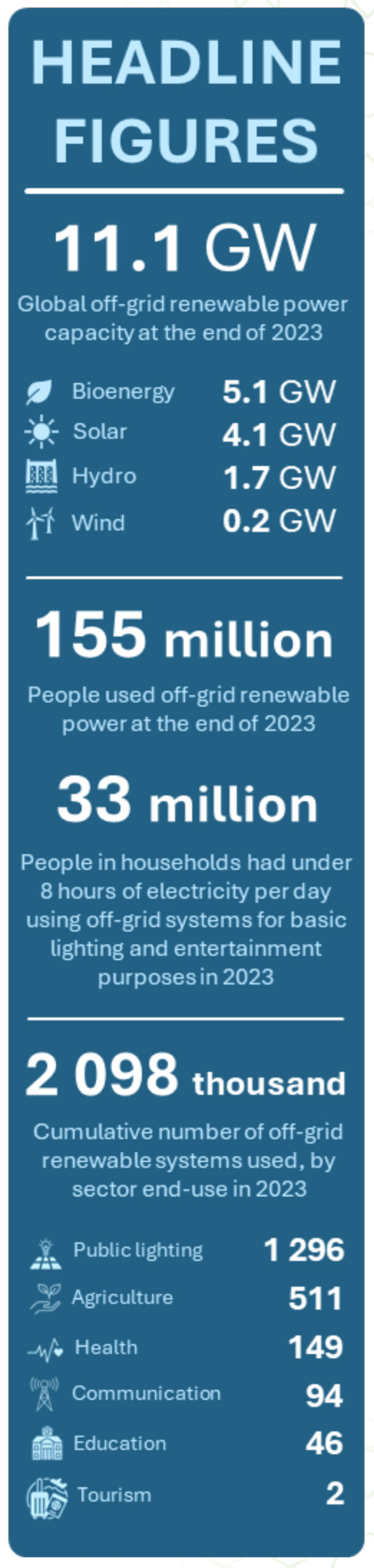
Renewable energy data does not include off-grid electricity production from renewables, which largely are unrecorded in most countries, and which is believed to be expanding rapidly. IRENA has started to collate data from various sources which confirms the proliferation of such renewable energy inputs. IRENA defines off-grid renewable systems as renewable technologies that serve people in rural/remote areas that have no physical connection to the national power grid. Additionally, an establishment with a physical connection to the grid that uses an off-grid system to provide backup power or reduce electricity bills is considered grid-tied and not off-grid.
The key developments in off-grid renewable energy are clear and present:
- Global off-grid renewable power capacity3 amounted to 11.1 GW at the end of 2023, doubling since 2014.
- Bioenergy, predominantly solid biofuels used in off-grid cogeneration plants, dominated the off-grid renewable capacity mix since 2014 and accounted for 5.1 GW in 2023.
- Off-grid solar capacity grew almost five folds in the same period and contributed 4.1 GW to the capacity mix by the end 2023.
- Some 155 million people used Off-grid renewable power at the end of 2023.
- The world invested a record high USD570 bn in renewable energy in 2023, of which Africa only got USD4.7 bn – down 47% on the previous year.
- Some 675 million people were without any access to electricity in 2021.
- The GCC countries especially Saudi Arabia and the UAE are some of the major drivers behind the renewables industry led by ACWA Power and Masdar with billions of dollars in investments proliferating all over Africa, Central Asia and Asia. China of course is a dominant player in the renewables sector.
Opportunities and Challenges for Islamic Climate Finance and Insurance
It is difficult to gauge the true extent of the involvement of Islamic finance and insurance in climate action, let alone renewables and Green Finance. This is because of the dearth of reliable data, its collation and the confusing and fragmented nomenclature and absence of a dedicated Shariah-compliant taxonomy relating to climate action.
Governments, sovereign wealth funds, corporates, banks and even the odd social institutions have all issued Green Sukuk, Sustainability Sukuk and ESG Sukuk, and over the last two years there has been a preference to issue Sustainability Sukuk in line with newly launched Sustainability and Green Finance Frameworks. There have also been a number of Murabaha Syndicated Financing Facilities specifically aligned with sustainable trade and green projects. Commercial banks are also introducing incentivised financing packages linked to sustainable projects and campaigns such as energy transition and the use of solar panels for heating in housing.
The industry can learn much from the engagement of Chinese companies in the renewables and clean energy sector. It was Tadau Energy Sdn Bhd, the Malaysian subsidiary of Edra Solar Sdn Bhd and Kagayaki Energy Sdn Bhd, part of the giant Chinese clean energy group, China General Nuclear Power Corporation, who closed “the World’s and Malaysia’s first green Sukuk” – the RM250 million Green Sukuk Tadau in 2017. The proceeds of the Sukuk were used to finance the construction of a 50 MWAc solar project in Kudat, Sabah under purchase agreements signed with Sabah Electricity Sdn Bhd. The Sukuk was certified as a green issuance by the Centre for International Climate & Environmental Research, Oslo, Norway.
Next it was the turn of BEWG Malaysia Sdn Bhd, a subsidiary of Hong Kong-based Beijing Enterprises Water Group Limited (BEWGL), the leading Chinese wastewater and sanitation company, with a RM400 million Sukuk Wakalah, the first ringgit Sukuk issued by a Chinese conglomerate for a water infrastructure project and the first Sukuk issued by a Chinese company. The proceeds of the Sukuk were used to part finance the RM687 million upgrading of the Bukit Sah water treatment plant in Kemaman, Terengganu.
The general Takaful sector has hitherto been modest in its engagement in climate-related risks partly because of lack of capacity, low capitalisation, paucity of relevant products, lack of experienced staff, low market penetration, a disconnect between Islamic finance and Takaful in general, and a conservative approach to insurance in general.
The outstanding exception to the rule is Shariah-compliant credit and investment insurance, of which ICIEC, the only Shariah-compliant multilateral insurer in the world and a member of the Islamic Development Bank Group, has made real impact on the development agendas, the lives and livelihoods of its 50 member states and their constituents over the last 30 years. ICIEC marked its 30th Pearl Anniversary in 2024, achieving a historic milestone in cumulative insured business surpassing USD121 bn over its 30-year history, significantly contributing to social and economic development across various sectors globally.
ICIEC in 2024 expanded strategic partnerships, notably in sustainable energy and food security, with the signing of several MoUs. The Corporation’s efforts in climate action were highlighted at COP28 and through membership of initiatives like the Energy Transition Accelerator Financing Platform (ETAF) which is managed by IRENA.
As a signatory to the Principles for Responsible Insurance, Shariah-based SRI, Sustainable Finance and ESG Finance are firmly embedded in ICIEC’s due diligence process through linking all new business insured, guarantees, and reinsurance with the UN SDG and Paris climate action indicators. ICIEC actively acts as a crowding catalyst in private sector capital mobilization and participation towards achieving the SDGs and Net Zero targets.
During 2024 several impactful transactions were closed in clean energy and sustainable development. In Senegal, ICIEC and Standard Chartered signed a EUR103 mn Non-Honouring of Sovereign Financial Obligation (NHSFO) policy agreement to support the government’s initiative to install 50,000 off-grid solar streetlamps in rural areas. This milestone advances renewable energy adoption, enhancing safety, boosting economic activities, and reducing carbon emissions while improving life quality in rural communities.
“We have a longstanding relationship of working with ICIEC in transactions which have supported key priority sectors of Member States across Africa. Supporting ESG, sustainability, energy transition and SMEs is a key priority for Standard Chartered. Our rationale for supporting these transactions is our commitment to these markets, the developmental benefits of the transactions and our relationship with both the borrowers and ICIEC,” explained Khurram Hilal, CEO, Group Islamic Banking at Standard Chartered Bank
The Senegal transaction is an important development project resulting in the electrification of remote villages where it is challenging to achieve electrification via traditional transmission lines. This project will directly facilitate increased economic activity and development in these regions. In addition, the social benefits will include improved quality of life and reduced crime, he added.
The Corporation is committed to helping its 50 Member States achieve their development goals, including resilience, mitigation and adaptation to the threats posed by climate change. The Corporation’s cover is directed towards various sectors, with USD2.35 bn in 2023 going specifically into clean energy initiatives such as solar energy systems and wind farms – assisting with their importation and use in national infrastructure projects.
At COP28, IsDB President, Dr. Muhammad Al Jasser, also unveiled a USD1 bn climate finance initiative for fragile and conflict-affected member countries over the next three years, in which ICIEC is bound to participate.
Another important development is the Service Agreement ICIEC signed with the Islamic International Trade Finance Corporation (ITFC), Jef Vincent, and ActorX GmbH to create a three-year business plan for the proposed Africa-Arab Guarantee Fund (AAGF).
This collaboration is designed to strengthen trade and investment ties between the Arab and African regions, fostering economic integration and mutual growth. The agreement was finalized at end November 2024 during the AMAN UNION Annual General Meeting. As the Coordinator of the AAGF, ICIEC is joining forces with ITFC, which represents the Secretariat of the Arab-Africa Trade Bridges (AATB) Programme, of which ICIEC is the insurance pillar.
The aim is to provide a clear roadmap for the establishment and operationalization of the Fund. The initiative will include comprehensive market analysis, consultations with stakeholders, and strategic recommendations to ensure that the Fund operates efficiently and sustainably.
ICIEC first proposed the establishment of the AAGF in 2022 under the aegis of the Arab Africa Trade Bridges (AATB) Programme, launched in 2010 by the OPEC Fund for International Development (OFID), Arab Bank for Economic Development in Africa (BADEA), IsDB, ICIEC, Afreximbank, ITFC and the Governments of Egypt, Morocco, Senegal and Tunisia.
The AAGF provides “a scalable structure that aims to mobilize financial resources and risk mitigation capacity to support trade and investment in Arab and African countries; and ensures that all-in pricing of transactions is optimized for the end beneficiaries through blended structures.” It comprises three sub-funds, including an Arab Africa Green Facility, an Arab Africa Food Security Facility, and an Arab Africa Health Facility.
Recently also ICIEC has signed MoUs with the Korea Overseas Infrastructure and Urban Development Corporation (KIND) to enhance collaboration on Public-Private Partnership (PPP) projects in ICIEC Member States and the Republic of Korea focusing on critical infrastructure, clean energy technologies, and the generation of renewable energy.
Similarly, ICIEC and the Japan Bank for International Cooperation (JBIC) signed an MoU to enhance cooperation and support the development and flows of trade and investment between ICIEC’s member states and Japan. This strategic MoU aims to establish a solid collaboration between ICIEC and JBIC by leveraging ICIEC’s insurance services and JBIC’s financial facilities. The partnership will facilitate transactions involving Japanese companies as exporters, EPC contractors, or investors in projects that promote the development of ICIEC’s member states, with a particular focus on Central Asia and climate action projects such as renewable energy generation.
The challenge for the CII Industry is that of scale and reach. The CII industry base is low, and its market penetration and premium income are subdued compared with the conventional insurance market. But some encouraging trends are emerging, albeit the differential with the conventional Green Bond market of over USD1 trillion, remains huge. Take for instance Green, ESG, SRI and Sustainable Sukuk, the estimates vary from USD20-USD50 bn.
In a report published end October 2024, Fitch Ratings expects ESG Sukuk issuance to continue rising over 4Q24-2025 and cross USD50 bn outstanding, driven by investor demand, funding and diversification goals, along with sustainability initiatives in some Muslim-majority countries.
“Sukuk are becoming a key ESG funding tool in emerging markets (outside China), reaching 17.2% of all ESG US dollar debt issued in 9M24. In addition, 40% of all ESG bonds and Sukuk in EM (outside China) were issued by the core Islamic finance markets of the UAE, Saudi Arabia, Qatar, Turkiye and Indonesia. We expect this share to rise. Risks include a weakening sustainability drive, Sukuk sharia-compliance complexities, geopolitical risks and oil volatilities,” said the report.
ESG Sukuk were only 5% of global Sukuk outstanding but had expanded 34% yoy to USD44.6 bn outstanding at end-3Q24 (all currencies), outpacing the global Sukuk market growth of 8.5% yoy. In 9M24, ESG Sukuk issuance rose by 14.7% yoy in the Islamic finance core markets (the GCC, Malaysia, Indonesia, Turkiye and Pakistan) to USD8.9 bn, while ESG bond issuance fell by 18% yoy (USD12.9 bn), with outstanding ESG Sukuk at about 44% (all currencies). In the GCC, ESG debt was USD46.3 bn, with about 42% in Sukuk.
ESG Sukuk Outstanding (Global & GCC)
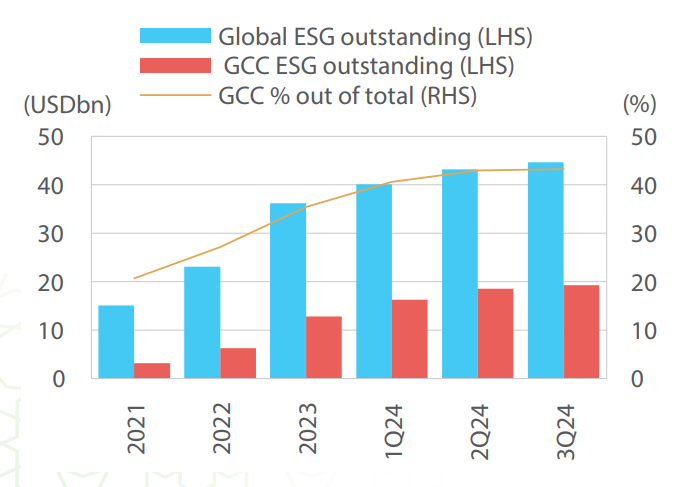 Source: Fitch Ratings, Bloomberg
ESG Sukuk Outstanding by Country
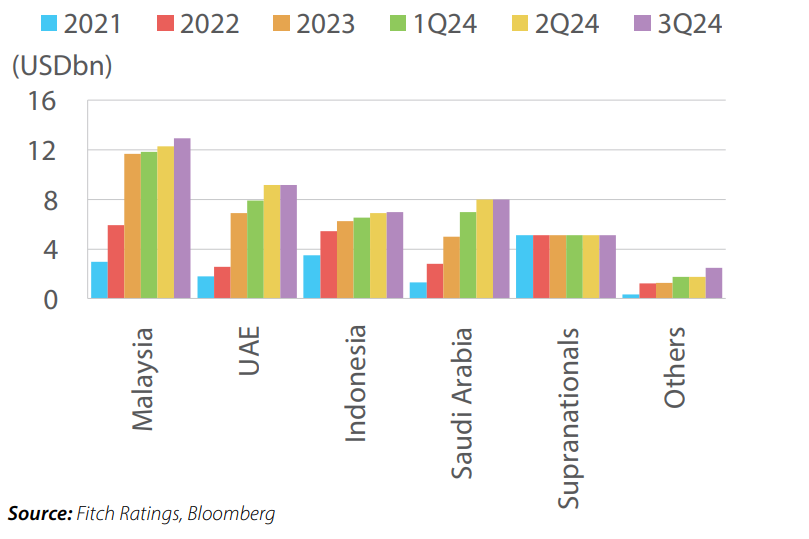
Another important driver is that ESG Sukuk could help issuers diversify funding and tap ESG-sensitive international investors, especially for tenors beyond 7 years. A notable case says Fitch is the July 2024 Indonesian sovereign US dollar Sukuk (rated BBB). The 30-year green Sukuk tranche attracted 90% investors from Europe, the US and Asia (excluding Malaysia and Indonesia). In contrast these groups constituted 41% of investors in the five-year non-green Sukuk tranche and 31% in the 10-year non-green Sukuk tranche.
Here there are also potentially good opportunities for ICIEC in rolling out its Sukuk Insurance Policy (SEP), especially for sovereign issuers who are rated investment grade or below, or unrated. For this to happen ICIEC’s senior management led by new CEO Dr. Khalid Khalafalla, could come up with a revised strategy to operationalise the SEP to greater and proactive synergy with the Corporation’s underwriting of Green and energy transition projects especially as the demand for such projects increase incrementally.
There is also another initiative in which the IsDB Group especially ICIEC, as the insurance pillar of the Group, could play a vital role in helping to democratise access to risk mitigation Takaful products in the Member States at the MSME level to build resilience to climate change.
In this respect it was also encouraging to see the launch of The Global Takaful Alliance (TGTA) – A Shared Vision to Deliver Fin
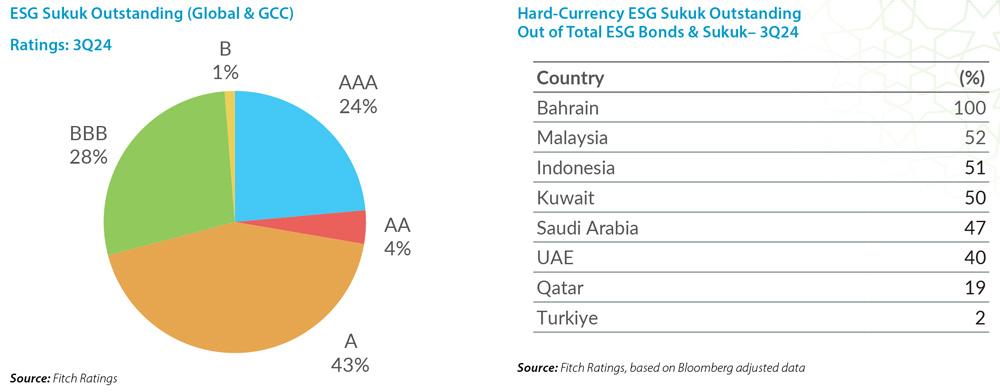
ancial Resilience through Takaful at COP16 UNCCD in Riyadh in December 2024 under the session theme of “Harnessing the power of the market,” which essentially reinforces the importance of private sector involvement in just and clean energy transition, given that governments alone do not have resources to do so on their own. This official event was organized by the Islamic Development Bank (IsDB) in partnership with UNDP through its Insurance and Risk Finance Facility. It was an opportune time to articulate the TGTA, a public-private partnership to enhance the financial resilience of Muslim communities to rising risks, including climate change, land degradation, drought and environmental challenges, through Takaful, a Shariah-compliant alternative to mutual insurance. The Alliance aims to build Takaful markets and products with an overarching goal of reaching 100 million people by 2030.
ICIEC’s role here could be specifically aimed at MSMEs. As a multilateral insurer, it does not under its mandate get directly involved in covering individual and household risks to climate-related events, but it can support Takaful operators by offering risk and resilience mitigation micro-Takaful products. “The protection gap from disasters (the difference between losses insured or not) in most developing countries,” maintain the promoters of TGTA, is often well above 90%, and in numerous developing countries, insurance remains remarkably low, with merely 7% of individuals on average being covered by any form. The lack of financial resilience exposes households to the vulnerabilities of medical emergencies subjects small-scale farmers to the uncertainties of climate-induced crop failures, leaves SMEs susceptible to overwhelming losses caused by catastrophic events, and prevents heavily indebted countries from accessing critical financing to support recovery and reconstruction post disaster.”
Sustained Demand for Credit and Investment Insurance in 2024
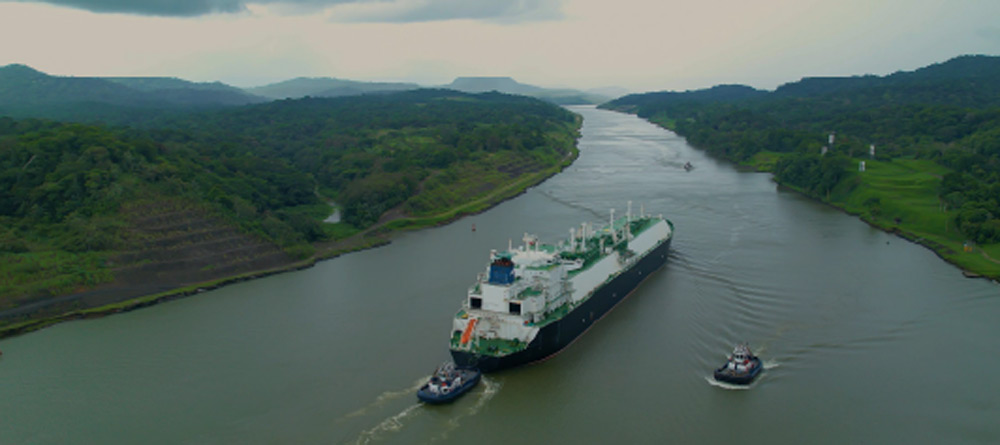
The continued global economic and geopolitical uncertainty marked by subdued GDP growth of the G7 economies, a modest uptake in merchandise trade, the intensification of the conflicts in Ukraine and Middle East with its disruptions in the Red Sea trade route and separately in the Panama Canal Route, due to climate-related drought, have seen a sustained demand for risk mitigation in 2024. A cornucopia of other challenges including the evolving AI revolution, the digitalization of trade, a changing regulatory landscape, tackling the entrenched issues relating to climate action and finance, funding and insuring the transition to a just clean energy playbook, and sovereign debt sustainability developments have all served to unleash new emerging risks and to present credit and investment insurers with exciting new opportunities for their business strategies. Dr. Khalid Khalafalla, Chief Executive Officer of ICIEC, considers the state of the credit and investment insurance industry in 2024, the emerging trends which require strategy flexibility, innovation and collaboration in an evolving landscape of world trade and foreign direct investment.
If we agree with the mood music at the Annual General Meeting of the Berne Union (BU) in October in Hamburg, the leading global association for the export credit and investment insurance industry of which ICIEC is a member, then our industry was poised for a new growth phase in 2024 with opportunities in a changing global trade landscape with the beguiling lure of trade digitalisation, the adoption of electronic trade documentation and its new-found legality under UK governing law, and generative AI applications.
BU members provide over USD3 trillion in new commitments annually in support of trade – more than 10% of the total value of global exports. The data indeed point to a modest positive trajectory in 2024 despite the increased risks. The credit insurance dichotomy is that economic and geopolitical flashpoints lead to heightened risks – both perceived and real. This in turn increases demand for risk mitigation tools such as export credit and political risk insurance, surety, and guarantees.
“The year 2023 marked continued transformation in the trade finance industry. Historic levels of underwriting have led to a colossal USD3.12 trillion of support for trade over the year. As trade patterns shifted and new relationships forged companies sought protection from Berne Union members to expand their businesses in new avenues,” stressed Maëlia Dufour, the erstwhile President of the BU whose 2-year term expired at the end of October 2024, in the Union’s 2023 Year Annual Report. This growth saw a surge in demand for Medium-Term (MLT) and Other Cross-Border (OCB) solutions in a strategic shift towards longer-term solutions.
“We have uncovered a growing emphasis on larger and more complex transactions, extended tenors, and a heightened need to mitigate risks associated with intricate global supply chains amid high interest rates. Companies are increasingly seeking the stability and security our membership offers,” she added. The emphasis for 2024 is a much greater meaningful collaboration between stakeholders around public and private risk-sharing, synergy between trade and development, and the potential for innovation amid new products and emerging approaches to export support.
Not surprisingly, BU members reported USD2.46 trillion in new commitments in H1 2024 which shows a consolidation of a new growth phase for export credit especially medium-and-long-term (MLT) business lines as well as continued diversification across a growing array of trade support products.
MLT export credit, according to the Union, saw another historically strong period, climbing 22% to USD73 bn of new business, driven by increased ECA support and expansion of underwriting from private insurers with notable growth in Europe, the Middle East and South Asia. Ocean-going vessels and mega infrastructure projects drove MLT growth, but the industry still sees the greatest opportunities in renewable energy and green transition. Members also reported new and updated products primarily focused on green support and expanded domestic support, untied and working capital products which aim to build and enable future trade ecosystems.
Geopolitical risk and economic slowdown are the biggest concerns for members, as claims remain elevated at USD5 bn – but claims ratios remain relatively benign overall. The first half of 2024 also saw a flurry of PRI claims to Russia triggered by a range of events including: expropriation, political violence and transfer. The BU is also collaborating with Finance in Common which aims to explore and promote opportunities for closer collaboration between export credit and development finance.
Berne Union Business Lines, Claims and Recoveries Data H1 2024
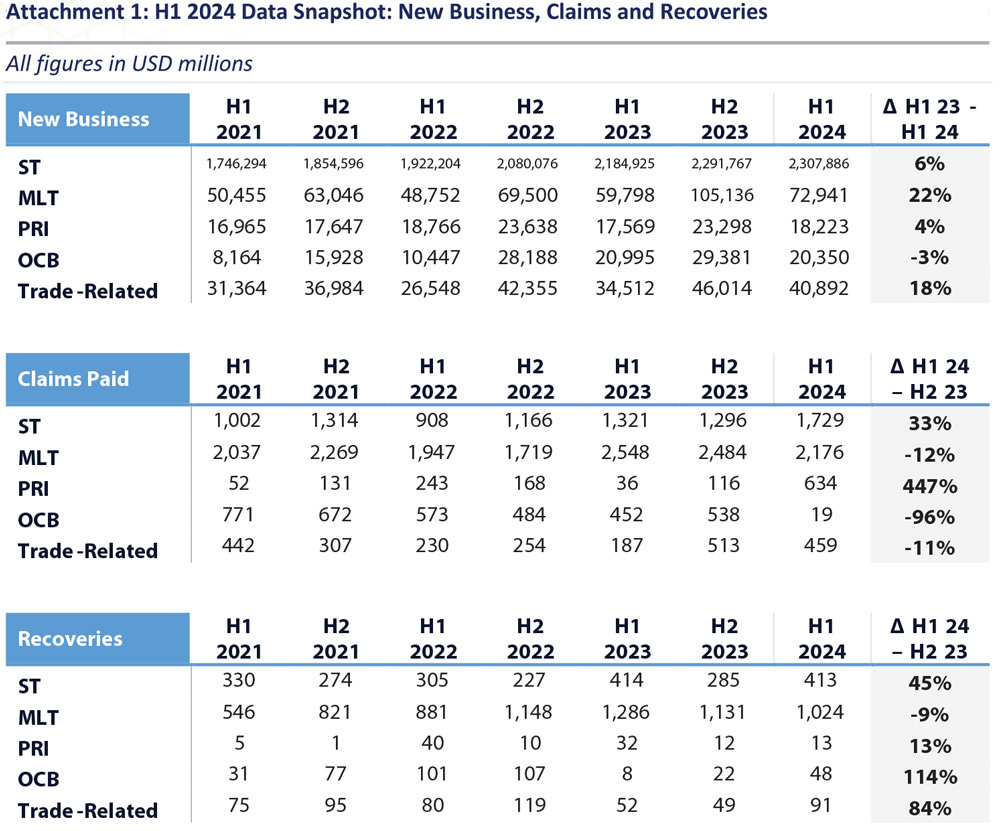
Source: Berne Union October 2024
The consensus is that renewables are the new powerhouse for trade finance and investment. Fuelled by a global focus on environmental sustainability and supportive policy frameworks, the value of supported renewable energy transactions doubled in 2024 compared to the previous years – after consecutive periods of growth. This surge reflects not only the industry’s commitment to green initiatives but also the recognition of renewable energy as a stable, long-term investment, perfectly aligning with the growing demand for trade finance. This is especially in emerging and developing markets. As members continue to support renewable energy projects offering financial incentives, risk portfolios are shifting as exposures increase to this key industry.
Key Takeaways for 2024
The BU Export Credit Business Confidence Trends Index for H2 of 2024, which tracks perceived demand and claims in the export credit insurance industry based on half-year surveys of BU members, noted several key takeaways:
- Cautious optimism for H2 of 2024 as the demand for ST and MLT insurance cover is expected to rise.
- Opportunities for growth lie in supporting SMEs and investment in renewables and the green transition.
- Claims under short-term policies are expected will rise in H2 of 2024 while claims for longer term business are expected to fall.
- For ST cover, Russia-Ukraine, the Middle East, and Argentina are the regions they are most watchful of; construction and consumer goods are the sectors being closely monitored due their higher sensitivity to macroeconomic conditions
Trade Credit Insurance – Insured Exposure ICISA Members Amount in (excl reinsurance members)
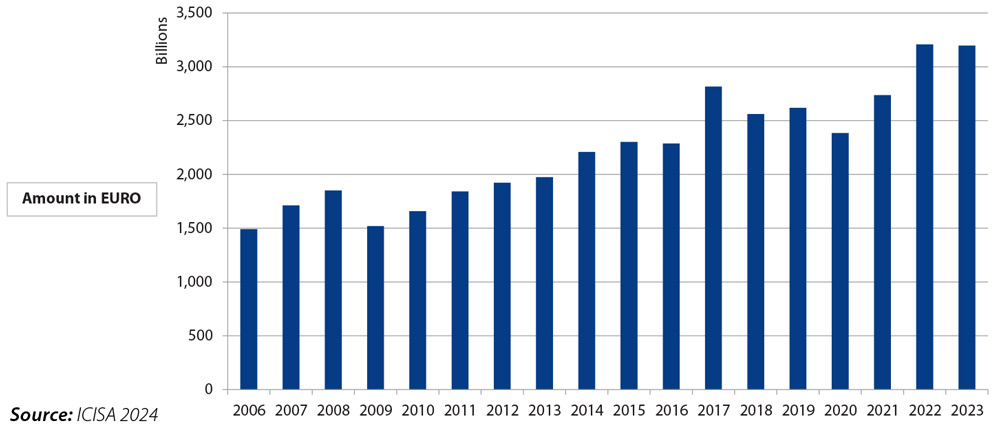
- Debt sustainability developments have meant lower sovereign-related claims under longer-tenor cover, but members remain vigilant towards countries in delicate fiscal positions, predominately in Sub-Saharan Africa and South Asia.
- Overwhelming consensus that macroeconomic and geopolitical uncertainty will shape demand and claims over the next six months. As such navigating geopolitical risks and the impact of conflicts are seen by many as the biggest challenges in H2 of 2024, albeit concerns over global macroeconomic uncertainty still linger.
Given the current landscape of credit insurance is marked by significant uncertainty and heightened risks due to a multitude of overlapping crises, Richard Wulff, Executive Director of the International Credit Insurance and Surety Association (ICISA), the first and leading trade association representing trade credit insurance and surety companies internationally, whose members account for the majority of the world’s private credit insurance business, stresses that “there is substantial room for enhanced collaboration between government insurers, including stateowned entities and ECAs and Development Financial Institutions (DFIs), and private sector re/insurers. Such collaboration can lead to the development of more comprehensive risk mitigation strategies by leveraging the strengths of both sectors.”
The recent MoU signed between ICISA and the AMAN UNION of credit insurers and ECAs from the OIC countries, of which ICIEC is currently the Secretariat, is precisely aimed at advancing credit and investment insurance initiatives in member states common to both, and expanding credit insurance, extending its benefits beyond traditional high-income markets to developing countries where the sector is often fragmented and undervalued and marginalized because of the absence “hard collateral” as security.
ICISA’s data for 2020 on the role of credit insurance in global trade estimates EUR12.07 bn in total global credit insurance premium, and EUR6.35 trillion of total value of insured shipments. The percentage of World Trade in 2020 protected by credit insurance was 14.52%; the percentage of the global credit insurance market represented by private insurers was 61%, and the percentage of the private market represented by ICISA was 84%.
As the only Shariah-compliant multilateral insurer in the world and member of the Islamic Development Bank (IsDB) Group, and offering a suite of alternative risk mitigation solutions, guarantees and reinsurance akin to mutual insurance (Takaful) and (ReTakaful), ICIEC is similarly subject to the bevy of emerging risks that have evolved in the last two years in addition to the usual risks associated with trade and investment insurance, and guarantees and surety. It is also beholden to the prevailing macroeconomic conditions of the 50 member countries that it serves under its mandate. Its success has been impressive over the last three decades and in its Pearl Jubilee year in 2024 it surpassed the USD121 bn mark of cumulative business insured, investment protection and guarantees in pursuit of its mandate in providing risk mitigation solutions related to trade and investment in member countries, facilitating intra-OIC trade and investment, and promoting the alternative Islamic system of financial intermediation, in its case in the provision of Takaful.
Collaboration is in the DNA of ICIEC considering its longstanding partnerships with many peer institutions, industry professional bodies namely the Berne Union, AMAN UNION and ICISA; government export promotion agencies; with private credit insurers and a range of banks and with ECAs of member countries and beyond. The Corporation has a pivotal founding association with the AMAN UNION, which was established in 2009 and of which I am currently the Secretary General.
The 14th AMAN UNION AGM in December 2024 in Algiers showcased the critical role of fostering credit insurance and trade across Africa, the Arab, and Islamic countries. By uniting diverse stakeholders, we illustrated the power of collaboration in addressing trade challenges and driving sustainable growth. Strengthened partnerships and shared expertise are paving the way for a resilient, interconnected trade ecosystem in OIC countries to boost risk mitigation and protection in trade and investment in today’s interconnected world with its rising geopolitical and economic risks. In today’s complex global landscape, the AMAN UNION remains a vital platform for collaboration and innovation, delivering valuable insights to benefit all stakeholders.
The AMAN UNION seeks to be the comprehensive umbrella for export insurance agencies in Arab and Islamic countries, while expanding its membership to include elite international institutions, and aims to promote the exchange of experiences, the application of best practices, and the dissemination and development of a culture of assurance. In fact, in Algiers the AMAN UNION signed a Corporate Training Services Agreement with the UAE-based RISC Institute DMCC, a leading training institution specializing in talent development for the insurance, risk management, and personal finance sectors.
ICIEC unveiled its 2023 Annual Report in May 2024 in Riyadh at the IsDB Group Annual Meetings. The year 2023 was one of operational resilience and exceptional financial performance, showcasing a significant 14.4% y-o-y increase in insured trade and investment transactions, amounting to USD13.3 bn. The Corporation also reported an increase in its Gross Written Premium, which rose by 6.4% to USD98.3 mn. ICIEC’s improvement in corporate net results reflects its ability to effectively manage policyholder commitments, enhance value proposition and demonstrate fostering confidence of our Member States. This performance trajectory is set to continue in 2024, despite the various headwinds and evolving risks.
It would be a miss not to correlate the dynamics and impact of global macroeconomic indicators especially real GDP growth, trade movements and Foreign Direct Investment (FDI) trends for 2024, all of which impact the dynamics of credit and investment insurance business and market calculations. The IMF’s World Economic Outlook Real GDP Growth Projections in October 2024 reveals a subdued global growth scenario of 3.2% for 2024 and 2025. This trajectory is repeated at 1.8% for the Advanced Economies of which Canada’s economy is projected to grow at the highest percentage of 2.4%.
In contrast the Emerging and Developing Economies are projected to grow 4.2% for the same years, with India way ahead at a projected GDP growth of 7% in 2024 and 6.5% in 2025, and China weighed down by its current economic woes with projected GDP growth at 4.8% declining to 4.5% for the same period. GDP growth outlook for low-income developing countries which constitute a majority of ICIEC membership is projected at a health 4.2 per cent for the two years. Of the OIC countries, Saudi Arabia’s growth is projected to increase from 1.5% in 2024 to 4.6% in 2025 in line with the ambitions of the Saudi Vision 2030, while Nigeria’s growth prospects are projected to increase from 2.9% in 2024 to 3.2% in 2025.
The scenario for global trade prospects in 2024 and beyond reflects a similar trajectory. The WTO’s Goods Trade Barometer published on 10 October 2024 shows moderate trade growth as uncertainty looms, including possible shifts in trade policy.
World merchandise trade volume
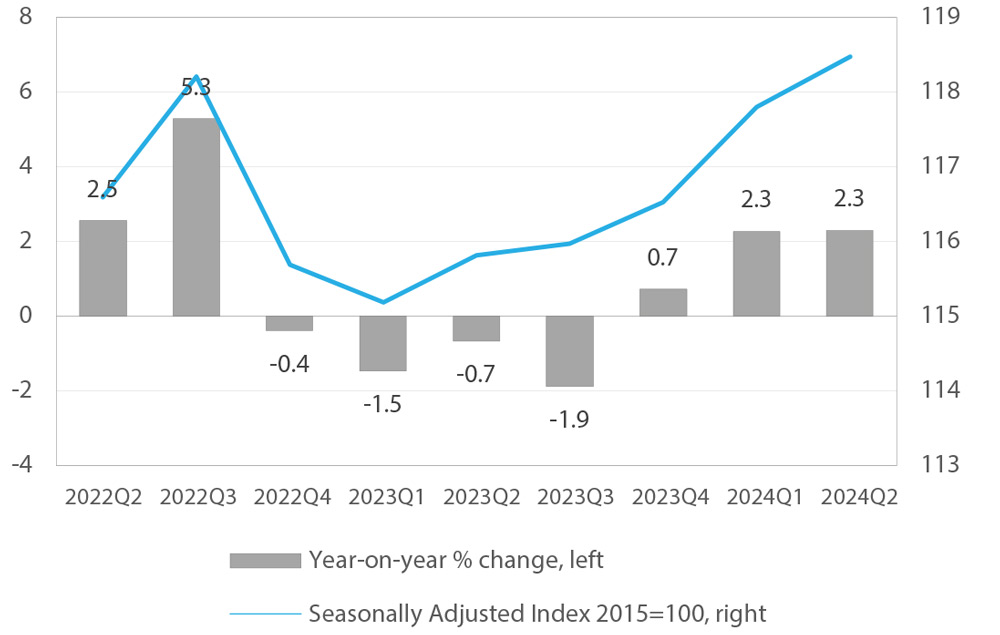
Source: WTO Goods Trade Barometer October 2024
Drivers of goods trade
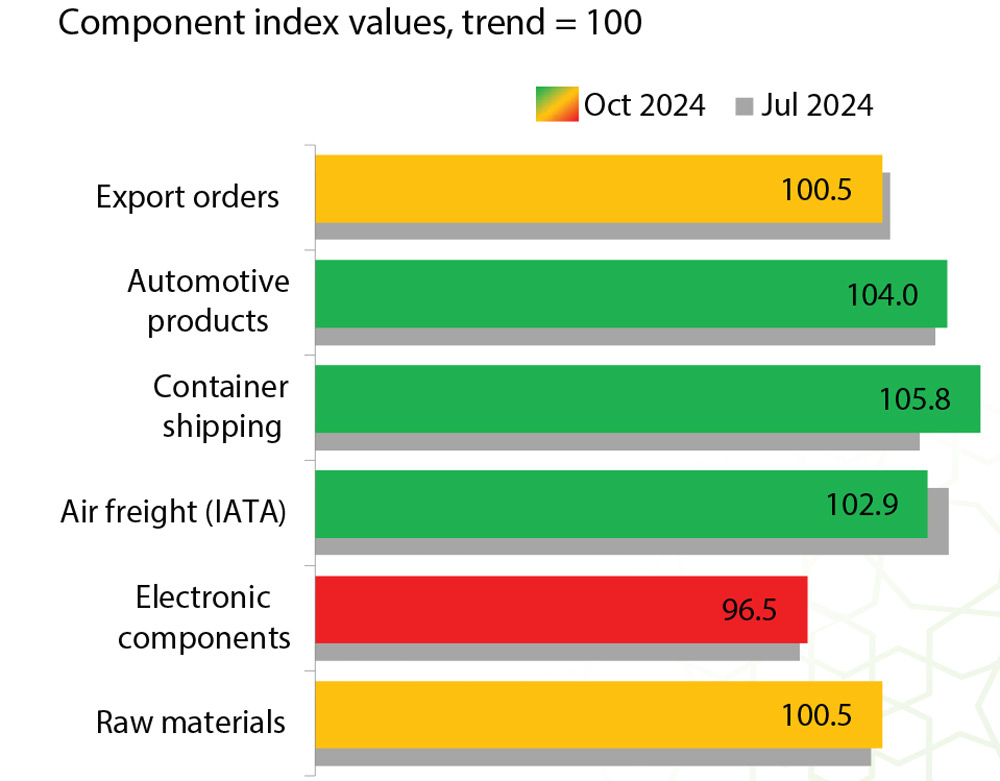
Source: WTO Goods Trade Barometer October 2024
Trade volume growth for the whole of 2024 should come in at around 2.7% while growth in 2025 is expected to reach 3.0%. Exports of Asian economies and imports of North American countries grew more than expected in the first half of 2024 while European trade flows continued to decline on both the export and import sides.
The WTO’s Global Trade Outlook and Statistics Update in October 2024 projects a gradual trade recovery in 2024 despite widening regional conflicts and increased policy uncertainty. “Global merchandise trade turned upwards in FH 2024 with a 2.3% year-on-year increase, which should be followed by further moderate expansion in the rest of the year and in 2025. The rebound comes on the heels of a slump in 2023 driven by high inflation and rising interest rates. WTO economists now anticipate that the volume of world merchandise trade will increase by 2.7% in 2024 and 3.0% in 2025, while global GDP growth at market exchange rates is expected to remain at 2.7% in both years,” stressed the update.
Declining inflationary pressure, says the WTO, has allowed central banks in advanced economies to begin cutting interest rates, which should stimulate consumption, boost investment and support a gradual recovery of global trade. However, significant downside risks remain, including regional conflicts, geopolitical tensions and policy uncertainty. The revised trade forecast is consistent with the WTO’s Global Trade Outlook and Statistics report issued in April, which predicted 2.6% growth in both merchandise trade and GDP in 2024, followed by trade growth of 3.3% and GDP growth of 2.7% in 2025.
World merchandise trade volume and GDP growth, 2021-2025
Annual % change
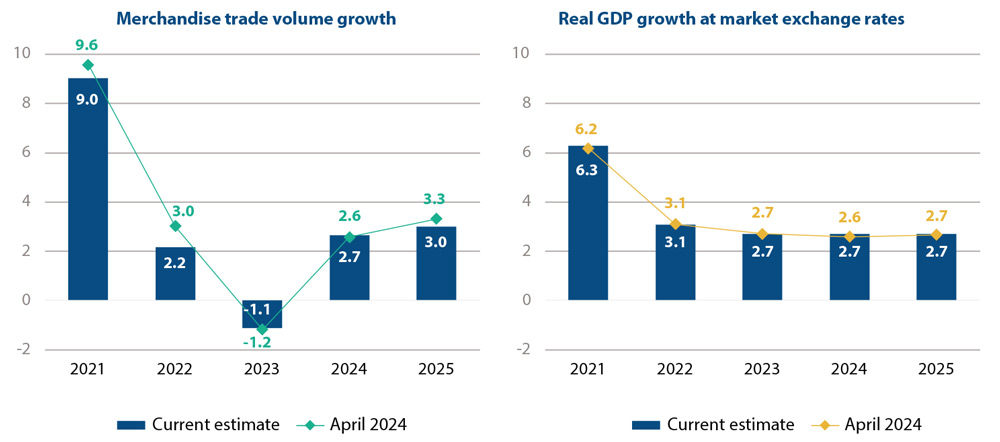
Source: WTO for merchandise trade volume and consensus estimates for GDP.
Note: Figures for 2024 and 2025 are projections. Trade refers to average of exports and imports.
Merchandise exports of least developed countries (LDCs) are projected to increase by 1.8% in 2024, marking a slowdown from the 4.6% growth recorded in 2023. Export growth is expected to pick up in 2025, reaching 3.7%. Meanwhile, LDC imports are forecast to grow 5.9% in 2024 and 5.6% in 2025, following a 4.8% decline in 2023. These forecasts are underpinned by GDP growth estimates for LDCs of 3.3% in 2023, rising to 4.3% in 2024 and 4.7% in 2025.
The prospects for Global FDI flows are more disconcerting. According to the UN Trade and Development (UNCTAD’s) World Investment Report 2024, FDI fell 2% to USD1.3 trillion in 2023, as trade and geopolitical tensions weighed on a slowing global economy. The report underscores that the headline figure exceeds -10% when excluding a few European conduit economies that registered large swings in investment flows. FDI flows to developing countries dropped 7% to USD867 bn, with Sub-Saharan Africa attracting only USD53 bn in FDI in 2023. The Report further highlights that:
- Tight financing conditions led to a 26% fall in international project finance deals, critical for infrastructure investment. International project finance is crucial for the poorest countries, making them more vulnerable to the global downturn in this type of investment.
- Crises, protectionist policies and regional realignments are disrupting the world economy, fragmenting trade networks, regulatory environments and global supply chains. This undermines the stability and predictability of global investment flows, creating both obstacles and isolated opportunities.
- While prospects for 2024 remain challenging, modest growth in FDI flows for the year remains possible, citing easing financial conditions and investment facilitation efforts in both national policies and international agreements.
- Investments are growing in several global value chain-intensive manufacturing sectors like automotive and electronics in regions and countries with easy access to major markets. But many developing countries remain marginalized, struggling to attract foreign investment and participate in global production networks.
Foreign direct investments declined in most regions
Foreign direct investment (FDI) inflows by economic grouping and region, billions of dollars and percentage change
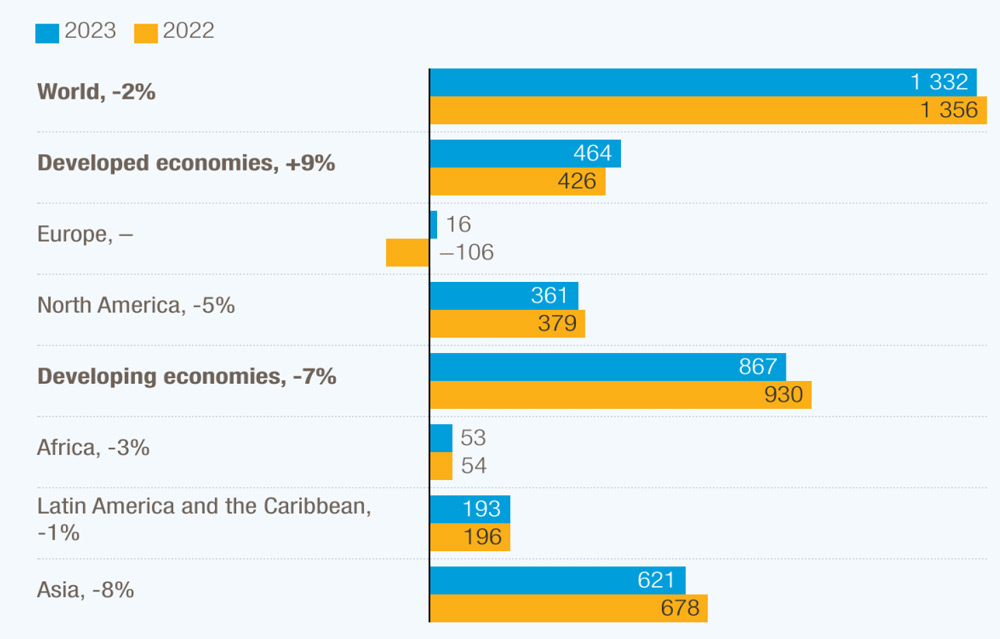
Source: UN Trade and Development (UNCTAD)
Credit and Political Risk Insurers (CPRIs) also faced new challenges as the year 2024 is ending. The European Banking Authority (EBA) released its long-awaited recommendation on the treatment of credit insurance as a credit risk mitigant (CRM) tool under the Basel regulation. The EBA decided against recommending an alternative approach for banks using credit insurance for credit risk mitigation. This topic now moved to the European Commission, which must balance financing the real economy with the need for competitiveness and innovation, while considering the EBA’s strict adherence to Basel standards.
Geopolitical tensions pose downside risks to the global economy and is adding challenges to CPRI underwriters through a surge in uncertainties, from protectionism to political uncertainty in major EU countries and ongoing conflicts in Russia-Ukraine and the Middle East, including tensions in the South-China-Sea and with Taiwan. This is a moving environment which requires proactive adaptation from underwriters and guarantors.
ICIEC MEET THE TEAM

ICIEC’s Women in Credit and Investment Insurance
A Trajectory for Gender Responsiveness and Balance in the Workplace
Of the current cohort of ICIEC’s 85 staff 15 are women. They vary from Country Managers, four of whom are featured in this article, to finance, underwriting, credit risk, corporate affairs, training, communications and marketing, human capital and resources, and public relations professionals. Their commitment, aspirations, knowledge, experience, expectations, and career pathways are universal, irrespective of the various metrics of identity, be it ethnicity, gender and creed.
As a signatory to the Principles of Sustainable Insurance (PSI), first introduced in 2012, and being the unique sole Shariah-compliant multilateral insurer in the world, and a member of the Islamic Development Bank (IsDB) Group, and of industry bodies such as the Berne Union, the AMAN Union and the International Credit Insurance and Surety Association (ICISA), gender responsiveness and balance are embedded in ICIEC’s playbook, at least in strategy terms, although in reality it is also a work in progress, as in almost all multilaterals and corporates around the world irrespective of demography and socio-economic status.
ICIEC of course does underwrite gender-responsive policies for transactions it supports in its 50 member states in line with their respective development agendas, especially in promoting women-owned-and-run Micro-and-Small-and-Medium-Sized-Enterprises (MSMEs) and women entrepreneurs. Gender responsiveness is increasingly becoming a core component of the gamut of the MDB and corporate architecture globally including the PSI.
The experiences and career paths of Sabah Alharbi, Eman A Mahmoud, Khady Seye, and Christelle Rivera in support of women in credit and investment insurance, sustainable finance and impact investment in developing markets, speak for themselves.
Ms. Sabah Alharbi, Country Manager, MENA Region, ICIEC
“I have over 18 years of extensive business experience in the Credit and Political Risk Insurance (PRI) business. This includes diversified experience in Policy Administration, Customer Relations to Country Manager and sales roles with key ICIEC accounts in MENA countries.
My Professional Experience at ICIEC spans as a Sales Assistant, then as a Policy Administration Officer, between 2008 to 2012, before moving on to become a Customer Relations Specialist till end of 2016, and then promoted to a pivotal role as Country Manager for the MENA region in 2017, a position I continue to hold.
My journey in the business world began in policy administration not to forget when our IMS had developed a portal online, I was among the top pioneers who trained clients on the system. With this massive development we were able to ease the process of workflow. Through my dedication, hard work and speed of learning, I was transferred to professional level, being a key staff member within the Customer Relations Department, where I managed relationships with existing clients and helped to resolve process obstacles and customer issues and feedback. This path ultimately led me to my current role as a Country Manager, where I oversee and support sales across specified countries in the Middle East and North Africa.
My personal interaction with clients helped me to increase our business not only in the MENA region, but also in the ASIA and SSAE regions, in close interaction with our sister organisation in the IsDB Group, The International Islamic Trade Finance Corporation (ITFC). Within this synergy, we will impact in positive way for the business portfolio not only in my division but as well to other divisions in ASIA and SSAE.
My motivation is also to continue improving my skills set through professional development and further qualifications and certifications. These include participating in ICIEC’s “Woman Leadership Programme in 2023,” courses on “Climate Change Fundamentals,” “Role of Credit Information Sharing & Business Intelligence in Supporting Trade & Investment Decisions (OBIC),” “Sukuk Structuring and Risk,” and “Buyer and Banking Underwriting.”
The fact that I am also a Certified International Credit Professional and a Certified Islamic Banker has helped me in my work for a dedicated Shariah-compliant multilateral insurer. In my current role, I am responsible for driving business growth by attracting new customers and enhancing relationships with existing clients. By implementing region-specific sales strategies, I had significantly contributed to increasing business insured and premium income, aligning with the corporation’s overall goals.
My forte is in generating business, ensuring the quality of insured business, and assisting customers in understanding new policies. With a strong ability to develop market intelligence, I provided valuable input for the continuous improvement of existing products. I am known for being highly motivated and self-directed, which has impacted in consistently delivering positive results that have led to increasing responsibilities and notable recognition throughout my career.”
Ms. Eman Mahmoud, Country Manager Egypt, ICIEC
“I have a strong foundation in finance and credit analysis, having completed a BCom from Cairo University and a MA in Business from The Ohio State University. I am also a certified Credit Analyst and a Certified Financial Modelling and Valuation Analyst.
My professional journey has been marked by a focus on credit and investment analysis, with experience spanning both commercial banks and a multilateral development finance institution. My current role as Country Manager for ICIEC has further honed my skills in these areas.
In my capacity as Country Manager at ICIEC, I have been instrumental in driving business development as part of the MENA region team. My responsibilities encompass establishing and maintaining relationships with strategic partners, origination, new project screening, appraisal, due diligence, and presenting new transactions for technical committee approval. This role has provided me with invaluable experience in credit and political risk assessment, project evaluation, and transaction structuring.
My expertise extends to several key areas such as Credit and Origination, Sustainable Finance and Development, Impact Investment, and Credit Risk Management. Recently, I presented a Paper titled ‘Insuring a Sustainable Future: An ICIEC Perspective’ at the BDC International Banking conference in Cairo, Egypt.
While the field of credit and investment insurance offers numerous opportunities, barriers include the need for specialized knowledge and experience, as well as a strong understanding of the regulatory, political and economic landscape. Additionally, building relationships with strategic partners and developing a strong network within the industry can be challenging.
Given my strong track record and expertise in credit and investment insurance, sustainable finance, and impact investment, I believe there is significant potential for career advancement within ICIEC. I am glad to have participated in the “Women Leadership Programme” at the Corporation to support women assume leadership roles.
I am excited about the future and the opportunities that lie ahead. I aspire to continue to contribute to the growth of ICIEC, while leveraging my expertise to drive sustainable development and promote inclusive economic growth. I am also keen to explore opportunities for leadership and management roles within the organization.
Ms. Khady Seye, Country Manager Senegal, ICIEC
“As far back as I can remember, I’ve always wanted to work in the financial sector, thus all my academic choices were made in this direction. In 2010, I obtained my MBA in Finance from Laval University in Quebec, Canada. Even then, I was one of the few women in our graduating class to take up this challenge. Nevertheless, obtaining a degree from a faculty with 2 international accreditations that place it among the top 1% of business schools worldwide was a daily motivation.
In 2010, with an MBA and CFA (Chartered Financial Analyst) Level 1 designation in my pocket, I began my career in Quebec at Desjardins as an account manager whose main mission was to offer financing solutions to companies in a variety of sectors. Always looking for new challenges, I joined Export Development Canada, one of the largest Export Credit Agencies (ECAs) in terms of assets which task is to support and develop Canada’s export trade by helping Canadian companies.
It was in August 2023 that I joined the ICIEC team in Senegal. As I was already familiar with credit insurance from my previous experiences, my integration was straightforward. Our sector is still very male-dominated, so I see my role as a mission: to pave the way for other women to reach positions of responsibility and be more represented in the management team.
Ms. Christelle Rivera, Sales Administration Associate, UAE, ICIEC
“My journey began during my undergraduate years at University of Saint Anthony in the Philippines, where I pursued a degree in Accounting and Finance. I was fascinated by the mechanisms of financial markets and the impact of strategic financial decisions on business success. This initial spark of interest led me to seek out roles in the financial sector, where I could gain hands-on experience.
I started my career as a Policy Administration Associate at ICIEC, where I was introduced to the intricacies of trade credit and investment insurance. This position allows me to develop a robust understanding of the sector including the different risk mitigation tools and impact of Investment and Credit Risk Management in global economic markets.
My role at ICIEC plays a crucial part in managing and maintaining the various insurance policies including the account management and direct collaboration with the Reinsurance Partners. My expertise extends to Financial and Management Reporting, Account Reconciliations, Reinsurance Portfolio Management, and Trade Credit and Investment Insurance.
As I continued to advance in my career, I took a Certified Management Accountant (CMA) certification course which is highly regarded in the fields of management accounting and demonstrates expertise in financial and strategic planning. By leveraging the expertise gained through the CMA certification, I believe I can contribute to overall operational efficiency and support ICIEC’s success and continuous growth.
The Trade Credit and Investment Insurance industry plays a vital role in facilitating international trade and investment in global markets, however, given the high importance of the business, it requires specialized knowledge in the sector such as compliance, regulatory changes, technological aspects and fostering a strong understanding of market dynamics.
I am looking forward to continuously advancing my career in this strategic institution that supports the economic development of its member states and enhances global economic relations and cooperation.”