Investment Insurance For Corporates
– Political Risk Insurance for Equity Investment / Projects



- Currency inconvertibility and transfer restrictions.
- Expropriation.
- War and civil disturbance.
- Breach of contract.
- Protects balance sheet against losses due to non-commercial risks.
- Attracts additional project capital.
- Enables the penetration of high-risk markets.
- Involvement in a project of a multilateral institution (such as ICIEC) is itself a risk mitigant.
- Acts as a deterrence against adverse government action against the project.
- Foreign investment / project in Member Countries.
- New investment, acquisition or expansion of existing investments / projects.
- Investments should not be prohibited by the Islamic Shariah.
- Up to 20 years
How It Works ?
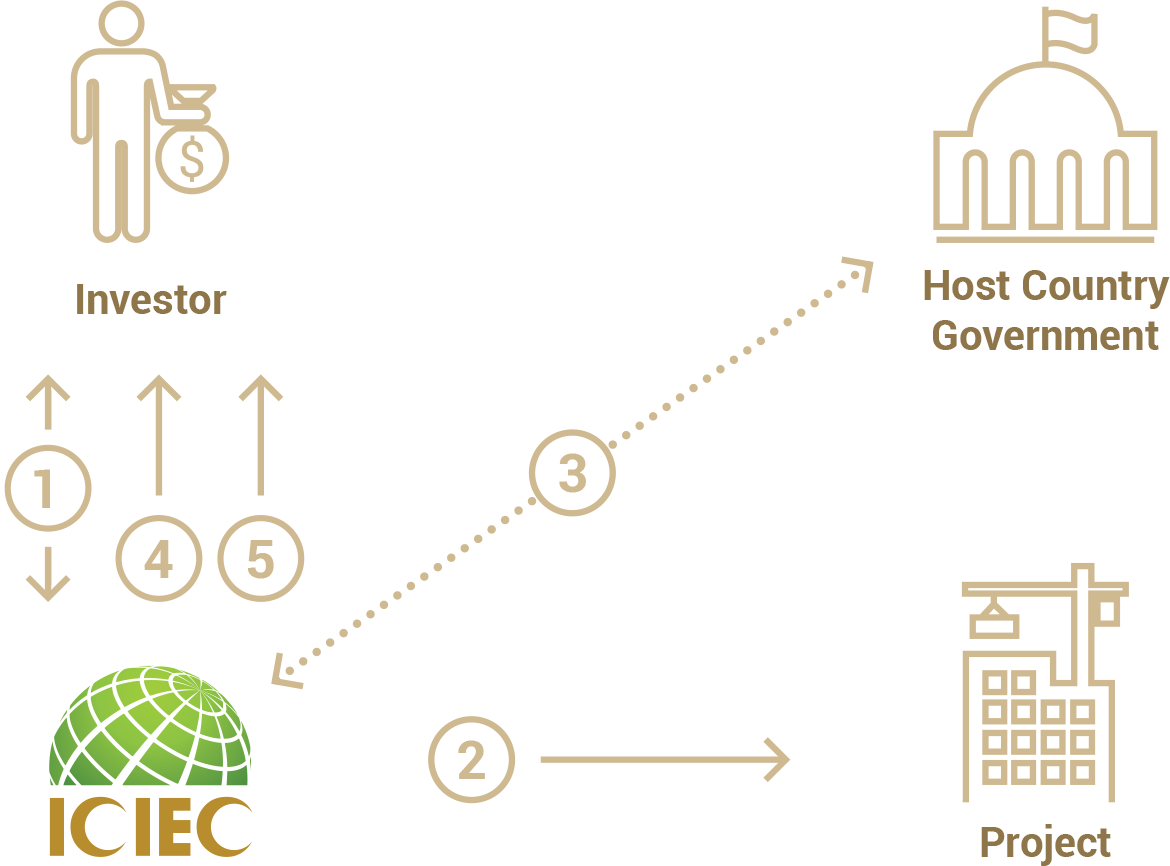
- The investor submits a preliminary application to ICIEC. ICIEC provides its initial ‘in-principle’ approval and requests a full detailed application and the payment of applicable fees.
- Applicant submits a completed Main Application. On the basis of the detailed application, ICIEC will assess the project / country risks.
- Should ICIEC management approve the insurance, ICIEC will then issue an investment insurance policy to the investor.
- ICIEC will obtain the non-objection of the government of the host country.
- In case of risk occurrence, the investor submits a claim to ICIEC and ICIEC pays the compensation.
Credit Insurance For Corporates
– Insurance of Supplier Credit
- Insolvency of the buyer / issuing bank.
- Failure or refusal of the buyer to pay.
- Refusal of the buyer to accept goods after shipment.
- Arbitrary cancellation of the contract by the buyer.
- Currency transfer restrictions by the buyer’s country / issuing bank’s country.
- Expropriation by the government of the buyer.
- War or civil disturbance in the buyer / issuing bank’s country.
- Protects balance sheet against non-payment of export receivables.
- Enhances competitiveness.
- Increases international sales by offering flexible payment terms to overseas customers.
- Offers to customers open account credit terms while protecting the insured against credit risk.
- Helps access working capital facilities from banks by assigning the insurance policy to the banks as security.
- Nationals of a Member Country.
- Corporations or other juridical entities located in ICIEC member countries or owned at least 50% by the IsDB or by a Member Country if located in Non-member countries.
- Goods should have at least 20-30% value-added from one or more Member Countries.
- In case of capital goods or strategic commodities, the above criteria are not applicable. However, the buyer should be in a Member Country.
- Goods not prohibited by Islamic Shari’ah.
- Up to 7 years
How It Works ?
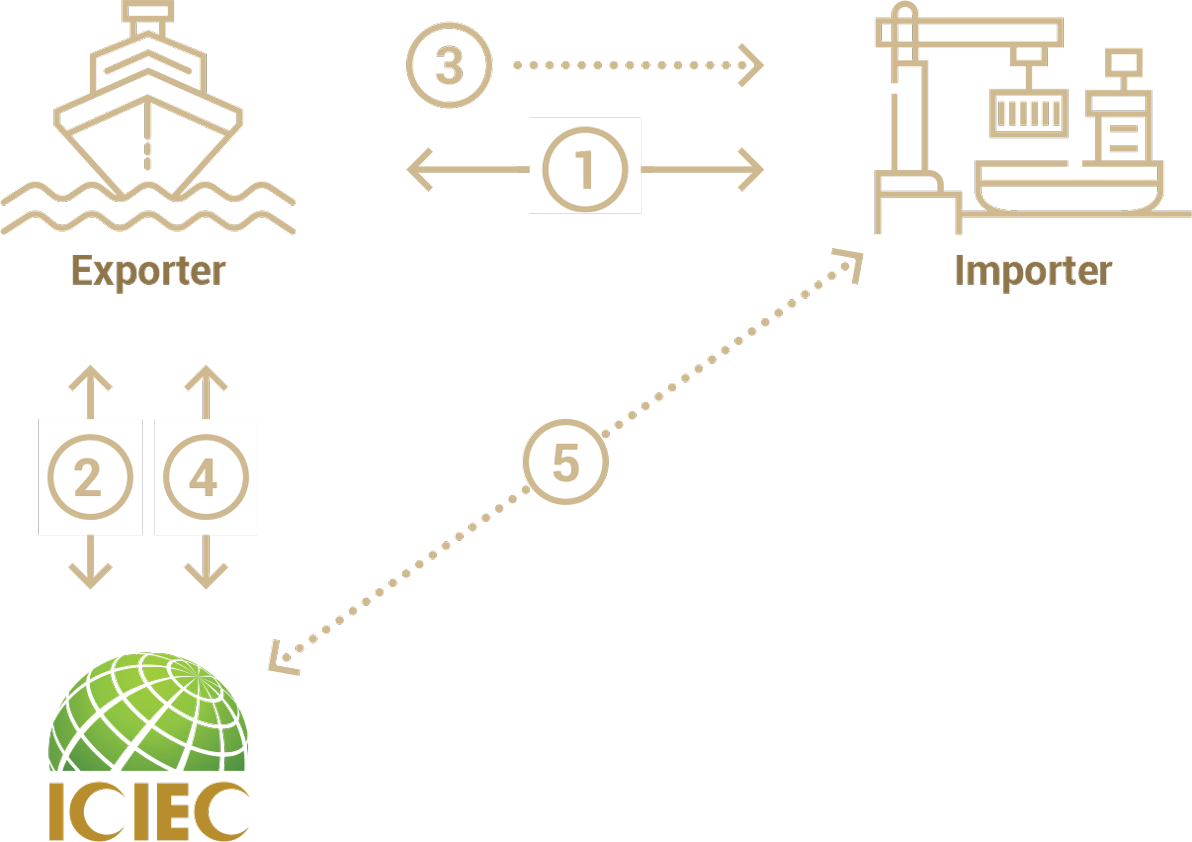
- Exporter enters into a sale contract with importers / buyers.
- The exporter concludes an insurance contract with ICIEC to cover non-payment risks of up to a certain percentage (e.g. 90%) and pays the premium.
- The exporter ships the goods to the buyers and declares the shipments to ICIEC
- In case one of the buyers fails to pay, the exporter submits a claim to ICIEC which indemnifies the exporter for up to 90% of the covered amount.
- ICIEC recovers from the buyer and pays 10% share to the exporter.
Export Credit Agencies & Insurers
– Reinsurance / Co-insurance / Fronting
- Commercial and Political Risks.
- Provide capacity-building support for ECAs in Member Countries.
- Provide technical assistance in the establishment of ECAs in Member Countries.
- Provide credit information services.
- Joint marketing and technical assistance to the ECAs of Member Countries.
- Help ECAs in non-Member Countries to cover projects in Member Countries.
- Exports from ICIEC Member Countries to any country in the world.
- The inflow of capital and investments from the world into ICIEC Member Countries.
- Domestic sales of exporters in ICIEC Member Countries.
- Import of strategic and capital goods from the rest of the world to ICIEC Member Countries.
- Insured goods should not be prohibited by Islamic Shariah and should have at least 30% value-added in any ICIEC Member Countries.
- 2 years short term
- 7 years medium term
- 20 years foreign investment
- Quota Share Treaty
- Excess of Loss
- Reinsurance Facultative Agreement
Investment Insurance For Banks & Financial Institutions
– Non-Honoring of Sovereign Financial Obligations / Political Risk Insurance of Cross-Border Loans
Political Risk Insurance for Equity Investments, Debt Finance and Loan Guarantees
- Currency inconvertibility and transfer restrictions.
- Expropriation.
- War or civil disturbance.
- Breach of contract.
Non-Honoring of Sovereign Financial Obligations / Political Risk Insurance of Cross-Border Loans
- Non-Honoring of Financial Obligations by the sovereign / sub-sovereign / State-owned Enterprises (SOEs)
- Facilitates access to finance.
- Protects balance sheet against losses due to non-commercial (i.e. political) risks.
- Attracts additional project capital.
- Enables the penetration of high-risk markets.
- Reduces cost of funding
- New investments, acquisition or expansion of existing investments / projects.
- Investment not prohibited by Shariah.
- Investments being undertaken in a Member Country.
- Up to 20 years
How It Works ?
- Investor submits a preliminary application to ICIEC, ICIEC gives its initial ‘in-principle’
approval and requests a full detailed application and payment of applicable fees. - Applicant submits completed Main Application. On the basis of the detailed
application, ICIEC will assess the project / country risks. - Should ICIEC management approve the insurance, ICIEC will issue an investment
insurance policy to the investor. - ICIEC will obtain the non-objection of the government of the host country.
- In case of risk occurrence, the investor submits a claim to ICIEC and ICIEC pays the
compensation.
Credit Insurance For Banks & Financial Institutions
– Insurance of Letters of Credit / Buyer Credit Insurance
- Insolvency of the obligor.
- Failure or refusal of the obligor to pay on due date.
- Currency inconvertibility and transfer restrictions imposed by the obligor’s country.
- Expropriation, confiscation or adverse government intervention in the business of the obligor.
- War or civil disturbance in the obligor’s country.
- Protects balance sheet against losses due to commercial and non-commercial (i.e. political) risks.
- Improves capital adequacy via capital relief.
- Optimizes Balance Sheet by de-risking a portion of the portfolio.
- Better reflection in ICAAP and CRM techniques.
- Provides additional headroom capacity.
- Reduces portfolio cost using the credit rating of a highly rated multilateral institution.
- Minimizes non-performing assets.
- Enhances business volume.
- Helps in structuring Shariah compliant financing facilities.
- Banks / Financial Institutions domiciled in ICIEC Member Countries.
- Banks / Financial Institutions domiciled in ICIEC Non-member Countries, owned not less than 50% by the IsDB or by Member Country.
- Banks / Financial Institutions offering Shari’ah compliant products.
- Banks that finance strategic exports to member countries.
- Up to 7 years
How It Works ?
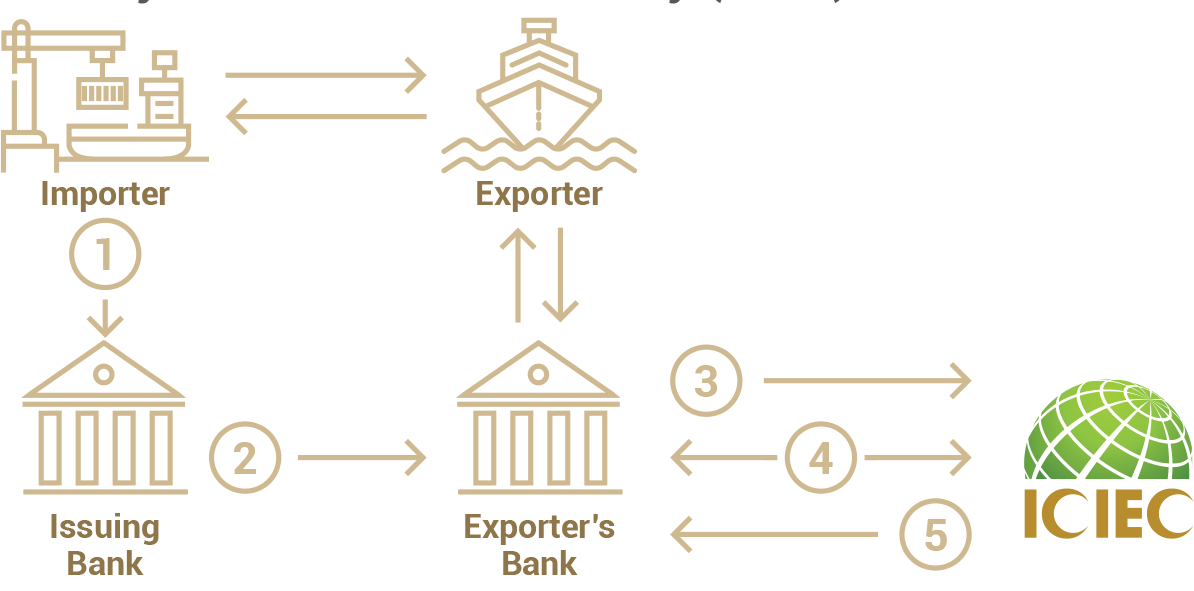
Documentary Credit Insurance Policy (DCIP)
- Importer arranges issuance of LC.
- The issuing bank issues an LC to the exporter’s banks.
- The exporter’s bank applies to ICIEC to insure the LC. ICIEC insures the LC up to a certain percentage (e.g. 90%). The Insured is required to keep the uninsured amount on its own account.
- In case of non-payment by issuing bank, the exporter’s bank submits claim and ICIEC pays compensation (90% of the loss).
- ICIEC recovers from the issuing bank and pays 10% back to the exporter’s bank.
Bank Master Policy (BMP)
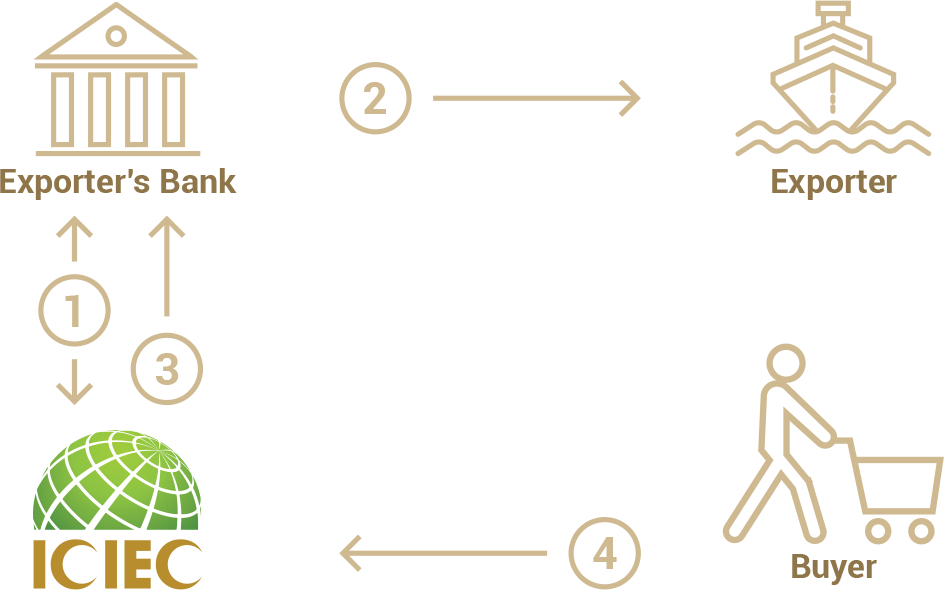
- The exporter’s bank concludes an insurance contract with ICIEC up to a certain insured percentage (e.g. 90%) and pays the premium.
- The bank provides Islamic financing to the exporter with the purchase contract as security.
- In case the buyer fails to pay, the bank files a claim with ICIEC, which indemnifies the bank for up to 90% of the loss.
- ICIEC recovers from the buyer and returns the 10% uninsured share to the bank.